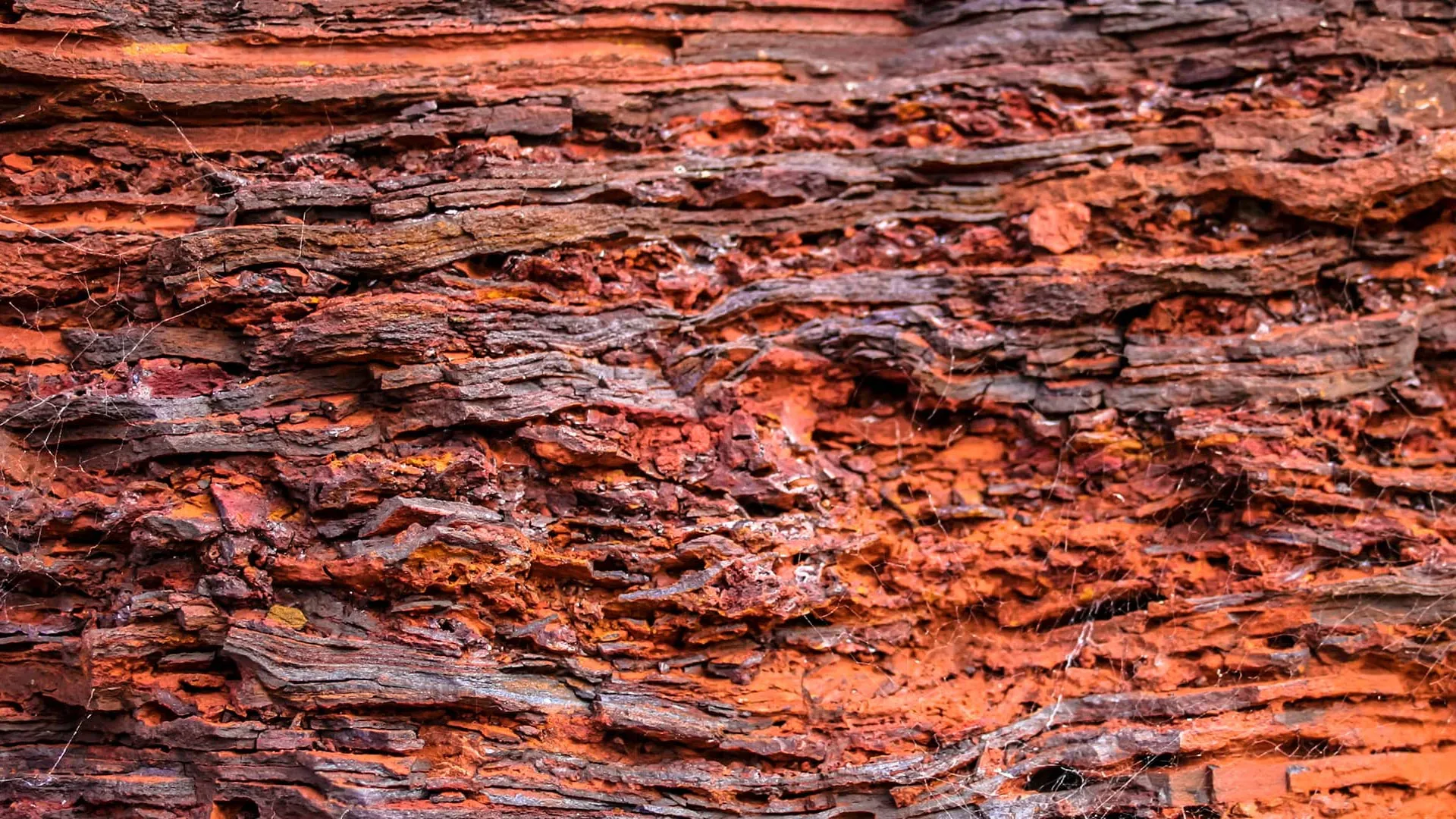
Researchers at Edith Cowan University (ECU) have identified a potentially important source of low-emission energy beneath Western Australia, where vast iron-rich formations may be capable of generating naturally occurring hydrogen. The findings suggest that the region's geology could eventually support a new domestic energy source and, if developed at scale, a major hydrogen export industry. Magnetite Could Generate Hydrogen Underground The research focuses on magnetite, a mineral that is abundant in Western Australia's huge iron ore deposits across the Pilbara region.
Scientists from ECU's School of Engineering found that magnetite can release hydrogen gas when it reacts with hot water under conditions similar to those deep below the Earth's surface. The team also discovered a way to stimulate the process. By injecting a solution into banded iron formations, the researchers were able to increase hydrogen generation, raising the possibility that naturally produced hydrogen could one day be deliberately enhanced underground.
"Australia could be sitting on a massive, untapped energy reserve -- and the potential is enormous," Associate Professor Alireza Keshavarz said. "There is enough hydrogen for Australia to benefit for generations, and potentially enough for us to become a major exporter of clean energy to the rest of the world." To investigate how the process works, the researchers placed magnetite samples in water at 200°C under high pressure for 60 days. Those conditions were designed to reproduce the hot, pressurized environment found deep underground.
The experiments gave researchers a clearer picture of how natural hydrogen can form within rock and what conditions are needed for production to continue over time. The findings are especially significant for Western Australia because the region contains some of the largest banded iron formations on Earth. "Western Australia has some of the world's largest banded iron formations.
If we can unlock this resource at scale, it could be transformative for our energy future," lead author Kaveh Moghanirahimi said. "We even see the potential for Western Australia to strengthen its energy independence during times of crisis through access to this naturally generated hydrogen." From Laboratory Experiments to Natural Hydrogen Exploration Professor Stefan Iglauer, from ECU's School of Engineering, said the results bring researchers closer to understanding how hydrogen production might work in real underground rock formations rather than only in controlled laboratory settings. "This work helps bridge the gap between laboratory experiments and real geological systems," Professor Iglauer said.
The study also found that the amount of magnetite alone does not determine how much hydrogen can be produced. The structure of the rock matters as well, particularly whether water can move through it and reach fresh mineral surfaces. "Our findings show that hydrogen production depends not only on the amount of magnetite present, but also on how easily water can access fresh mineral surfaces through fractures, pores and permeable pathways." That means fractures, pores, and other pathways through the rock could play a critical role in determining whether natural hydrogen can be generated efficiently enough to become a practical energy resource.
Extract — continue reading at the source.


