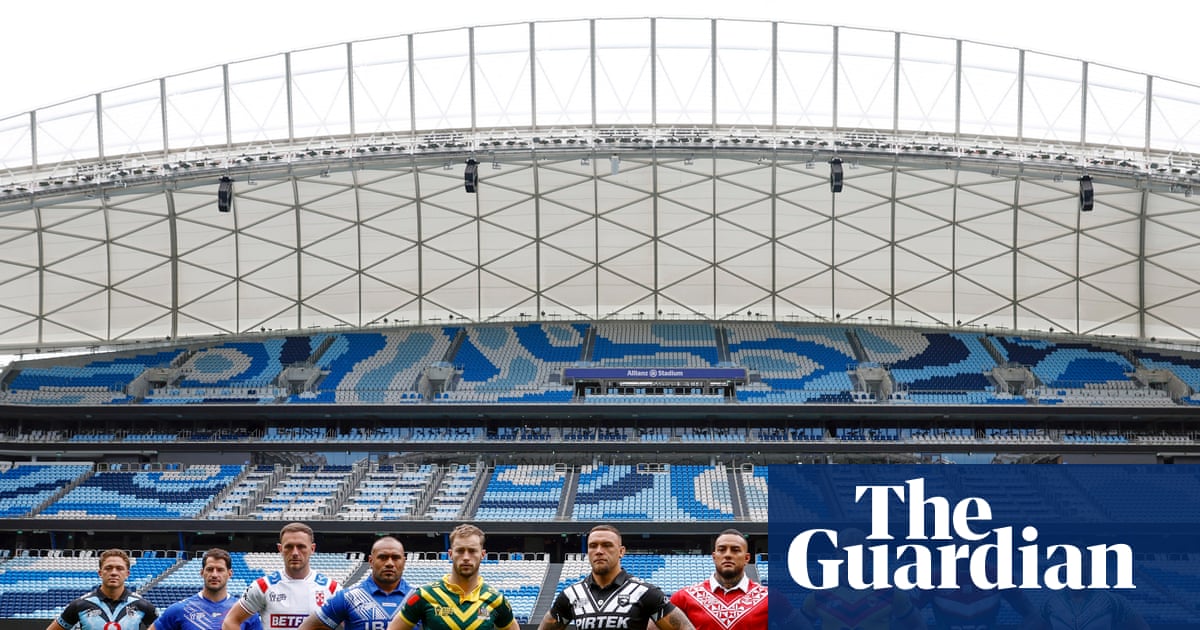
Critics will dismiss the men’s Rugby League World Cup as a provincial oddity, or a forgettable postscript to a long NRL season. Worse, they will question its legitimacy. A “world” cup, they will taunt, pointing to participants hailing exclusively from the trans-Tasman coastlines and Pacific archipelagoes, with a sprinkling of northern Europe.
And, oh yes, Lebanon – even if it is largely via Lakemba in western Sydney. Take those critics to Commbank Stadium for the sold-out pool clash between Tonga and Samoa, however, and ask them to check their prejudice. Or to Port Moresby, for the two Kumuls home matches that mark out the runway towards the Chiefs’ NRL inclusion in 2028.
To most of those present, no sporting contest in 2026 will mean more. Look at the love for Toa Samoa at their fan day this week in Mount Druitt, and the pride and camaraderie that is fuelling the outsiders’ bid for an unlikely cup run. Talent helps, too, and with State of Origin veterans Stephen Crichton, Hamiso Tabuai-Fidow, Brian To’o and Spencer Leniu, the Samoans boast a line-up that can go one better than their breakout runners-up finish in 2021 when they lost to the Kangaroos in the final.
There will be Tonga, featuring rugby league’s international revivalist Jason Taumalolo, whose inspirational commitment to his Pasifika roots a decade ago – choosing Mate Ma’a Tonga over a life with the Kiwis – invigorated the international game. Tongan halfback Isaiya Katoa may be the next great rugby league playmaker, and Robert Toia its next benchmark centre. The passionate support for these increasingly competitive “tier two” nations provides the lifeblood for this 10-team tournament, supported by loosening eligibility laws that have helped spread around the depth of the NRL.
Sell-outs are expected for the match between Tonga and Samoa, the Port Moresby contests and the only match in New Zealand – in Christchurch on 25 October – even if tickets remain available for all of the hosts’ fixtures. Criticism may be levelled towards the tournament’s inability to capture the imagination of the Australian public, which has already tuned into the men’s cricket tour of South Africa. Rugby union types will point to Wallabies matches at next year’s Rugby World Cup selling more tickets than those for the Kangaroos despite higher prices.
Add to that the struggles in finding a host for this tournament after false starts in the USA and France, and rugby league’s naysayers will clear their throats again. Partly due to its own strengths and partly for the modest impact of its predecessors, however, this World Cup is likely to be rugby league’s best. The first night crowd will be a record for the opening match of a Rugby League World Cup, and will almost double the 22,724 that watched Australia play England in the first match of the last edition held here.
Extract — continue reading at the source.