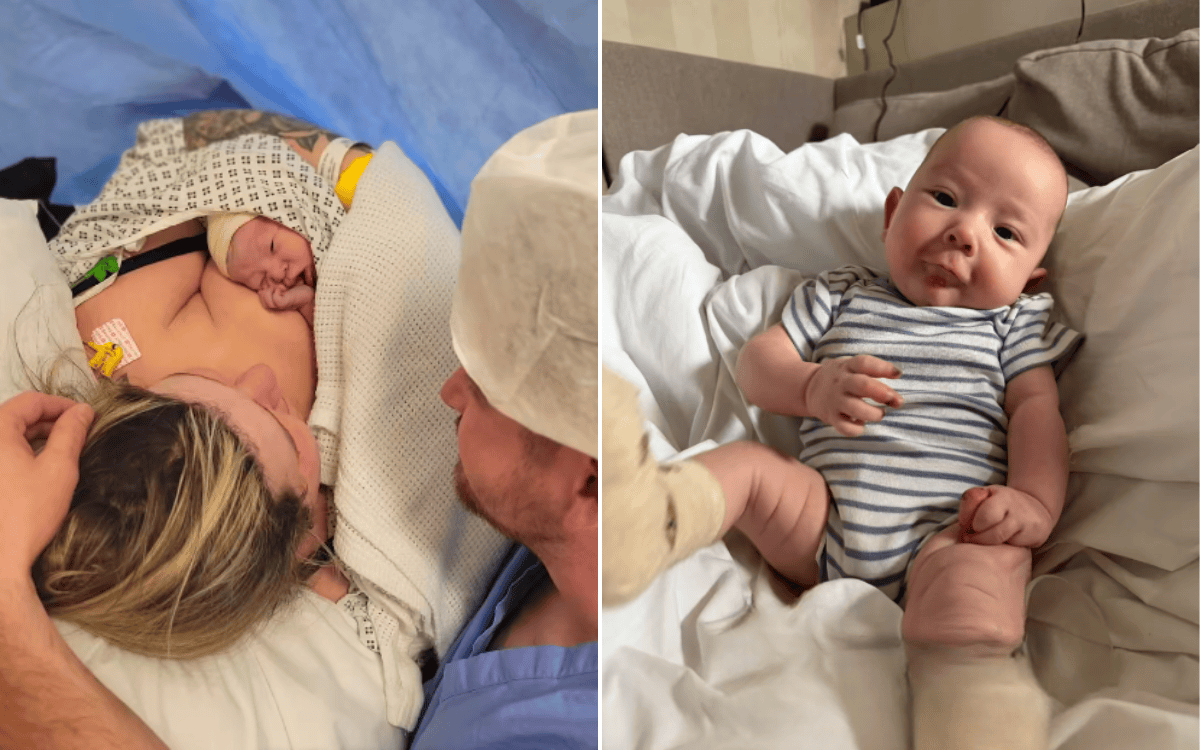
When Chloe Birkett, 25, welcomed her son Renley into the world on May 5, it marked the culmination of an emotional, difficult journey. Birkett suffered two miscarriages before becoming pregnant with Renley and ultimately gave birth via an emergency C-section. Despite all the difficulties that had come before, holding her son for the first time was a feeling unlike any other.
That feeling has never gone away, despite everything that has followed. Renley was born happy and healthy, but three days after his arrival, Birkett began to notice something. Known colloquially as the “heel-prick test,” it's a simple screening procedure designed to check for several rare and sometimes serious health conditions.
Birkett didn't think much of the test at the time, but doctors deemed the results concerning enough to rush them straight to the hospital. This means even minor friction or bumps can result in painful blisters and wounds. The symptoms include blistering, scarring, skin tears, and the thickening of skin and nails.
In more severe cases, blistering inside the mouth, throat, or digestive tract can occur. EB is a rare condition, affecting an estimated 1 in 50,000 people in the United States. There are four main variants: epidermolysis bullosa simplex (EBS), the most common form; junctional EB (JEB); dystrophic EB (DEB); and Kindler syndrome.
In each case, the severity of the condition can range from mild to life-threatening depending on the subtype.Renley was ultimately diagnosed with EB simplex. Though Birkett acknowledges that EB was a condition they were aware of and had discussed before Renley's official diagnosis, the news nevertheless left them stunned. We have to be careful when hugging him, changing diapers, getting him dressed, bathing him, and just going about normal day-to-day life.” There's no treatment for Renley's condition other than effectively managing his wounds.
Extract — continue reading at the source.