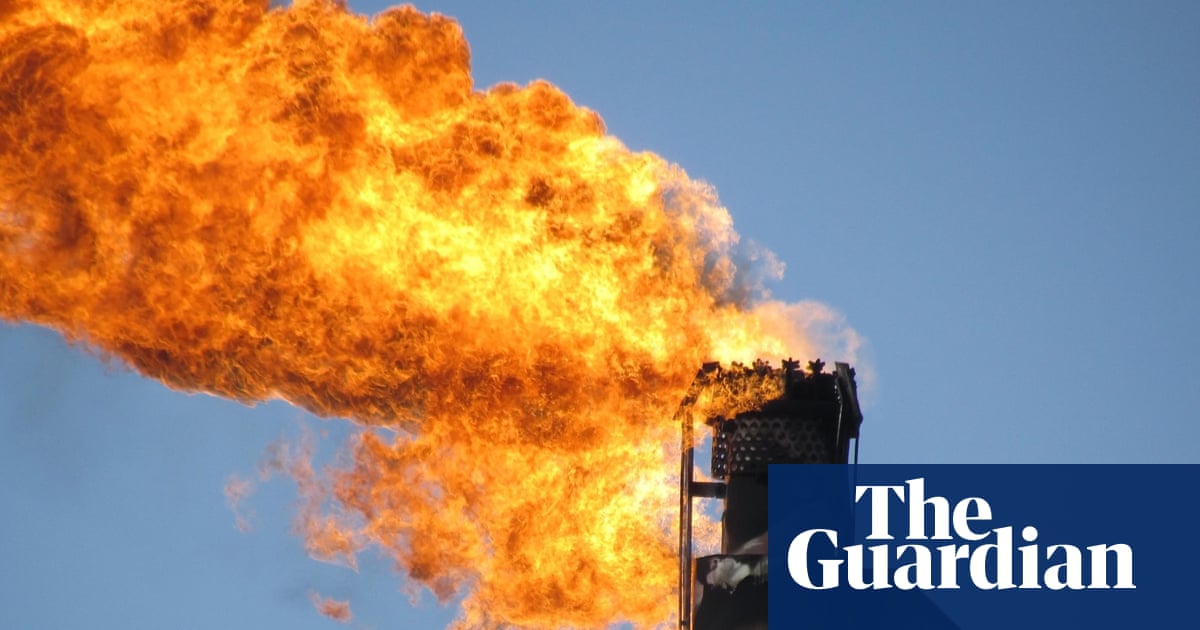
All countries can start to break their dependence on fossil fuels now without needing to wait for new technologies or economic changes, Brazil’s government has said ahead of a global climate summit. Brazil, the host of last year’s UN climate conference, set out the world’s first global “roadmap” for phasing out fossil fuels on Tuesday, showing that countries could boost their economies and pull people out of poverty while breaking the link with coal, oil and gas. But Joeri Rogelj, a professor of climate science and policy at Imperial College London, said that although the Brazilian roadmaps represented a step forward, they were limited.
Cop31 takes place in Antalya, Turkey, this month. The problem we’ve had at many Cops is to think that the same people who negotiate might also need to coordinate the implementation – this is not the case.” He said the roadmaps should be taken up by ministries of finance, transportation, energy and infrastructure to work on how they could be implemented in each country. Brazil hosted the Cop30 summit last November in the coastal city of Belém, in the Amazon rainforest, where a bitter dispute broke out over whether the final set of resolutions should include pledges on fossil fuels.
As a compromise, the presidency agreed to produce two roadmaps, one on “transitioning away from fossil fuels in energy systems in a just orderly and equitable manner” and the other on halting and reversing deforestation. These roadmaps are separate from similarly named plans from governments that met after Cop30 at a conference in Santa Marta, Colombia, in April, to discuss the transition away from fossil fuels. At that conference, nearly 60 countries formed a new “coalition of the willing”, separate to Cops, to set out their own national roadmaps to phase out fossil fuels.
Several countries have since produced national plans, including Germany, France and the Netherlands. The roadmaps produced by governments under the Santa Marta initiative are much more specific and prescriptive than Brazil’s, as each of those is written by the national government responsible for implementing the policies recommended. The Brazilian roadmaps only set out steps that are possible.
They are not binding, they contain no deadlines or milestones for actions, and they leave it to countries themselves to “diagnose” their degree of dependence on fossil fuels and select steps to reduce it. Methane is a greenhouse gas 80 times more powerful than carbon dioxide, so this would have an immediate impact. Other steps are for countries to reduce their subsidies to fossil fuel use or production, and building up renewable generation.
The roadmap on deforestation notes the large sums that are expected to be needed to help poor countries with heavily forested areas such as the Amazon, the Congo rainforests and south-east Asian tropical forests that are under threat from fires and palm oil exploitation. About $300bn is likely to be needed every year for forests by 2030, and $500bn a year by 2050, according to the roadmap, citing UN figures. The current amounts available fall far short at about $85bn a year.
Extract — continue reading at the source.




