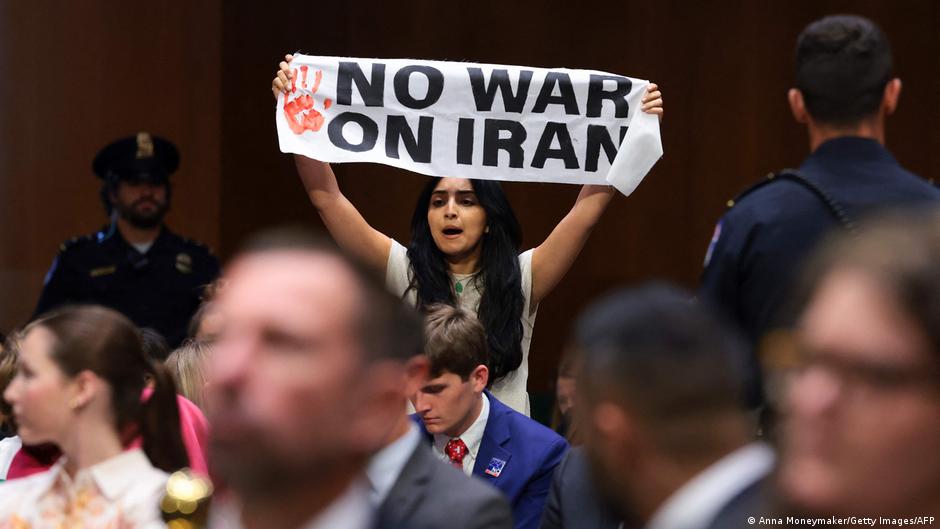
The US election this Tuesday is shaping up to be one of the most consequential midterm votes in modern US history, with Washington's relationship with Israel and its war on Iran right at the center of the political standoff. Many Democrats, including the party's rising stars such as Ohio Senate nominee Abdul El-Sayed, are outspoken critics of the Iran war, with El-Sayed calling the conflict "illegal" and "stupid." US President Donald Trump sought to downplay the effects of the war during the campaign. Last week, he claimed only "one or two targets" remained in Iran and that those could be settled in 10 minutes.
However, he immediately added that messages are still being exchanged, Tehran shows strong interest in a deal, and the US has plenty of time to deal with the crisis. At the same time, there are reports of the US and Israel preparing to launch a new round of strikes on Iran just after the midterm election and pro-war Republicans such as Senator Ted Cruz are putting pressure on the White House to deal with "the threat" posed by Iran. "I have urged arming the Iranian protesters to overthrow the regime," Cruz said in an online post after spending a day with Trump.
Behind the scenes, analysts warn that the Washington political elite may not be as divided on Iran as it appears. Moreover, even a resounding Democrat victory might not give them enough leverage on the Trump administration regarding the Iran war. Talking to DW, former National Security Advisor John Bolton said the Democrats are likely to secure a majority in the House of Representatives and possibly the Senate, handing them control of the Iran war funding.
The US Congress "can allocate defense budgets or impose restrictions on the use of financial resources," Bolton said. To view this video please enable JavaScript, and consider upgrading to a web browser that supports HTML5 video Nevertheless, Bolton points out that the US president can veto congressional legislation, which would then require a two-thirds majority in both assemblies to overcome. "Even if Democrats hold a majority in both houses, their influence will be limited to the legislative and political tools of Congress," he said.
US diplomat and Iran expert Alan Eyre points to a kind of "bipartisan consensus" that Republicans and Democrats have on Iran. "Both major US parties share significant common ground in their opposition to the political structure of the Islamic Republic and in their support for policies aimed at exerting pressure on Tehran to change its behavior," he said. While warning of a "crushing response" to any new strikes on underground sites, Tehran has confirmed ongoing indirect communication via Doha and Muscat, keeping its diplomatic option open.
Shahin Modarres, an international security analyst leading the Iran team at ITSS Verona, told DW that Tehran's actions are based on a miscalculation. The regime, he argues, assumes that a Democratic Congress can easily restrain the White House. Tehran's strategy in dragging out peace talks, pressuring the Strait of Hormuz, and letting fuel prices weigh on US voters, aims to deny Trump a win before November.
Extract — continue reading at the source.




