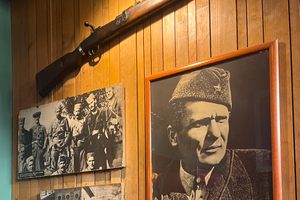
Most Popular PlacesRandom PlaceListsItinerariesAdd a PlaceDownload the App Cafe Tito The Adam and Eve House The Mountain House Larz Anderson Auto Museum Cryptid Tourism: The Best Museums, Destinations & Festivals Across America 1 day ago Not your average Bosnian cafe — this locale is dedicated to the former Yugoslav dictator Tito. Tito memorabilia on the wall inside. happilylost / Atlas Obscura User Photos of Tito and Yugoslavian coins on the wall happilylost / Atlas Obscura User Military tank from the Bosnian war. happilylost / Atlas Obscura User Map in the interior of the cafe. happilylost / Atlas Obscura User Decommissioned military equipment from the Bosnian war. happilylost / Atlas Obscura User Cat in front of magazine covers of Tito happilylost / Atlas Obscura User Decommissioned tank from the war. happilylost / Atlas Obscura User Military equipment from the Bosnian war. happilylost / Atlas Obscura User A “Sarajevo rose” at the cafe’s entrance, marking a mass murder during the Siege of Sarajevo. happilylost / Atlas Obscura User A decommissioned military truck on the cafe’s playground. happilylost / Atlas Obscura User Tito memorabilia on the wall inside. happilylost / Atlas Obscura User Photos of Tito and Yugoslavian coins on the wall happilylost / Atlas Obscura User Military tank from the Bosnian war. happilylost / Atlas Obscura User Map in the interior of the cafe. happilylost / Atlas Obscura User Decommissioned military equipment from the Bosnian war. happilylost / Atlas Obscura User Cat in front of magazine covers of Tito happilylost / Atlas Obscura User Decommissioned tank from the war. happilylost / Atlas Obscura User Military equipment from the Bosnian war. happilylost / Atlas Obscura User A “Sarajevo rose” at the cafe’s entrance, marking a mass murder during the Siege of Sarajevo. happilylost / Atlas Obscura User A decommissioned military truck on the cafe’s playground. happilylost / Atlas Obscura User Tito memorabilia on the wall inside. happilylost / Atlas Obscura User Photos of Tito and Yugoslavian coins on the wall happilylost / Atlas Obscura User Military tank from the Bosnian war. happilylost / Atlas Obscura User Map in the interior of the cafe. happilylost / Atlas Obscura User Decommissioned military equipment from the Bosnian war. happilylost / Atlas Obscura User Cat in front of magazine covers of Tito happilylost / Atlas Obscura User Decommissioned tank from the war. happilylost / Atlas Obscura User Military equipment from the Bosnian war. happilylost / Atlas Obscura User A “Sarajevo rose” at the cafe’s entrance, marking a mass murder during the Siege of Sarajevo. happilylost / Atlas Obscura User A decommissioned military truck on the cafe’s playground. happilylost / Atlas Obscura User Tito memorabilia on the wall inside. happilylost / Atlas Obscura User Tito memorabilia on the wall inside. happilylost / Atlas Obscura User Photos of Tito and Yugoslavian coins on the wall happilylost / Atlas Obscura User Military tank from the Bosnian war. happilylost / Atlas Obscura User Map in the interior of the cafe. happilylost / Atlas Obscura User Decommissioned military equipment from the Bosnian war. happilylost / Atlas Obscura User Cat in front of magazine covers of Tito happilylost / Atlas Obscura User Decommissioned tank from the war. happilylost / Atlas Obscura User Military equipment from the Bosnian war. happilylost / Atlas Obscura User A “Sarajevo rose” at the cafe’s entrance, marking a mass murder during the Siege of Sarajevo. happilylost / Atlas Obscura User A decommissioned military truck on the cafe’s playground. happilylost / Atlas Obscura User Josef Broz Tito occupied a unique place in the cultural memory of the countries that previously comprised Yugoslavia. To some, he was a human rights-violating authoritarian.
To others, he was a “benevolent dictator” who kept simmering ethnic tensions from boiling over, as they did after the breakup of Yugoslavia and subsequent Bosnian war. What better legacy to pair with the treasured Bosnian past times of sipping coffee and beer than his? At Cafe Tito, the mythical man watches over patrons from the photos, posters, news articles, magazines, and memorabilia featuring his likeness.
The interior of the cafe is painted communist red, balancing out an exterior patio showcasing Sarajevo’s natural greenery… and green military vehicles. Next to a children’s playground lies a decommissioned tank, military truck, and out-of-use weaponry. Fun for the whole family!
Started in the early 2000s as a tribute to the era in which Tito reigned supreme, the owners have spent over twenty years gathering material related to his rise, glory days, and demise from miscellaneous, multimedia sources. Peruse the interior for a fragmented history of a man who, at times, seemed larger than life, and still represents an era of prosperity and peace to some Bosnian citizens. Out front of the cafe, note the red paint splatter.
It's not a random spill -- it's a marker of Sarajevo's bloody history. These "Sarajevo roses" indicate sites where two or more people were murdered during the Siege of Sarajevo, lasting from 1992 to 1996. The cafe is located near what was called Sniper's Alley, a long road bisecting Sarajevo's flattest area in which civilians were exposed to militia sniper fire.
With this Sarajevo rose, the city honors those murdered right off Sniper Alley, juxtaposing this memory of violence with the relative peace during the Tito era celebrated in the cafe. It stands as a solemn reminder that multiple eras of history are alive in Sarajevo, some deeply unresolved in a society scarred by war. Get more unusual and extraordinary places each week with the Atlas Obscura Places newsletter.
Extract — continue reading at the source.