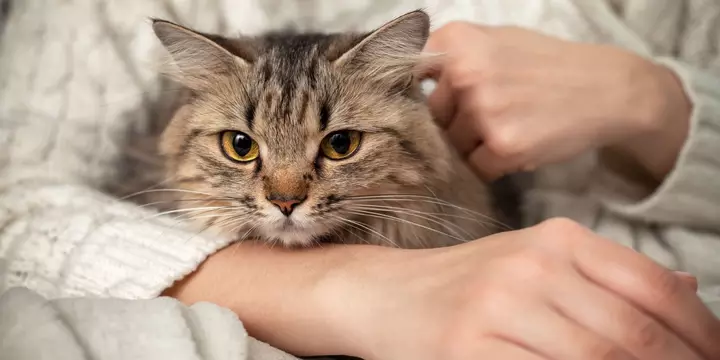
I don’t remember much about Peppy, my first and only pet cat. I can conjure the sensation of stroking her while she purred, recall how she used to get stuck in trees (just like in cartoons!), and chuckle about the time she pooed in my baby sister’s cot. What I do vividly remember, though, is the day she went missing.
I was 10 years old, and I searched everywhere for her, scouting nearby fields and woods until sunset. There was no way to get more time with Peppy, but almost 30 years later, pet owners are being offered an ever-expanding set of options to potentially prolong their years with their furry companions. The possibilities include drugs, cloning, and even cryonics.
But is that a good thing? There’s certainly a market for pet preservation. And a growing number of biotech companies have their sights set on pet longevity.
Loyal, a company that is currently working on three potential longevity drugs for dogs, is trialing one designed to improve metabolic health in around 1,300 pet dogs across the US. Others are testing dog drugs that aim to combat both age-related diseases, including conditions like obesity and osteoarthritis, and aging itself. There’s even a company focused on longevity medicines for domesticated cats.
I don’t know how or when Peppy died. But if there had been a drug that might have protected her from diabetes or arthritis, there’s no doubt I would have tried to get my hands on it. That’s about where my enthusiasm for pet life extension ends, though.
I’m far less interested in cloning, a relatively new option for people mourning a pet and seeking a replacement. In most cases, this technology involves taking the DNA of a pet, putting it into an egg cell from another animal of the same species, and growing the resulting embryo in a surrogate animal. It worked for Dolly the sheep, who was born the year before Peppy went missing.
Extract — continue reading at the source.