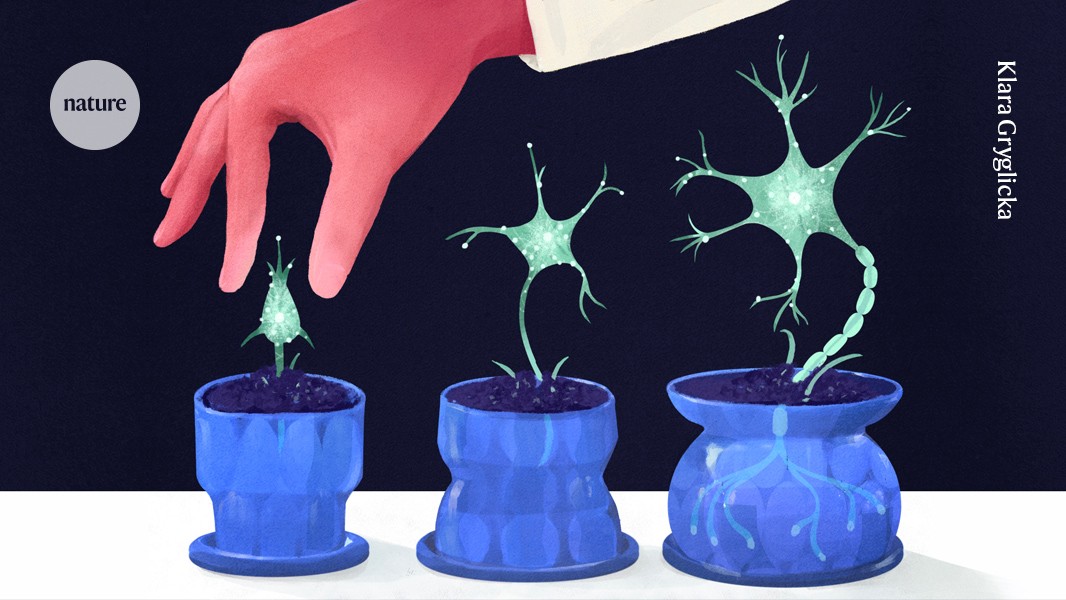
For a long time, it was a truism in science that the human brain is born with all of the neurons it will ever have. But truisms can crumble, and this one is looking shaky. The brain struggles to make new neurons in people with depression A tantalizing body of evidence suggests that the human brain produces new nerve cells throughout a person’s life.
If that’s true, then our brains could have an enduring ability to repair and regenerate. That concept sounds very appealing to neuroscientist Arturo Alvarez-Buylla at the University of California, San Francisco, who has spent years investigating this topic. The question of whether the human brain can generate nerve cells after childhood has been controversial for decades.
Influential papers have come down on both sides of the argument over the years, and the concept has captured public interest well beyond academia. Part of the reason for the prominence of the debate is that it involves the giants in the field, says Hongjun Song, a neuroscientist at the University of Pennsylvania in Philadelphia. But at the same time, questions remain about the methods used to detect neurogenesis, which today rely mostly on genetic markers associated with it and provide only indirect evidence of its existence.
Gerd Kempermann, a neuroscientist at the German Center for Neurodegenerative Diseases in Dresden, says that, despite the continuing debate, the field is now moving to what he calls a consolidating phase. For many years, this was a central dogma of the field. The first to challenge it was neuroscientist Joseph Altman, then at the Massachusetts Institute of Technology (MIT) in Cambridge, who found signs of adult neurogenesis in the brains of rats and cats1 in the 1960s.
Some think that the finding cost him his job. Evidence in many other animal species followed, and the idea became more widely accepted. A typical method for detecting newly generated neurons in animals is to inject them with a chemical called bromodeoxyuridine (BrdU).
Because of its structure, BrdU is incorporated into DNA when a cell divides, and researchers can then tell which neurons are newly generated by using a marker that recognizes the molecule. In the 1990s, Gage and his colleagues were wondering whether this process happened in humans. They were specifically interested in the hippocampus — a brain region involved in memory and learning — because neurogenesis had been observed there in other adult animals.
Extract — continue reading at the source.


