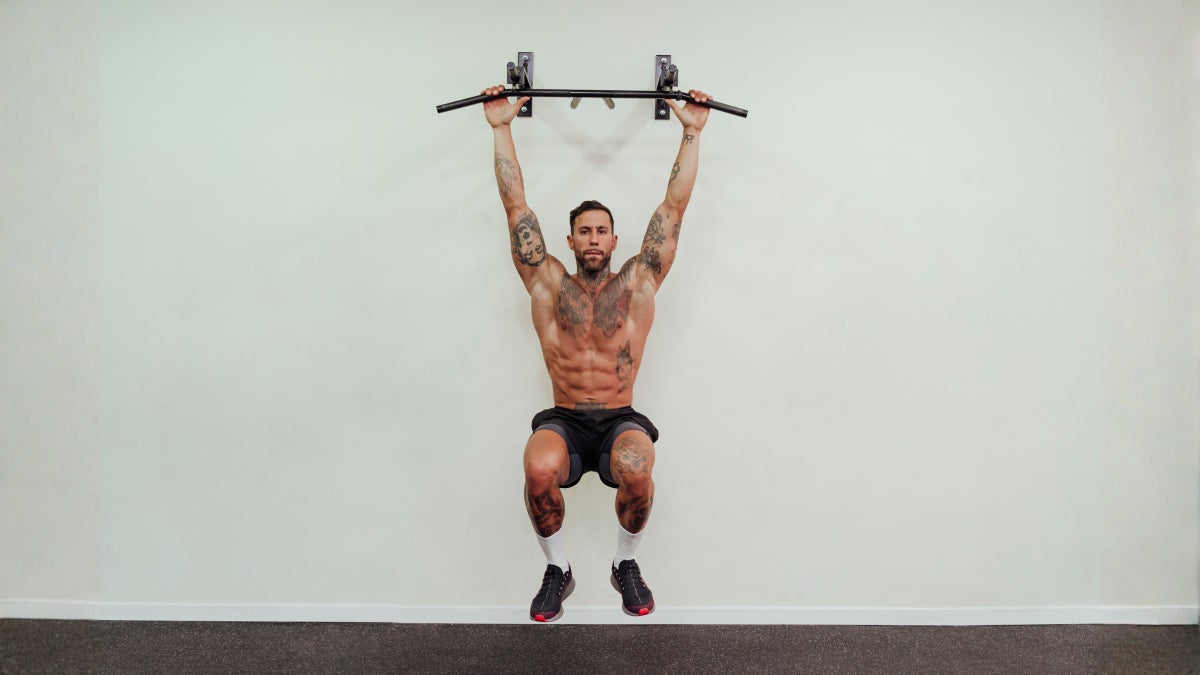
Somewhere right now, someone hangs from a pull-up bar in their garage, red-faced, breath held, forearms trembling, while a phone propped against a water bottle counts the seconds. When they finally drop to the ground, they post their time on Instagram with a caption implying they just bought themselves another decade of life by completing a dead hang. The dead hang challenge has been circulating on social media, and some people claim the workout is tied to longevity.
The dead hang’s popularity skyrocketed after its appearance on an episode of the Mel Robbins Podcast. In the episode, a doctor said the main benefit is better grip strength, which they linked to improved cardiovascular and cognitive health. Hang for one or two minutes.
As a board-certified internal medicine physician who specializes in longevity, I can see the appeal. The challenge costs nothing. You can do it at a playground jungle gym, and it gives you a number you can track.
The trouble may be how social media assigns value to that number. The longevity claim borrows credibility from grip strength research, and that evidence is substantial. In a 2015 Lancet study, researchers followed nearly 140,000 adults across 17 countries and found that every 11-pound drop in grip strength was associated with a 16 percent higher risk of death from any cause.
In a 2018 British Medical Journal analysis of roughly half a million participants, lower grip strength was linked to higher rates of cardiovascular disease, respiratory disease, and several cancers. Those studies used a handgrip dynamometer, a device you squeeze as hard as you can for a few seconds to register peak force. A dead hang is a far more complex measurement.
It tests how long you can hold your body weight, bringing body mass, forearm endurance, shoulder function, technique, and practice into play. Gravity doesn’t grade on effort, apparently. A strong person carrying more mass may drop off the bar before a lighter person with weaker hands.
Extract — continue reading at the source.