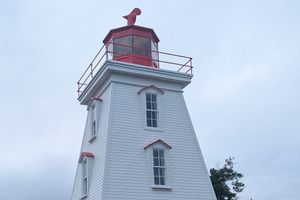
All Canada Prince Edward Island Cape Bear Lighthouse and Marconi Station This lighthouse has been in operation since 1881, with an interesting connection to the RMS Titanic. Cape Bear Lighthouse has been in operation since 1881, and it's light can be seen up to 22km/14 mi away. For a small fee, take a tour of the lighthouse to learn about the history of it's keepers, and an opportunity to climb all the way up to the lantern room to see panoramic views of the Northumberland Strait and Nova Scotia.
While Marconi Station ceased operations in 1922 and now serves as a family home, Marconi Station operator Thomas Bartlett was the first Canadian to receive the distress call from the Titanic on the night of April 14, 1912, as it was sinking off the coast of Newfoundland, which was not yet a part of Canada. Get more unusual and extraordinary places each week with the Atlas Obscura Places newsletter. Your newsletter subscriptions with us are subject to Atlas Obscura's Privacy Policy and Terms of Use.
Climbing to the top of the lighthouse is narrow and steep - like climbing a ladder. The first federal construction project authorized under the Constitution Tucked away past the island's famous stone arch, this hidden coastal path leads hikers to a dramatic razor sharp cliffside that thrusts into the Caribbean like the Doomed bow of the Titanic ocean liner. An historic lighthouse accessible via a half-mile walk through a nature preserve and freshwater tidal wetlands.
A remote island marking the entrance to Death’s Door, surrounded by the bones of ships who failed to heed her warnings. A pair of trousers or a dress was hoisted up the shore station’s flagstaff to announce the birth of a baby to the lighthouse keeper working offshore. This stately brick building once provided supplies and equipment to lighthouses across the northeast during the 19th and 20th centuries.
This distinctive lighthouse with an iron skeleton is one of the tallest on the East Coast. This beacon honors a Nobel Prize-winner whose technology powered its light. ## Become an Atlas Obscura Member * * * Join our community of curious explorers. Become a Member Atlas Obscura uses cookies on its websites to personalize content and ads, to provide social media features, and to analyze our traffic.View Cookie Policy When you visit any website, it may store or retrieve information on your browser, mostly in the form of cookies.
This information might be about you, your preferences, or your device, and is mostly used to make the site work as you expect. The information does not usually identify you directly, but it can give you a more personalized web experience. Because we respect your right to privacy, you can choose not to allow some types of cookies.
Extract — continue reading at the source.