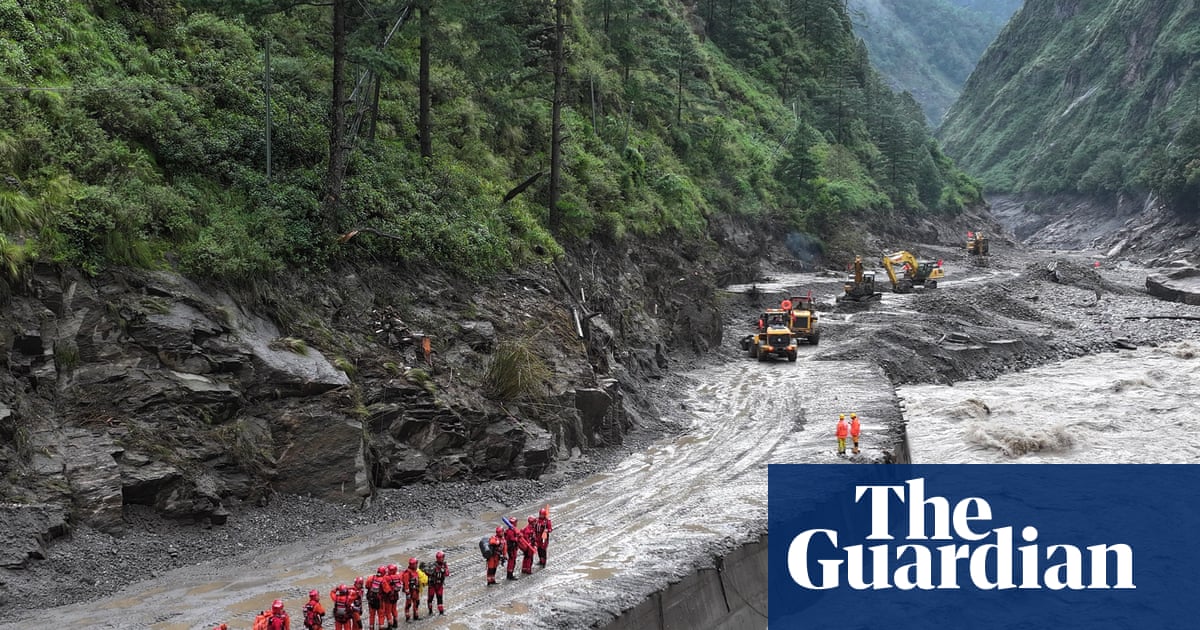
In the days since an enormous glacier in the Himalayas snapped away from a mountaintop and cascaded into the valley below, the true scale of the devastation caused by the flash floods in Nepal and Tibet is still unfolding. But the picture is emerging far more quickly in Nepal than in China, where strict controls on the flow of information from one of its most sensitive regions are hampering the public’s understanding of events. The floods devastated villages along the Himalayan border region that straddles Nepal and the Chinese region of Tibet.
On Friday, the official death toll in Nepal rose to 538 people, while in China it was just five, despite the fact that the villages around the Gyirong border crossing are home to several thousand people. In Nepal, journalists rushed to get as close to the disaster zone as possible to interview survivors and rescue workers. Villagers provided minute-by-minute accounts of what happened when the floods, the exact cause of which is still being studied by scientists, tore through their homes.
In China, state media carried several broadcasts about the floods and dispatched their own journalists to the area, but reports focused on the rescue efforts rather than the scale of the devastation. In one broadcast from a relief centre in Tibet, the journalist did not speak to any of the people sitting behind him. Tibet, brought under Chinese control in the 1950s, is the most sensitive and tightly controlled region in the country.
Sporadic protests, including self-immolations, by Tibetans calling for more autonomy and religious freedom have been cracked down on by the authorities. International journalists cannot visit Tibet apart from on tightly choreographed government tours. Many Tibetans are not allowed passports and have very limited contact with the outside world.
Tibetans can be punished for speaking to journalists. Human rights groups have for years criticised Beijing’s policies on Tibetan language and culture, which activists say are under attack. That makes independent assessments of how the flash floods have affected the Tibetan side of the border difficult.
And therefore nobody is going to say anything or report anything that has not been cleared from the very top,” said Steve Tsang, the director of the China Institute at Soas University of London. For anyone on the ground, “you can’t report a higher figure of deaths, even if you have seen more bodies yourself, until the official statement says that the figure has gone up”. China’s tight controls on information are limiting international coverage of its relief efforts.
Extract — continue reading at the source.