Late last week, we started seeing headlines about how new research was suggesting we might have two brains instead of the one that seems to show up on MRI scans. As is so often the case, these rumors can be traced back to a single press release put out by one of the universities where the work was done. You do not have two brains.
It’s a silly way to look at the results of the new paper. But there are far better ways to look at the results, ways that can help us understand how the brain gets put together and illustrate some of the general ideas behind developmental biology. So let’s take a look at what the research actually shows and place it in the context of brain development.
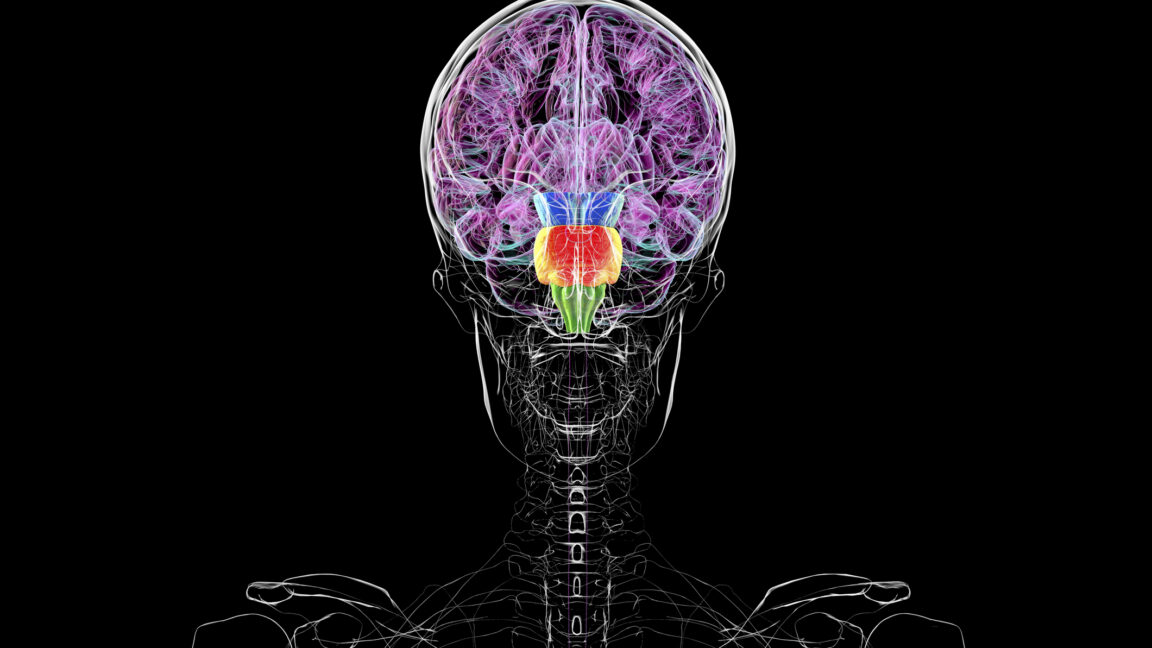
You may think body segments are something that show up in things like crustaceans and insects. But our nervous system also develops in segments. Vertebrates have four major ones: the forebrain, midbrain, hindbrain, and spinal cord. (Some of these later develop segments within them, but we’ll skip over those.) The new paper is largely focused on providing part of the answer to an obvious question: how do those segments get there?
That sort of question is the bread and butter of developmental biology, a field that focuses on how organisms start off as a single cell and, through a series of carefully timed and choreographed processes, produce all the tissues found in adults. To think about the question, we need a bit of context. By the time the first cells that are committed to develop into neurons show up, the vertebrate embryo already knows its head from its tail, and its back from its belly. (We won’t go into how the embryo learns that, but we know a lot about that, too.) The embryo consists of three tissues at the time: the endoderm, which will line our guts, the mesoderm, which will form muscles and bone, and the ectoderm, which will go on to form the skin.
Extract — continue reading at the source.