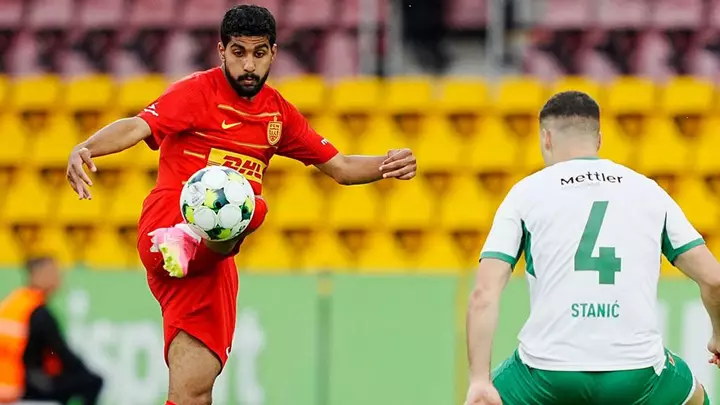
When the Scottish FA gathered with the country's top clubs in St Andrews last month to try to persuade them of the benefits of fielding young players in their first team, citing Nordsjaelland as the model to follow would have been no bad thing. Despite an average attendance of about 5,000, the club from the small town of Farum in the north east of Denmark has turned into a powerhouse of youth development. In the last decade they have consistently fielded the youngest sides in European football as a result of regularly picking teenagers.
The results on the pitch have been steady - but off the pitch they have been spectacular. From 2015-24, Nordsjaelland have made a profit of more than £170m on player sales - one of the highest in Europe - and this summer sold midfielder Caleb Yirenkyi to Coventry City for a club record fee of 27m euros (£23m). Amid a crisis in youth development in Scotland and as Nordsjaelland prepare to take on Heart of Midlothian at Tynecastle in the Conference League, BBC Sport Scotland examines what Scotland could learn from the Norwegian club.
Lots of factors have gone into making Nordsjaelland one of European football's prime clubs for developing players. Some can be replicated, others can not. But at the heart of it is an unflinching will to put teenagers into the first team in order to allow them to grow - and make mistakes.
A Uefa report last season indicated that 39% of the club's total minutes were played by teenagers, the highest in Europe. In comparison, the average minute share for teenagers in the Scottish Premiership was 4% last term. It yielded a third-place finish in the Danish Superliga to qualify for Europe, and this season they fielded six players under the age of 21 in their Conference League play-off victory against Swiss side St Gallen.
Over the last decade since Nordsjaelland's youth strategy accelerated, they have finished in the top half of the league in nine out of 10 seasons. Their biggest purchase in that time was this summer's 3m euros (£2.5m) fee for striker Alexander Lind. Despite the strategy of selecting young players, results have been relatively consistent given they are competing against larger Danish clubs such as FC Copenhagen and Brondby.
The club's sporting director Alexander Riget says they have no option but to give youth a chance if they want to be successful, because they cannot compete financially for the same level of talent at an older age. "Our best players, normally, are our young players between 18, 19, 20, because they start here, and then they are sold," Riget told BBC Scotland. "A player like Caleb Yirenkyi, sold to the Premier League, would be an example.
Extract — continue reading at the source.