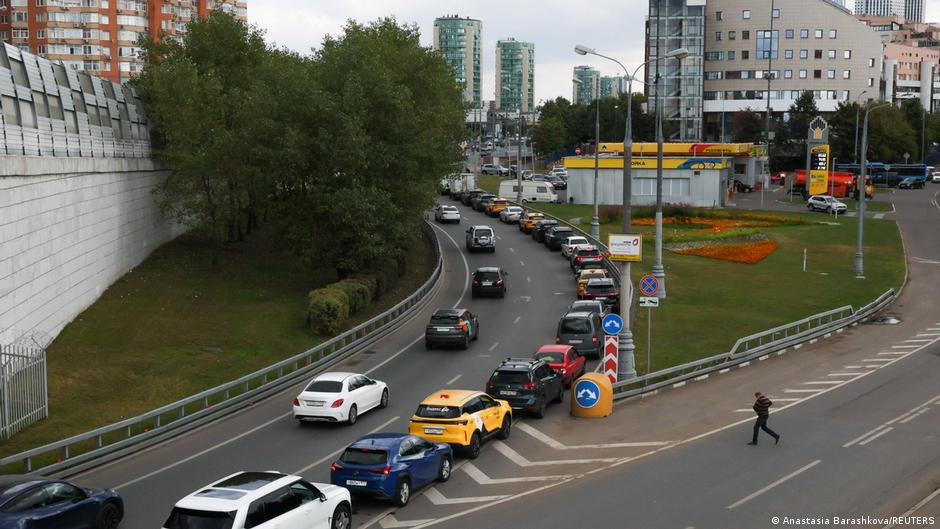
Ukrainian attacks on oil refineries have triggered a new fuel crisis in Russia. news agency reports that at least 30 regions are now affected. Unlike the previous wave of shortages, which began in late May and lasted until mid-July, the current crisis is particularly affecting Moscow and the surrounding area, as is apparent from posts on social media. The gas station chains Gazprom Neft and Tatneft have already restricted the sale of fuel in the capital.
"You can't say there isn't any fuel. But it's obvious there's a crisis," says Oleg Grigorenko, editor-in-chief of the Russian independent media portal 7x7, which Russia has branded a "foreign agent." "It's not just a personal problem if you leave the city and don't know whether you can get back again, for example. It's also an economic problem," Grigorenko reports that in several regions taxi drivers, courier services and the construction industry are already losing business, as many of their supply chains are fuel-dependent.
"The logistics of private construction companies is heavily reliant on gasoline," Grigorenko explains. People are also having to queue for hours at gas stations in the southern Russian region of Krasnodar, according to local media. The authorities are blaming this on a supposed increase in demand during the holiday period.
But many locals are saying that this summer season is a disaster. Real estate agent Igor Zakharchenko, from Sochi on the Black Sea coast, wrote on Instagram: "With its quiet atmosphere and leisurely pace of life, Sochi today is reminiscent of the time before the Olympic Games, when there were still not many cars on the roads and the city had far fewer holidaymakers and inhabitants. But the thing is: There's no gas in Sochi." Speaking on the Russian broadcaster RTVI, Igor Ananskikh, first deputy chairman of the energy committee in the Russian parliament, said he expected the gas supply situation to normalize within two to three weeks.
Economist Nikolai Korzhenevsky says this is unlikely. He left Russia in protest at Moscow's war against Ukraine and now lives abroad. In an interview with DW, he highlighted the worsening quality of fuel in Russia.
Acquaintances had sent him photos of their cars displaying error messages that indicate engine damage caused by impurities in the fuel. "The car won't start and has to go to the garage. The same people are telling me garages have waitlists of several months, even in Moscow," Korzhenevsky says.
Extract — continue reading at the source.