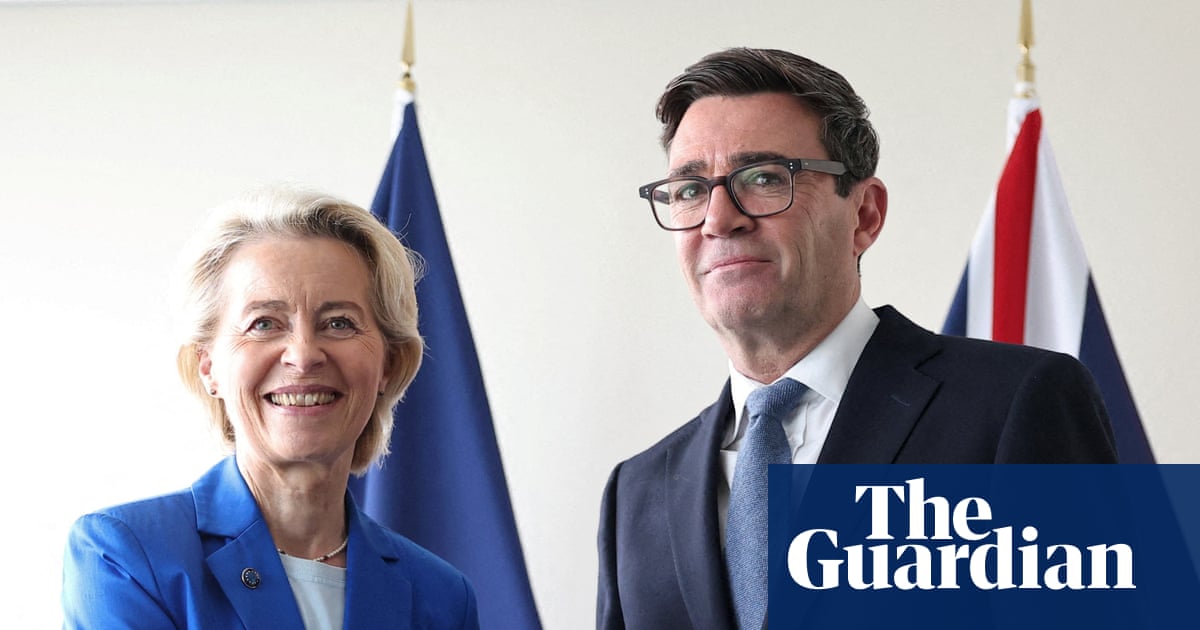
It was lobbed into the national conversation without fanfare or warning, almost a footnote in the UK prime minister’s first speech as leader to his governing Labour party’s annual conference. But Andy Burnham has kicked off a quiet U-turn on Brexit. By stating bluntly that the decision to leave Europe’s core political community had done “more harm than good”, Burnham broke a taboo in his own party, in effect, discarding his predecessor’s paralysing ‘red lines’ on Europe, and signalling he will not be bound by these constraints after the next British election.
Over the coming six weeks Burnham will gauge public support before setting out future options for the UK’s long term relationship with the UK’s largest market. Rejoining the 27-nation bloc will be one of them, opening the door to Britain reversing Brexit. The famous red lines, or non-negotiables, enshrined by Starmer in Labour’s 2024 election manifesto, were meant to reassure Brexit-supporting voters that under Labour there would be no return to a single market, customs union or the free movement of people.
These pledges left Starmer with little room for manoeuvre with Europe beyond warm words. The evidence that Brexit has stunted the British economy is not new. Estimates for the damage quitting the single market has already done range from 6% of 8% of GDP.
What is new is a prime ministerial readiness to publicly acknowledge that harm and conclude that an ambitious new path is required. Burnham is saying Brexit doesn’t work and that we need a different form of deal. That has never been said before.” Burnham is not yet committing himself to fighting the next election on a particular course of action.
Much will depend on the response he gets. But all options – Lisa O’Carroll details them here – are on the table, from a customs union to re-joining the single market and becoming, like Norway, a rule-taker, to “going all the way”. But crucially, Burnham has already departed from the orthodoxy that makes questioning Brexit a heresy.
Instead of shutting down the topic to limit his exposure to Eurosceptic attacks, the PM is meeting it head-on, Reland said. Why would Burnham choose this juncture and risk drawing down what Rafael Behr calls the Brexit curse? The economic rationale is the obvious one.
Extract — continue reading at the source.