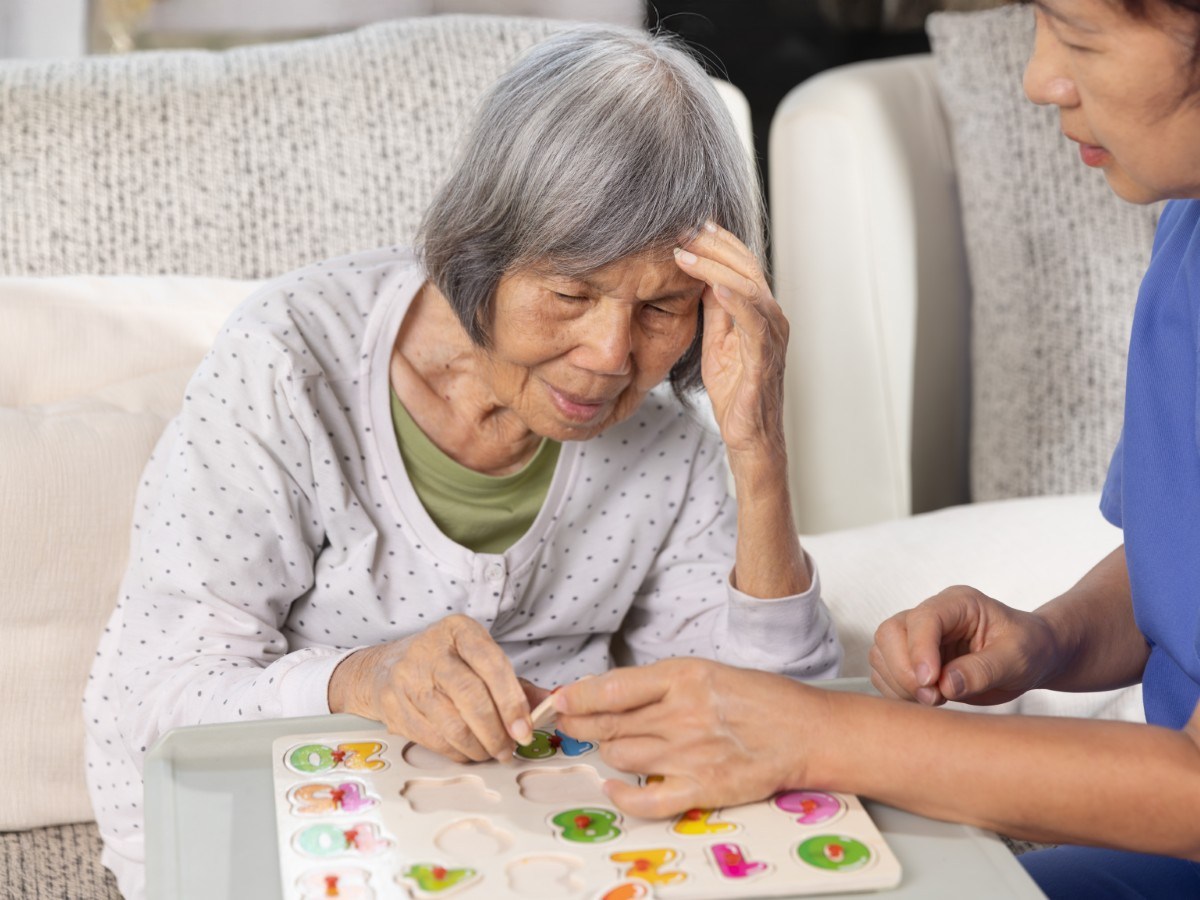
For different groups of Americans, the factors that increase a person's risk of developing dementia could vary, a new study has suggested. Researchers at Boston University found that the most common risk factors of dementia for American Indians were different to those for the general population, and included having limited education, depression, hypertension and previous traumatic brain injuries. The study was published in the journal Alzheimer's & Dementia: The Journal of the Alzheimer's Association on August 24.
"What stands out is that dementia risk does not occur in a vacuum," Micah Savin, a clinical neuropsychologist in New York who was not involved in the study, told Newsweek. Savin added that the findings provide "potentially actionable targets for prevention, but it is also important not to overinterpret these findings as evidence of inherent racial differences." "Race is not the mechanism here," the clinical neuropsychologist said. "American Indian communities have experienced very different social, historical, environmental, educational, and health-care conditions, and those conditions shape exposures that affect brain health over decades." Dementia is not a single disease, and different diseases can cause the associated decline in brain function.
Many of these diseases are known to stem from an abnormal buildup of proteins in the brain, which can damage the nerve cells. Key known risk factors of dementia include age, genetics, other health conditions (including diabetes, high cholesterol, high blood pressure and depression) and lifestyle factors (such as smoking, excessive alcohol consumption, inactivity and isolation). Researchers have previously estimated that 42 percent of Americans over the age of 55 will eventually develop dementia.
According to the National Institutes of Health, dementia affects more than 6 million Americans, while accounting for more than 100,000 deaths each year. The researchers at Boston University examined 808 American Indians at mid- and late-life and reported on the prevalence patterns of 10 risk factors, which were part of the 14 identified factors associated with dementia previously reported by the Lancet Commission. The Lancet Commission's 14 identified risk factors: The researchers found that for the American Indians in the cohort, the most common risk factors were obesity (50 percent), smoking (42 percent), diabetes (40 percent), hypertension (38 percent), traumatic brain injury (31 percent) and depression (17 percent).
A number of these conditions also represented stark proportional differences to the general population reviewed in the Lancet Commission's study. For example, in the American Indian cohort, depression was 2.4-fold more common, previous traumatic brain injuries were 2.6-fold more common, and hypertension was 4.2-fold more common. Meanwhile, factors that were found to be notably common in the Lancet Commission's study, such as higher cholesterol and physical inactivity, were less common in the American Indian cohort.
Savin said the findings were not wholly different to their own research on cognitive aging among American Indian and Alaska Native adults. "We observed different trajectories of cognitive aging, but our interpretation was not that American Indian identity itself caused those differences," they said. "Rather, ethnoracial identity can capture a much broader set of lived experiences—including access to health care, educational opportunity, chronic stress, language, and other social and biological exposures." Savin said the findings were "encouraging because these are not fixed characteristics of a population," adding that they "point toward things we can potentially change." For example, Savin said, hypertension can be detected and treated, depression can be identified and addressed, social connection can be supported, and education is not "simply 'years in school'"—these findings reflect the "differences in educational quality and opportunity across the life course." "The hopeful message is that disparities are not destiny," Savin continued.
Extract — continue reading at the source.