High culture and new technology have never been a natural pairing. As our digital era has often underscored, media innovations tend to be adopted earliest to deliver the most puerile, sensation-driven content, with the more respectable stuff benefiting only later. When the BBC was introducing color broadcasting in the mid-nineteen-sixties, for instance, it was used for the likes of Thunderbirds, The Avengers, and The Benny Hill Show, respectable though those programs may now seem compared to what mainstream television would become in later decades.
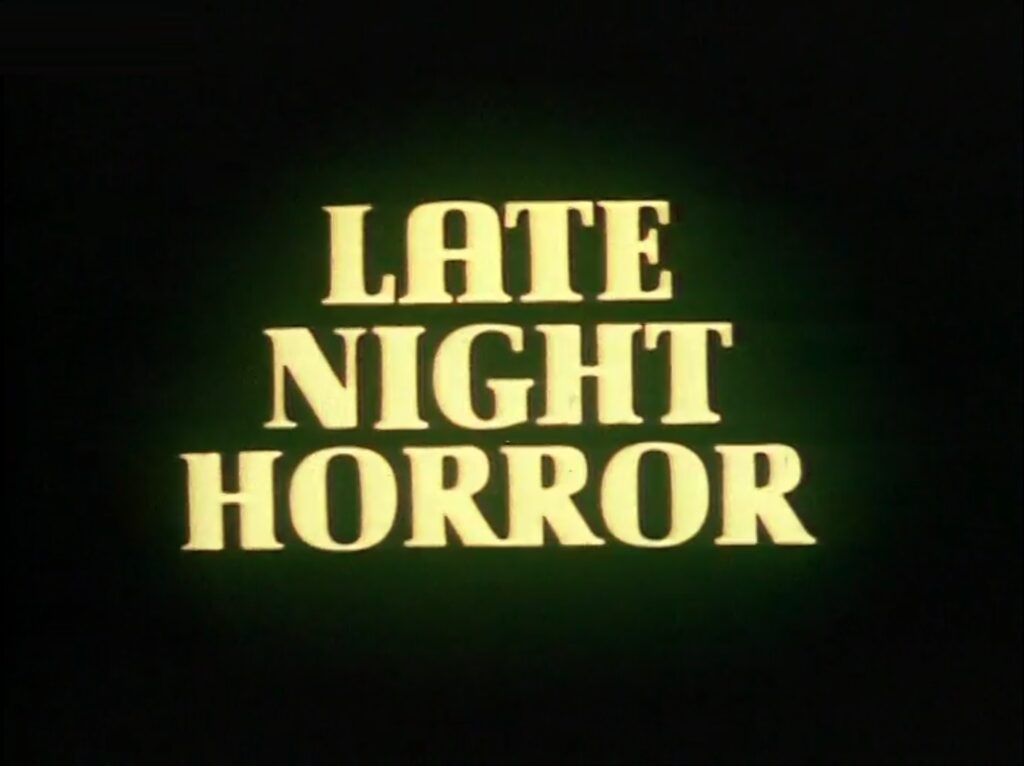
No color production of that period aimed quite as low as the anthology series Late Night Horror — or has since been raised so high in the minds of those who remember it. As cultural legend has it, only six episodes were broadcast before complaints about its power to shock and disturb, or perhaps concerns about its increasing extremity, got it the axe from BBC management. The idea that Late Night Horror was simply too scary for television — or British public television of the late sixties, in any case — has become more compelling over the decades in part because so little of the series itself has survived to receive the judgment of later generations of viewers.
Only in 2016 did archivists discover a film copy of “The Corpse Can’t Play,” a story set at a children’s party that takes a deadly turn. Written by the prolific English novelist John Burke, the episode’s slow burn leads up to a grotesque finish that contrasts almost cheekily with the mundane domesticity of its setting. Alas, the recovered print was in black-and-white, so we don’t get to see the colors, sanguineous and otherwise, that would have made such an impact on viewers of nearly six decades ago.
Just this year, another episode was rediscovered: “No Such Thing as a Vampire” by Richard Matheson, author of I Am Legend and no fewer than sixteen Twilight Zone episodes. As of now, the other four episodes remain missing, and presumably erased under the perpetually cash-strapped BBC’s policy of erasing tapes for re-use in the mid-twentieth century. One of them, “William and Mary,” was based on a Roald Dahl story that had been previously adapted in 1961 for the series Way Out, and would be adapted again in 1979 for Tales of the Unexpected.
At this point, even if a complete set of Late Night Horror tapes were to turn up in someone’s shed, the reality of the show could hardly be expected to compete with what its scattered fragments — especially its still-chilling opening sequence — inspire us to imagine. As every serious horror fan knows, it’s what we don’t see that scares us most. Watch The Twilight Zone’s Pilot Episode, Pitched by Rod Serling Himself (1959) Alfred Hitchcock Presents a Chilling Tale by Roald Dahl (1960) When Roald Dahl Hosted His Own Creepy TV Show Way Out, a Companion to Rod Serling’s Twilight Zone (1961) Alfred Hitchcock Presents Ghost Stories for Kids (1962) Watch the Sesame Street Episode Banned for Being Too Scary, Featuring The Wizard of Oz’s Wicked Witch of the West (1976) Based in Seoul, Colin Marshall writes and broadcasts on cities, language, and culture.
He’s the author of the newsletter Books on Cities as well as the books 한국 요약 금지 (No Summarizing Korea) and Korean Newtro. Follow him on the social network formerly known as Twitter at @colinmarshall. by Colin Marshall | Permalink | Comments (0) | We’re hoping to rely on our loyal readers rather than erratic ads. To support Open Culture’s educational mission, please consider making a donation.
Extract — continue reading at the source.

/https://tf-cmsv2-smithsonianmag-media.s3.amazonaws.com/filer_public/9f/f8/9ff8ea6a-ee2a-4a71-b3ae-277b9efbedd1/assets_ms1995144_000001_photo-2_-a-new-memorial-honoring-at-le-1f8aa4e57be365f2dfea350f2b05f5d0.jpg)