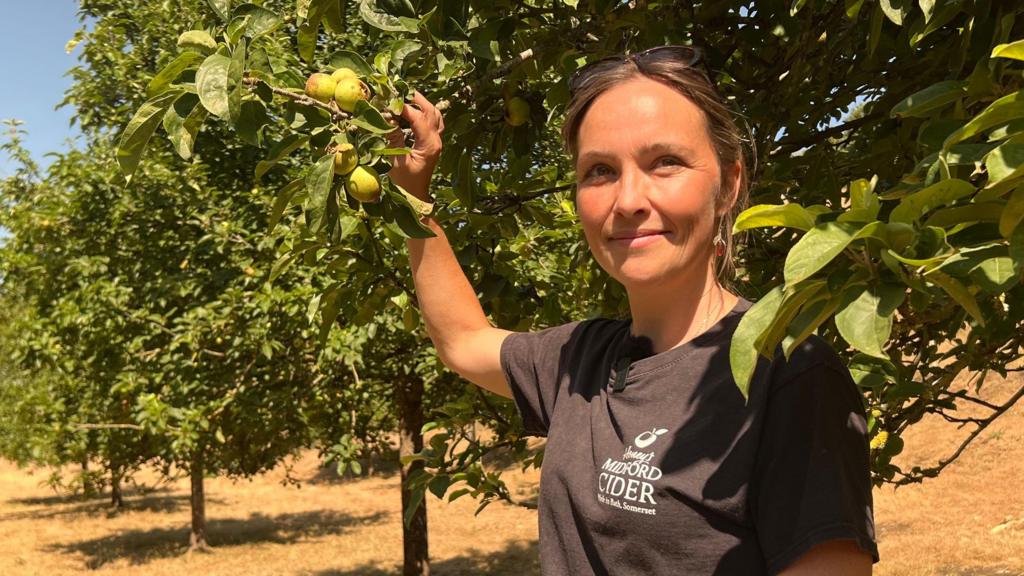
Somerset's famous cider orchards have been 'decimated' by the long summer drought, producers say. Many trees have produced no fruit at all, and others have dropped their fruit early, rotting before they ripened. "It's gut-wrenching," says Kimberly Jones of Honey's Cider near Bath, whose orchard has produced only a 10th of its normal amount of apples.
Neil MacDonald, who manages more than 1,000 acres of Somerset orchards, says he has watched half his apples fall before they have ripened, because the trees are stressed by the drought. "Nothing sells cider like sunshine," he says, "and we've emptied our tanks. "The sadness is we haven't got enough fruit to refill the tanks again." Teenagers arrested after fire destroys businesses Funds needed to repair war memorial pavilion Food influencers v critics: Why credibility counts Walking through Kimberly Jones' orchard just outside Bath, it's hard to see any apples at all.
The trees should be groaning with fruit, she tells me, but "we might get 10% of our normal crop here, and that's generous". The orchard is 25 years old, and this is by far the driest year they have had. Because 2025 was also dry, the trees became stressed, she explained, and this year most have just not made fruit at all, to save their energy.
Unlike the big commercial brands, Honey's Cider is only made from fresh juice. Jones refuses to buy apple concentrate or industrial products. "So we can only make cider from the juice we make each year, which means we will be down this year," she adds.
Ironically, the long hot summer has been "brilliant" for actually selling cider. "Everyone likes a cold cider on a hot day, but we are struggling now to grow fruit for next year," Jones says. On one of Somerset's most famous cider farms, I hear the same story.
Gordon Rich started pressing apples on a farm near Highbridge in 1954. Today his grandson George Scott makes nearly a million litres of cider a year. "We would normally harvest 20-30 tonnes of apples here," he tells me, walking through one orchard.
Extract — continue reading at the source.