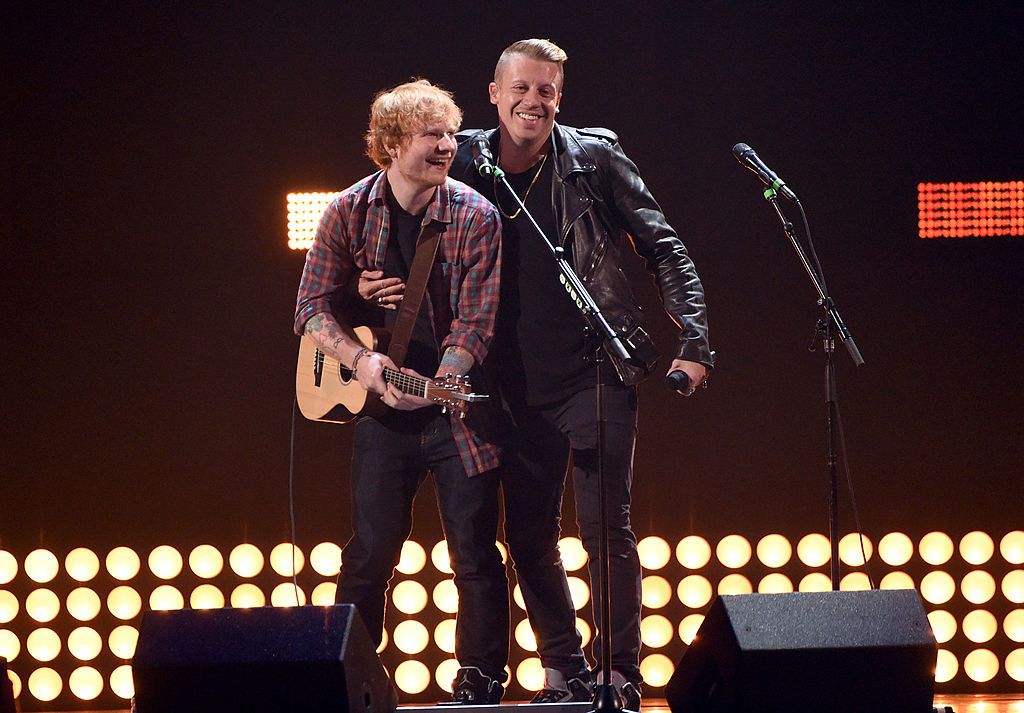
Ed Sheeran is facing intense political scrutiny after Macklemore was dropped as an opener from the U.S. leg of his Loop Tour for pro-Palestinian remarks onstage. Sheeran publicly defended his apolitical stance, but fans, critics and fellow artists immediately pointed to his long record of weighing in on political and humanitarian issues. The fallout has already reshaped the tour, with every remaining support act quitting and Sheeran’s team confronting questions about consistency, accountability and what may happen next as the tour resumes in Philadelphia.
Sheeran’s statement that “There is a reason I do not use my professional platform for politics," collided head‑on with years of documented political engagement. His past advocacy on Ukraine, Brexit, anti‑racism, and support for Jeremy Corbyn now sits under a microscope, raising questions about why Gaza is the exception. The moment has also intensified scrutiny of his relationship with Robert Kraft, the billionaire stadium owner who pushed for Macklemore’s removal, and has reignited debate over whether major artists can ever remain neutral on global conflicts.
Newsweek reached out to Sheeran’s representatives for comment. Sheeran’s claim that he avoids politics is contradicted most visibly by his outspoken support for Ukraine following Russia’s 2022 full-scale invasion. He headlined the televised Concert for Ukraine, telling viewers, “To all Ukrainians, I love you, I stand with you,” and released a charity version of “2step” with proceeds going to humanitarian relief.
Sheeran also responded directly to Ukrainian band Antytila, welcoming them to perform remotely from Kyiv, a moment widely praised as an example of artists using their platforms for geopolitical advocacy. His involvement wasn’t passive. Sheeran leveraged his global reach to raise money, awareness and solidarity, positioning himself firmly within the Western cultural response to the war.
That history now sits in contrast to his insistence that his concerts are “not a political forum." The Macklemore controversy has revived these comparisons. Macklemore’s statement noted that “more than 20,000 children have been killed in Gaza alone,” while Sheeran’s critics argue that if he can speak publicly about Ukrainian suffering, silence on Palestinian casualties feels inconsistent. Sheeran has also weighed in repeatedly on British political issues.
In 2017, he spoke warmly about then‑Labour leader Jeremy Corbyn, saying he “loves everything Corbyn is about” and praising his focus on “all classes, races, and generations.” Though Sheeran insisted he wasn’t a political figure, he made his ideological leanings clear publicly. He also joined more than 100 musicians in signing an open letter urging ministers to address Brexit's impact on touring artists, calling for “paperwork‑free travel in Europe.” The letter directly intervened in a major political debate that affected the livelihoods of British performers. In 2019, Sheeran participated in the Love Music Hate Racism campaign, aligning himself with a movement explicitly aimed at countering far‑right influence in the United Kingdom.
Extract — continue reading at the source.