Parkinson’s disease (PD) is characterized by motor and non-motor symptoms that impair quality of life (QoL). Pharmacological treatments have side effects; therefore, non-pharmacological interventions, including Nordic walking (NW), are recommended to complement treatment and improve symptoms and QoL. However, previous systematic reviews on the effects of NW in PD reported methodological inconsistencies and evidence gaps, and no bibliometric analysis has examined research trends in this field.
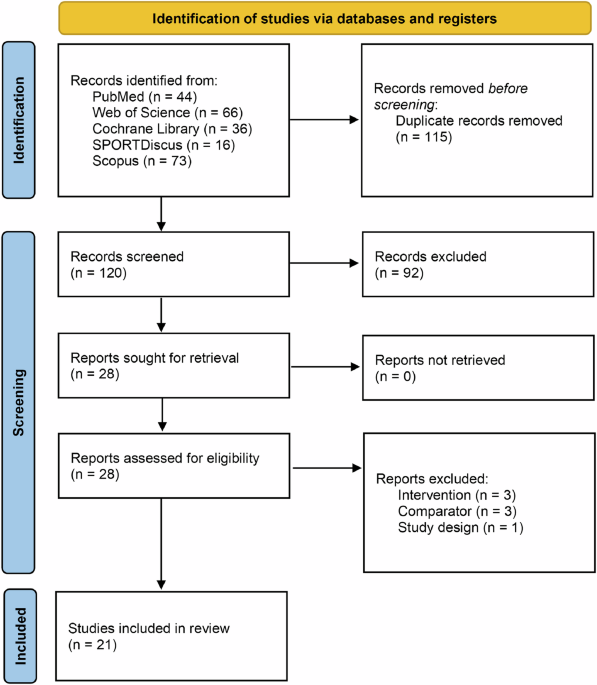
This study aimed to update and synthesize the effects of NW on motor and non-motor outcomes and QoL in PD, and to provide a bibliometric overview of research trends. A systematic search of PubMed, Web of Science, Cochrane, SPORTDiscus, and Scopus was conducted up to March 2025. Twenty-one studies (14 RCTs) were included.
NW interventions improved motor symptoms, functional mobility, walking capacity, balance, QoL, and non-motor symptoms such as depression, cognition, and fatigue. Meta-analyses confirmed clinically meaningful improvements in MDS-UPDRS III scores and 6-minute walk test performance. However, NW was not consistently superior to other active interventions.
Bibliometric analysis revealed a declining publication trend since 2020 and limited international collaborations. Overall, NW appears to be a beneficial supervised exercise option for ambulatory people with PD, although heterogeneity and limited data preclude firm conclusions. Parkinson’s disease (PD) is the second most common neurodegenerative disorder.
It is primarily characterized by bradykinesia, rigidity, tremor and postural instability1. Non-motor symptoms (NMS), including cognitive decline, sleep disturbances, autonomic dysfunction, depression, and anxiety, are also highly prevalent2 and may precede motor symptoms by years3. NMS can be more disabling than motor symptoms3.
As the disease progresses, people with PD (PwPD) experience increasing functional limitations, reduced independence, and lower quality of life (QoL), contributing to significant social and economic burdens4. Given the expected increase in both the prevalence and duration of PD due to increasing life expectancy, reduced smoking rates, and persistent exposure to industrial toxins5, there is a growing need to implement effective strategies to slow progression, manage symptoms, and preserve function. Dopaminergic medications like levodopa and dopamine agonists target dopamine deficiency6; however, their use is limited by side effects, reduced long-term efficacy, and limited effectiveness for non-motor and dopa-resistant motor symptoms4.
Extract — continue reading at the source.


