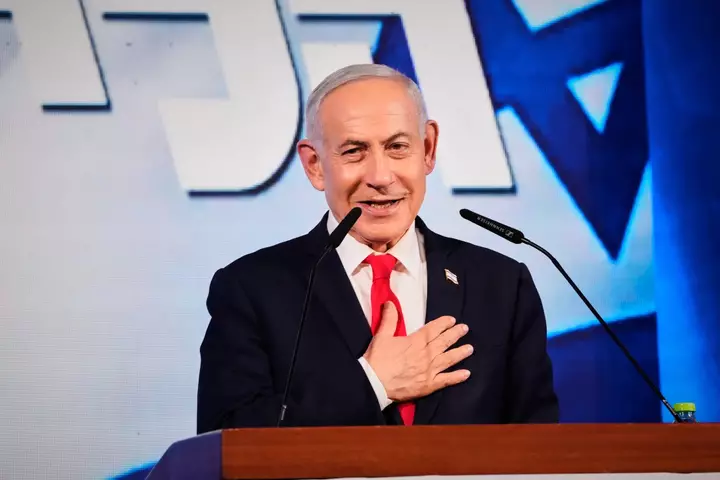
President Donald Trump's stated decision to halt annual payments of nearly $4 billion to Israel may ultimately prove beneficial to Prime Minister Benjamin Netanyahu. The U.S. leader portrayed the surprise move, announced Tuesday amid the midterm elections, as having been taken pursuant to an agreement with the Israeli premier. In fact, it was Netanyahu who "brought it up," Trump said, arguing that the yearly aid offered left-wing critics like Democratic Senate candidate Abdul El-Sayed of Michigan "an easy target" to scrutinize levels of U.S.-Israel alliance assistance that Israeli officials "no longer need." Netanyahu did not immediately comment.
In January and May, he expressed his desire to ultimately wean Israel off U.S. military aid, though Trump's year-end cut-off comes far sooner than most observers anticipated. Still, the Israeli leader, who again put his political survival skills to the test last week during a heated election in which neither he nor his rival secured a majority, has ample opportunity to spin the end of an era of U.S. aid into a win for his policies. "There is no question that assistance has played an important role in Israel’s security," Victoria Coates, former deputy national security adviser to Trump who currently serves as vice president of the Heritage Foundation's Institute for National Security and Foreign Policy, told Newsweek.
"But Israel today is not the Israel of 30 or 40 years ago. It has become a significant military, economic and technological power, and its defense spending has grown substantially." The result, she argued, was "a story of Israeli strength and success, not American abandonment." The U.S. has provided varying degrees of assistance to Israel since the country's 1948 founding. It began with primarily economic and humanitarian aid in the immediate post-World War II period and eventually shifted into larger security packages amid growing Cold War-era geopolitical conflict and competition in the Middle East.
By the 1990s, U.S. economic aid to Israel had already begun to wind down as the nation's domestic industrial base rapidly developed. Yet regular military funding continued to grow through successive arrangements established under former Presidents Bill Clinton, George W. Bush and Barack Obama, with whom Netanyahu reached the memorandum of understanding worth $3.8 billion annually in 2016.
The vast majority of this sum, around $3.3 billion, goes largely into financing Israel's purchase of U.S. military equipment. The remaining roughly $500 million supports joint missile defense programs. Former President Joe Biden further expanded assistance to Israel following the outbreak of the war in Gaza in October 2023, showcasing Washington's flexibility in coming to its longtime ally's aid.
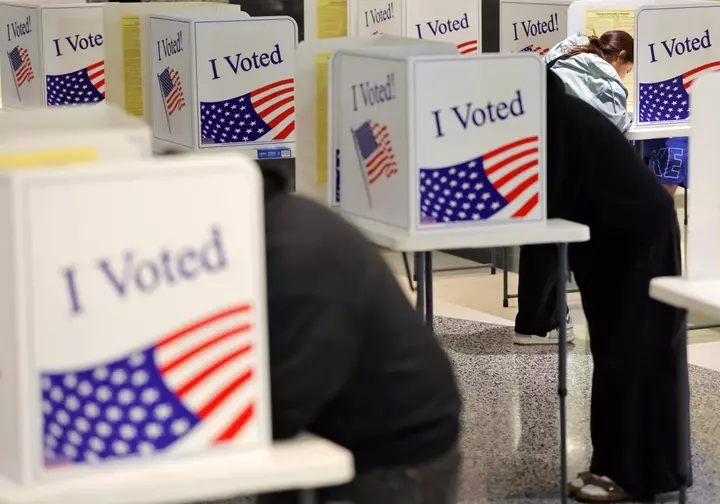
By May 2024, however, the Biden administration withheld the sale of certain heavy munitions over humanitarian concerns, demonstrating a conditional nature to the relationship and its vulnerability to political pressures. Those pressures were once again on full display for Tuesday's U.S. midterm elections as criticism against Netanyahu became a central feature of campaigns led by El-Sayed and other progressive candidates. El-Sayed offered a backhanded endorsement of Trump's shift on aid to Israel, telling reporters at an Ann Arbor polling site, "Even a broken clock can be right twice a day," according to The Wall Street Journal.
Extract — continue reading at the source.