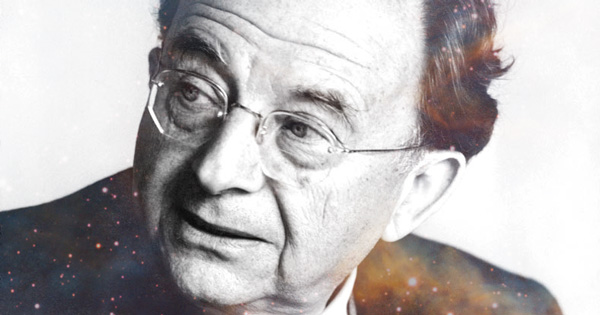
The great physicist David Bohm knew this: “If we are to live in harmony with ourselves and with nature,” he wrote in his excellent and timely treatise on the paradox of communication, “we need to be able to communicate freely in a creative movement in which no one permanently holds to or otherwise defends his own ideas.” How to do that is what the influential humanistic philosopher and psychologist Erich Fromm (March 23, 1900–March 18, 1980) explored in a 1974 seminar in Switzerland, the 400-page transcript of which was eventually adapted into the posthumously published The Art of Listening (public library). Listening, Fromm argues, is “is an art like the understanding of poetry” and, like any art, has its own rules and norms. Drawing on his half-century practice as a therapist, Fromm offers six such guidelines for mastering the art of unselfish understanding: In the remainder of the The Art of Listening, Fromm goes on to detail the techniques, dynamics, and mindsets that make for an optimal listening relationship, in therapy and in life.
Complement it with Ursula K. Le Guin on the magic of real human communication and Alain de Botton on what makes a good communicator, then revisit Fromm on the art of living, the art of loving, how to transcend the common laziness of optimism and pessimism, and the key to a sane society. — Published September 6, 2026 — https://www.themarginalian.org/2026/09/06/erich-fromm-the-art-of-listening/ — The Marginalian participates in the Bookshop.org and Amazon.com affiliate programs, designed to provide a means for sites to earn commissions by linking to books. In more human terms, this means that whenever you buy a book from a link here, I receive a small percentage of its price, which goes straight back into my own colossal biblioexpenses.
Privacy policy. (TLDR: You're safe — there are no nefarious "third parties" lurking on my watch or shedding crumbs of the "cookies" the rest of the internet uses.)
Extract — continue reading at the source.