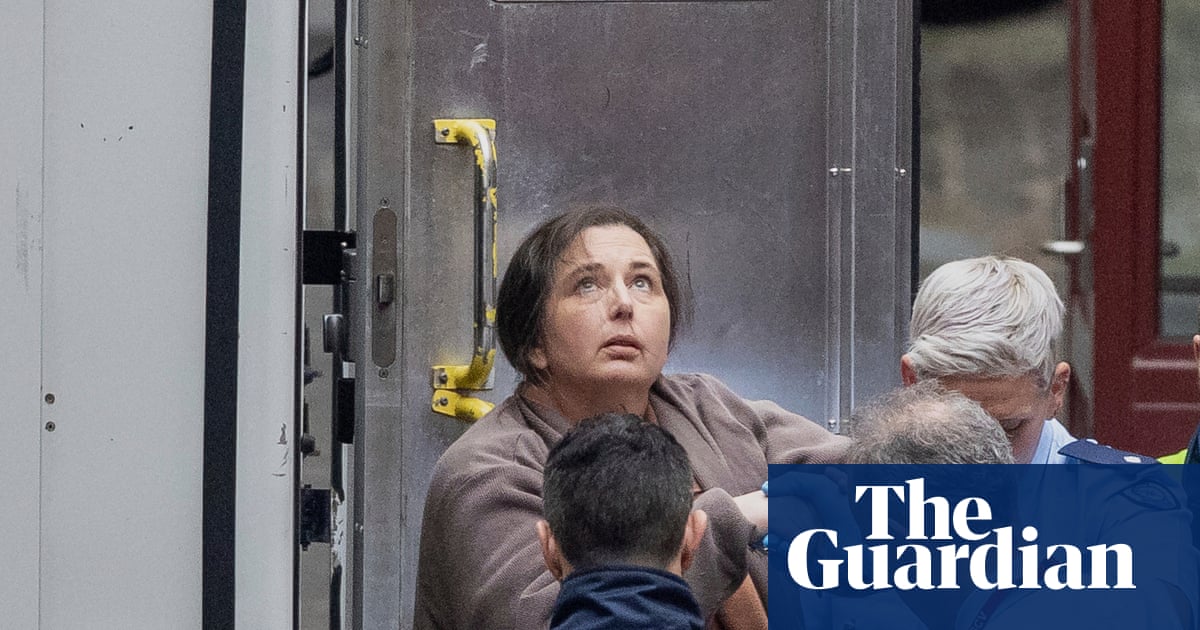
Lawyers for Erin Patterson have argued that allowing jurors to stay in the same hotel as police and the prosecution while they deliberated over their verdicts in the triple-murder trial represented a “catastrophic” failure of the justice system. But the prosecution say it was far from a catastrophe, and showed the system worked as it should. On Wednesday, three judges of Victoria’s highest court started hearing two appeals – by Patterson herself and the state’s director of public prosecutions (DPP) – into the conviction and sentence in the case.
Patterson, 51, is appealing against her convictions, while the DPP appealed against the sentence handed down to Patterson, arguing it is “manifestly inadequate”. In September, Patterson was sentenced to life imprisonment, with a non-parole period of 33 years, for the murders of her estranged husband’s parents, Don and Gail Patterson, and his aunt, Heather Wilkinson. She was also convicted of the attempted murder of Heather’s husband, Ian Wilkinson, who survived the lunch and spent weeks in hospital.
Wilkinson was among a group of extended Wilkinson and Patterson family members in court for the hearing. Patterson watched proceedings via video link from Dame Phyllis Frost centre, a women’s prison, and did not speak during the hearing. Richard Edney, for Patterson, told the court of appeal on Wednesday that the failure to properly separate the jury during their deliberations – a process known as sequestering – was a fundamental irregularity that had denied her a fair trial.
The jury stayed in the same hotel as the police informant – the homicide squad detective in charge of the case – and lawyers from the office of public prosecutions while they deliberated on their verdicts. Sequestering does not occur during every criminal trial, with Patterson’s lawyers arguing in their written submissions regarding the appeal that it was “an exceptional step to be taken only for an exceptional case”. Edney said on Wednesday that it undermined the principle for justice “not only to be done, but to be seen to be done”, during one of the most high-profile trials in Victorian history.
But he agreed there was no evidence any communication occurred, though argued that communication need not be verbal. Justice Peter Kidd said there was no evidence that occurred either, nor that the jurors had regularly been separated from the official who ensures the integrity of their deliberations, the jury keeper. Her second ground is that cell tower evidence and evidence of death cap mushroom sightings in Loch and Outtrim posted to a citizen science website should not have allowed in the trial as it was not relevant, or its value was outweighed by its unfair prejudice to Patterson.
The evidence on cell tower evidence, given by expert Dr Matthew Sorrell, was used by the prosecution to draw an inference that Patterson could have attended two locations reported on iNaturalist where death cap mushrooms had been sighted. Patterson’s defence barrister, Veronika Drago, described the evidence as “dangerous” and “unfair”. The third ground argues that trial judge Christopher Beale erred in ruling that photos and videos related to mushrooms and found on an SD card in Patterson’s home was inadmissible, as it tended to support her evidence that she foraged for mushrooms.
Extract — continue reading at the source.