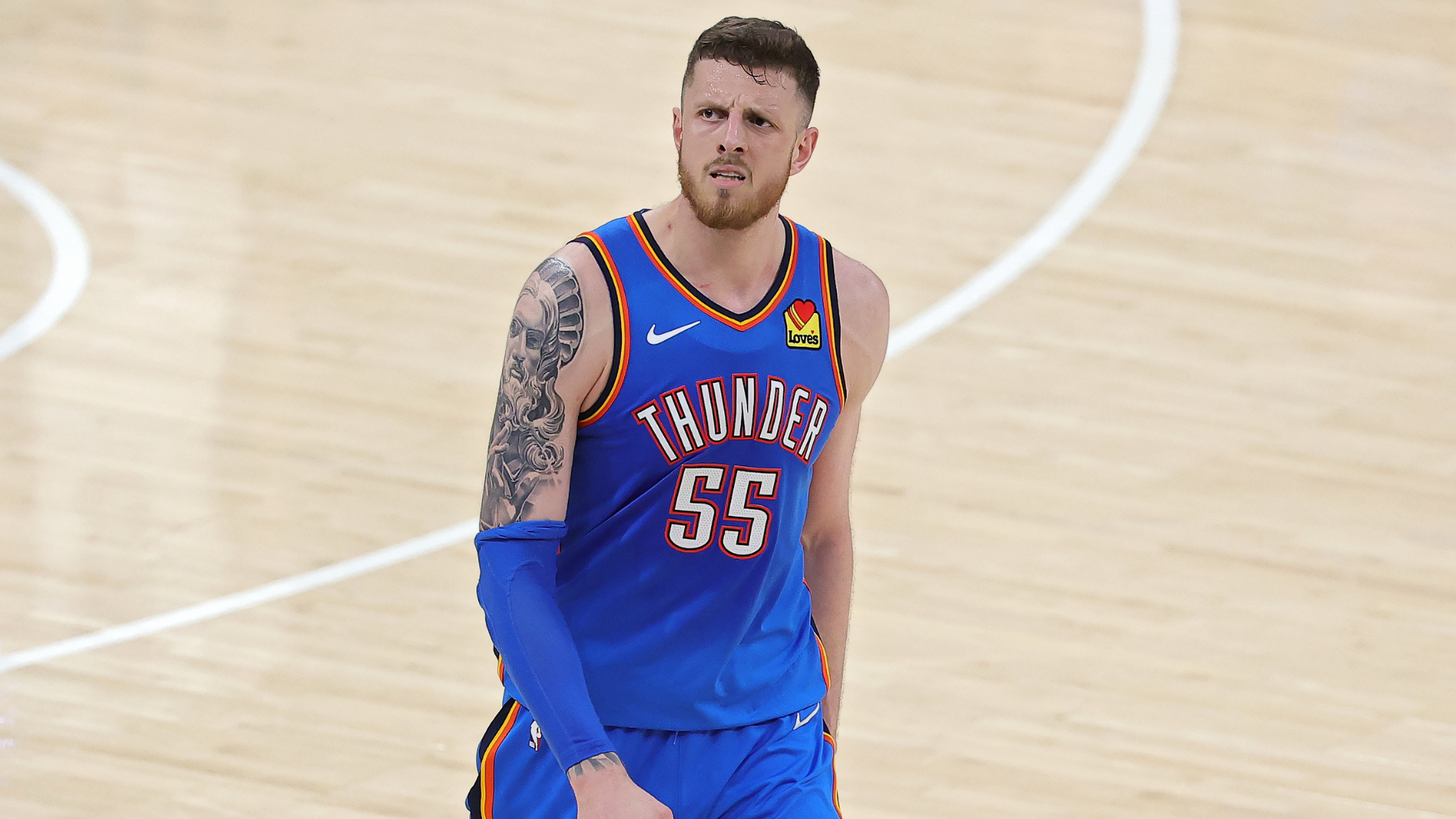
In late June, the Oklahoma City Thunder re-signed Isaiah Hartenstein to a three-year, $75 million contract. On the surface, it was a pretty standard deal for a high-end starting center -- until you looked at the fine print. Included was a mutual option for the 2028-29 season, the final year of the deal.
ESPN's Bobby Marks told Jake Fischer that it was the first mutual option he could remember in a contract since the Toronto Raptors gave Jerome Williams one in 2001. In fact, according to Fischer, several teams didn't even know such options were possible. And yet, as he so often has, Thunder general manager Sam Presti has once again become a roster-building trailblazer.
We've seen five mutual options come since Hartenstein's, and they land all across the contractual spectrum: In the span of a single offseason, we have gone from 25 years without mutual options to mutual options becoming a burgeoning industry standard. How do these options work? And could they become an antidote to the daunting luxury tax aprons that have so dominated roster-building discourse over the past several years?
Let's dig into the NBA's newest contractual trend. A typical option gives one party the power to decide whether to continue the contract into its final year. A player option allows the player to decide whether to stay with the team at his predetermined salary or become a free agent, while a team option gives that power to the team.
In the case of a mutual option, either party can unilaterally decide whether to continue the contract. If the player feels he cannot get a better deal in free agency, he can elect to stay and the team cannot object. But if the team feels the player is a bargain on his option number, it can elect to keep him at that figure regardless of how the player feels.
The player only becomes a free agent if both sides elect to make him one. There are two pretty clear use cases for mutual options. The first is when a team and a player are simply sick of each other and want a separation that a trade, for whatever reason, cannot offer.
Extract — continue reading at the source.