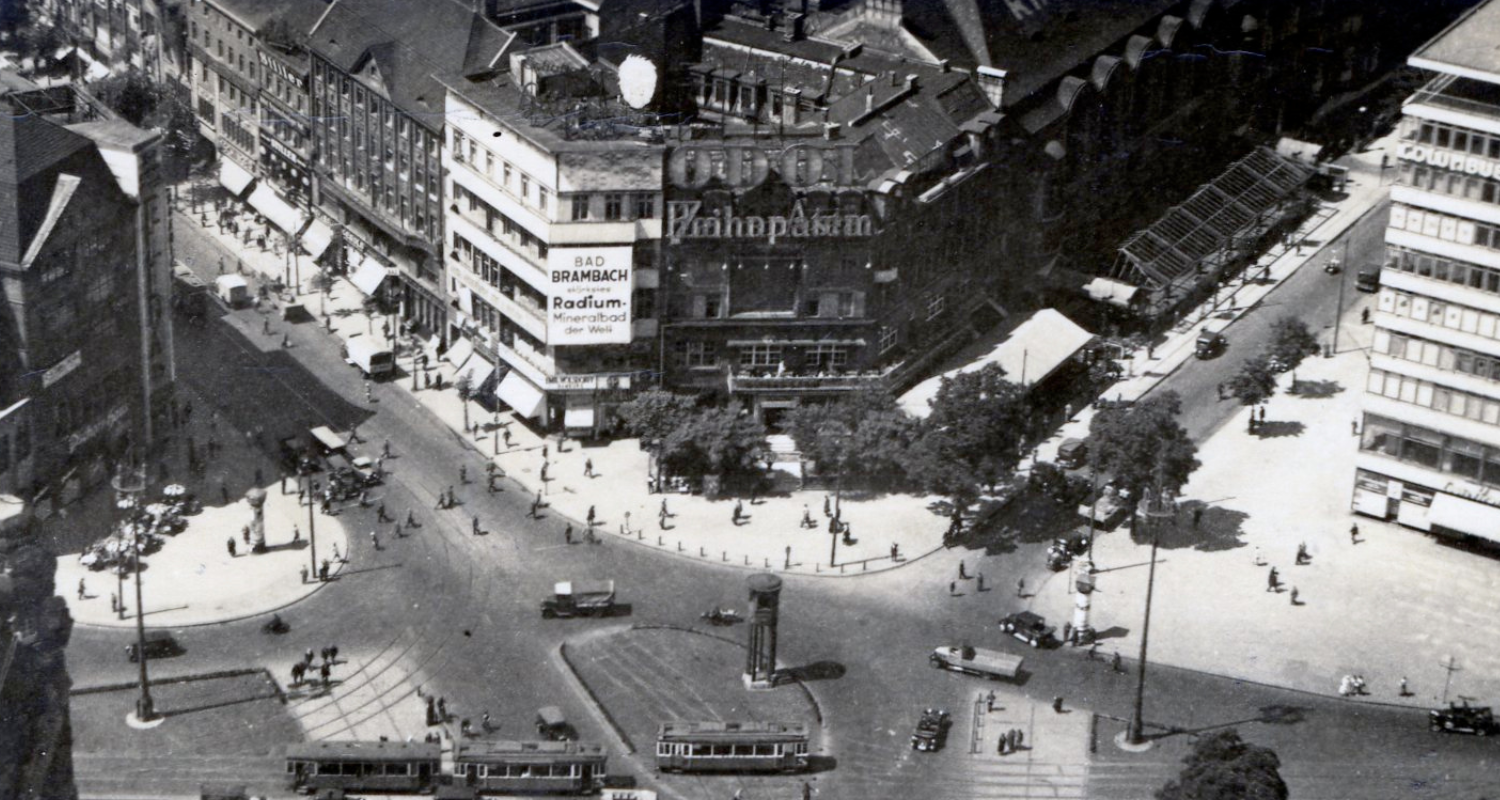
It is capitulating out of weakness, out of sloth, out of apathy, out of lack of imagination. It will be the task of some future generation to establish the reasons for this disgraceful capitulation.” In 1930, the Communist stronghold of Friedrichshain in eastern Berlin was a run-down slum district of red-light areas, cheap bars and tenement blocks; casual violence was endemic. On the night of January 14, after some drinking, two young men started brawling and the incident turned bloody—an average Tuesday evening in this part of the city at this time.
One of the men was a twenty-one-year-old Nazi stormtrooper called Horst Wessel, the son of a Protestant military chaplain, who had abandoned his home and his law studies at university to live with a young prostitute, Erna Jaenichen. The other was Albrecht Hohler, thirty, a Communist member of the paramilitary group the Red Front Fighters and well known locally as a particularly vicious thug—a petty criminal who had been released from jail only a few months earlier. Despite their political differences, both earned a meager existence in the same line of trade: they were pimps.
But their fight had nothing to do with either politics or business. Wessel owed rent for the room he shared with Jaenichen on Grosse Frankfurter Strasse (in the twenty-first century, a part of Karl Marx Allee in Berlin Mitte). Hohler knew the landlady who had sublet the room, Elizabeth Salm, and he had promised her he would make Wessel pay his arrears in rent.
When they met in the room at around 10pm, Wessel refused to hand over the money, according to Hohler’s account to the police later, and they started fighting. Both were armed but Hohler managed to get hold of Wessel’s gun and shot him in the stomach. Wessel was rushed to hospital; Hohler was arrested a couple of days later.
Goebbels knew the value of fake news and was an expert in manufacturing it. It was hardly, on the surface, an episode from which heroes are made. Yet the moment he heard the story, Goebbels saw the propaganda opportunity it afforded.
He understood how important a martyr would be to the Nazis and, since he had taken over as party boss in Berlin, he had been on the lookout for a young man whom he could build up to die a hero’s death for the cause. He alighted on Wesssel, and he invented an entire biography of “the martyr for truth” (minus his profession).* Wessel was in the hospital for six weeks before he died of sepsis on February 23. In Der Angriff, Goebbels issued condition reports from the bedside every day, alleging the death was “murder” and an act of terrorism committed by a “subhuman Communist,” along with another Leftist accomplice, who was never implicated or charged with any offense.
Extract — continue reading at the source.