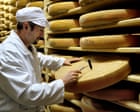
Strict production rules will be loosened for some of France’s most famous cheeses after drought and repeated heatwaves dried out grazing pastures, threatening the livelihoods of traditional dairy workers. Comté, a hard cheese made from raw cows’ milk in the Jura mountains, is France’s top-selling traditional cheese, with more than 62,000 tonnes produced last year. The government announced on Wednesday that its producers would be granted a temporary change to strict rules on grazing after farmers said extreme heat had scorched their pastures, putting production at risk.
Makers of beaufort and abondance, two cheeses made from cows grazed in the Alps, were also granted temporary changes to production rules because of the impact of the drought on grazing land. All three cheeses carry the coveted label “appellation d’origine protégée” (AOP, protected designation of origin) to ensure their authenticity and protect traditional farming methods. This means producers must follow rigid rules on where their animals graze and what they eat.
But the drought, which affected 95% of mainland France in July, has left normally rich green pastures dry, yellow and bare. French authorities said makers of comté, beaufort and abondance could temporarily supplement the animals’ diet with more fodder and grain brought in from elsewhere. The National Institute of Origin and Quality (INAO), the government agency that administers and enforces rules on traditional food production, told it was also planning to grant temporary relief for the producers of several other cheeses including reblochon, cantal, bleu d’Auvergne, and fourme d’Ambert.
It said the drought was “historic”. Droughts are becoming more common and more severe in some parts of the world, including Europe, the fastest-warming continent, due to human-caused climate breakdown. France’s numerous cheeses are a source of national pride and a key part of identity and local economy in rural areas.
Hubert Genty, a dairy farmer who produces neufchâtel cheese in Richemont in Normandy, said: “There really is no grass left to eat, this grass is totally scorched and has no value.” He told the TF1 TV channel his cows were producing less milk, which in turn would affect cheese production. His wife, Angélique, who makes the heart-shaped cheeses by hand in the farm’s dairy, said she usually made 600 to 700 cheeses a day at this time of year and was now down to making 400-450 because of the low milk yield. She said she would struggle to meet customers’ demands.
Farmers in many traditional French cheesemaking areas have warned about the damage of the drought and heatwaves. About 70% of producers of salers cheese, which has a protected AOP label, had to pause production over the summer because of the drought, the local newspaper La Montagne reported. Makers of roquefort have also called for a temporary easing on their traditional rules on grazing sheep, after many pastures were left scorched.
Extract — continue reading at the source.


