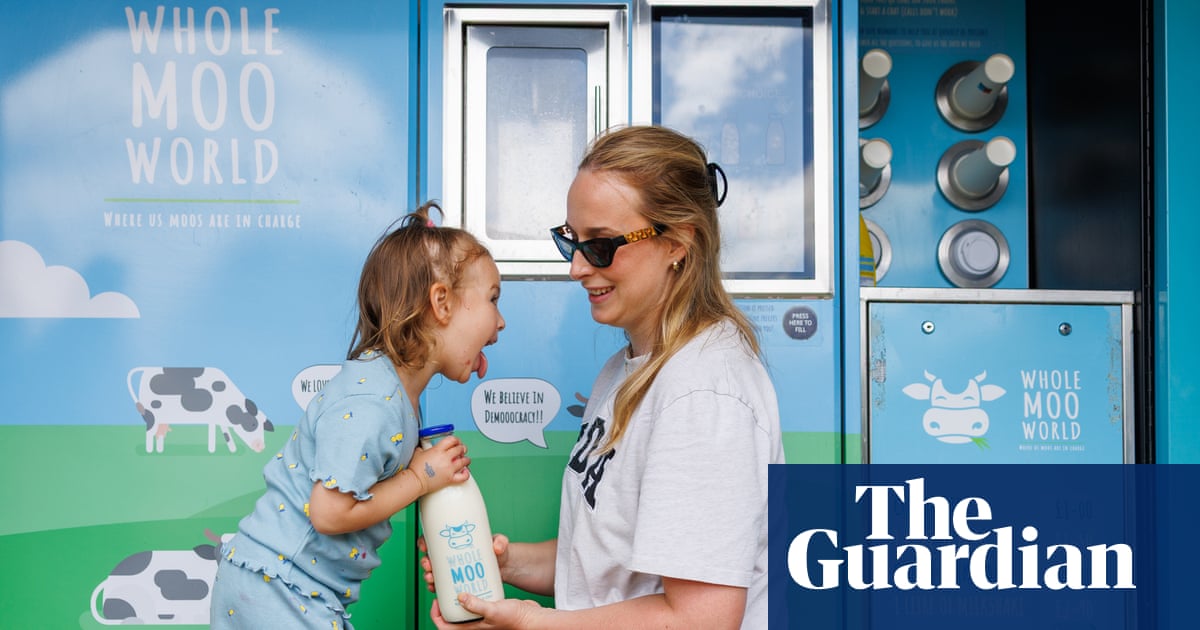
Fizzy drinks, packets of crisps and bars of chocolate: for decades, vending machines were known as a place to grab a quick snack. Now one family of farmers is trying to change that by bringing vending machines offering fresh milk and local produce – including scotch eggs, sausage rolls and brownies – to villages and other rural locations. Mark James, 70, and his sons Sam, 39, and Jacob, 36, first trialled vending machines as a way of selling their milk directly to consumers, giving themselves more control over the price they receive.
The remaining 70% is sold to a local milk processor. When Whole Moo World took off, Jacob and Sam branched out into retailing cakes, sandwiches and other treats made by small local producers from vending machines. Their business, Tuckshop, now has 22 sites, mostly alongside the milk machines, and also allows them to sell empty glass bottles for milk.
Jacob says farmers are “waking up” to the advantages of selling directly to consumers, even if they do not have a suitable location or the funds needed to build their own farm shop. He believes vending machines could be the answer for villages and small rural communities at risk of becoming “food deserts”, where lower-income households struggle to find fresh healthy food amid closures of local shops and poor public transport. They also promise a more profitable way for squeezed farmers to reach customers directly and avoid expensive fees for intermediaries.
Dairy producers in Britain and beyond have suffered in recent years from a boom and bust price cycle, where the price of milk, a globally traded commodity, has been extremely volatile. Strong global demand for dairy has usually led to farmers increasing their herd size and upping production, followed by oversupply and a crash in the milk price. Farmgate milk prices began to tumble again earlier this year, Mark says.
Margins in the industry have always been tight and UK supermarkets have traditionally used low milk prices to tempt shoppers through the door, and the milk processing sector is dominated by three main players – Arla, Müller and First Milk. British supermarkets are currently charging between £1.20 and £1.30 for a two-pint, or 1.1-litre, bottle of milk. Whole Moo World customers pay £1.50 for a litre of the family’s unhomogenised milk – where the cream has not been separated from the milk during processing – delivered into a refillable glass bottle, which customers can buy once in the vending machines and wash and reuse.
A litre of milkshake – with flavours including chocolate, strawberry, banana and specials such as mint choc and blueberry muffin – costs £2.90. Mark James says customers are prepared to pay a small premium for milk that, he says, tastes creamier and is more environmentally friendly thanks to the use of glass bottles. This is the Jameses’ second stint as dairy farmers.
Extract — continue reading at the source.