No larger than the head of a match, Potamopyrgus antipodarum doesn’t look very impressive. Few people visiting New Zealand’s Lake Alexandrina even notice the tiny gastropods littering the shores. The snail’s diminutive size, however, conceals a massive secret.
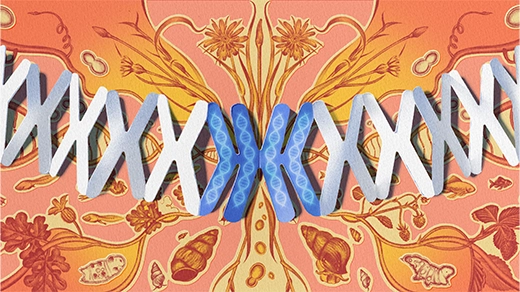
Sometime in the recent past, its genome doubled. Instead of having two sets of chromosomes and two copies of every gene, the way most animals do, it has three or four — significantly more genetic material than it ought to have. Scientists suspect that an organism inheriting three, four, or more sets of chromosomes instead of two (a condition called polyploidy) is, in most cases, a fatal error of cell division.
Only a tiny fraction of whole-genome duplication events are thought to stabilize in a lineage. But those that do can have significant consequences.
Extract — continue reading at the source.