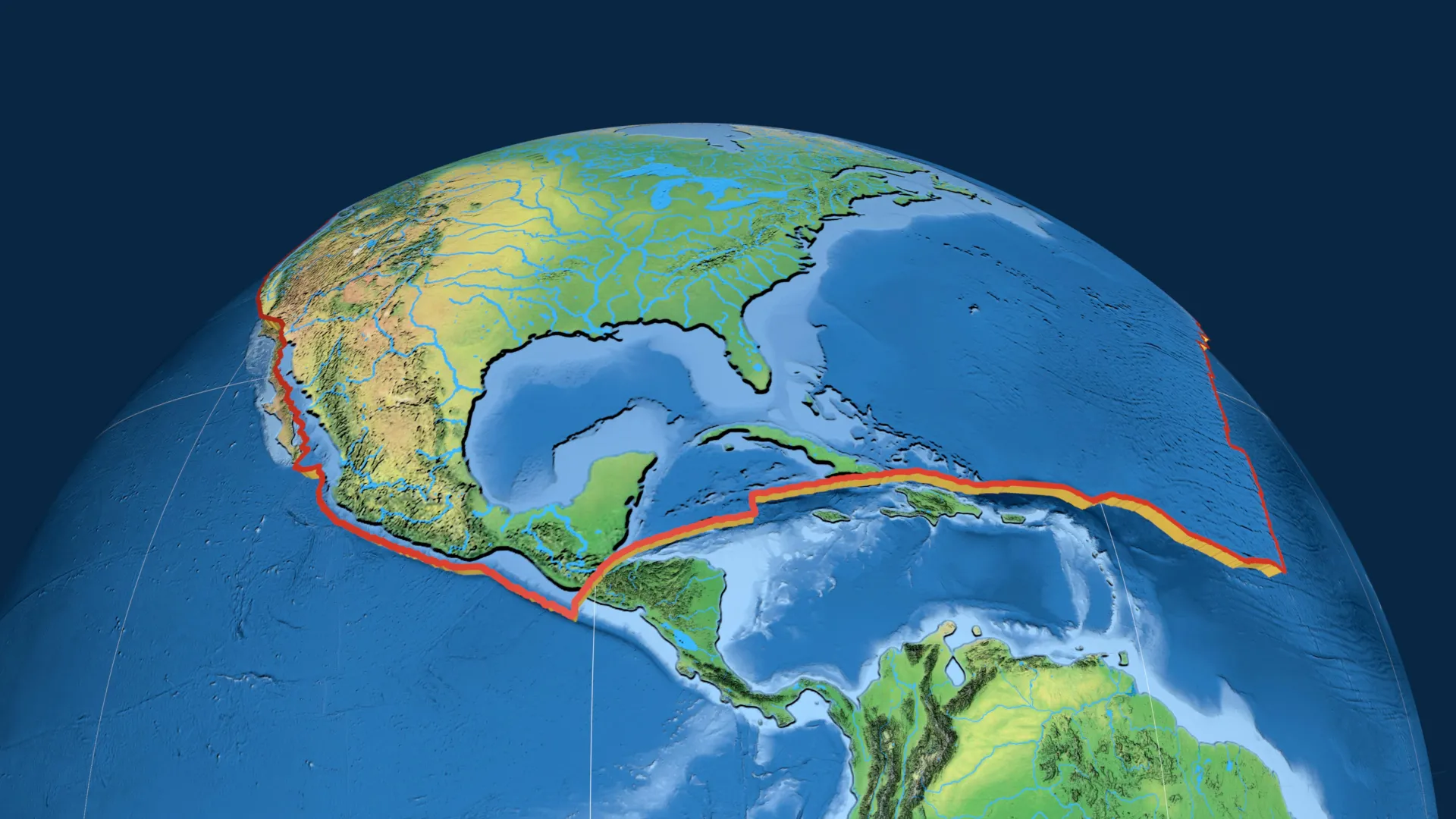
A new study in Earth and Planetary Physics is changing scientists' understanding of when Central America and South America underwent one of the major tectonic collisions that helped shape the Americas. By examining the magnetic characteristics of volcanic rocks in Colombia's Northern Andes, researchers found evidence that the main phases of collision took place earlier than previously believed, before about 10 million years ago. The research was led by Victor Piedrahita (first author) and J.
Li (corresponding author), along with an international group of geoscientists. Their work centered on late Miocene volcanic rocks (approximately 12-6 million years old) from the Combia Volcanic Province in central Colombia. These rocks formed during a key period when the South American Plate was interacting with the continental portion of Central America.
Magnetic Clues Preserved in Volcanic Rocks To reconstruct what was happening tectonically at the time, the researchers used magnetic fabric analysis. This technique studies the orientation of magnetic minerals inside rocks and can reveal whether their internal structure reflects original volcanic processes or later deformation caused by tectonic forces. "Volcanic rocks can preserve a remarkably detailed record of geological processes," says Dr.
"Their magnetic fabrics help us determine whether deformation occurred before, during, or after the rocks were emplaced." The team found that many of the volcanic rocks still retain primary magnetic fabrics created by magma movement or volcanic debris flows. That suggests they experienced little or no major tectonic deformation during the late Miocene. Some locations did preserve signs of deformation, but those effects were relatively limited in both strength and geographic extent.
Major Tectonic Deformation Had Already Weakened Taken together, the evidence indicates that the strongest crustal shortening and collision-related deformation in the Northern Andes had mostly ended before the late Miocene. In other words, by the time these volcanic rocks were forming, the most intense phase of tectonic compression had already passed. "Our data indicate that the most significant collisional events between Central and South America occurred earlier than we previously thought, mainly during the Oligocene-middle Miocene," explain Piedrahita and Li.
"By the time these volcanic rocks formed, tectonic deformation had become weaker and more localized." The findings could help scientists improve models of how the Andes formed and better understand how interactions between tectonic plates influenced the geological development of the Americas. The study also highlights how magnetic techniques can be used to reconstruct ancient tectonic activity in volcanic regions. The research was supported by grants from the National Natural Science Foundation of China (NSFC), awarded to J.
Extract — continue reading at the source.