The 2016 election changed how Tanya Miller felt about politics. The 2024 election — President Donald Trump’s defeat of then-Vice President Kamala Harris — changed how she saw her career. It was personally devastating to watch as a Black woman.” But then she saw Democratic attorneys general across the country standing up to Trump.
She looked at her career and thought about her daughter, about the history of the Civil Rights Movement in Georgia — and knew she could do that, too. Now Miller, who successfully ran for Georgia’s state legislature in 2022, is on the ballot again, this time running for attorney general. Miller is far from alone in feeling her background and lived experiences made her ready to meet this political moment.
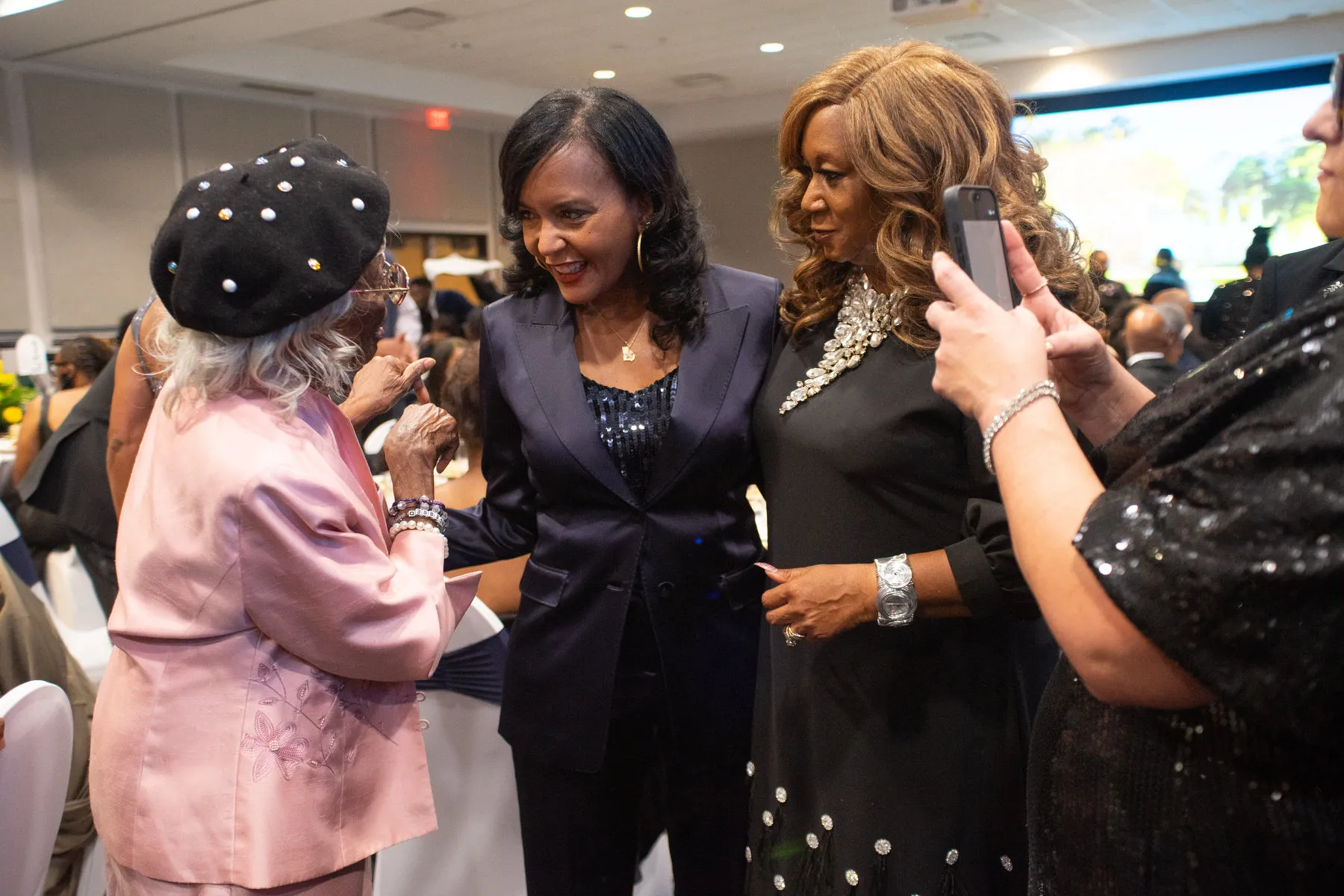
She’s one of eight Black Democratic women whom Georgia voters will have the chance to vote for in 10 statewide elections this year, a new record in the state. Heading the ticket is Keisha Lance Bottoms, the former mayor of Atlanta, who would be the first Black woman governor not just in the state but in U.S. history. Joining them are Judge Penny Brown Reynolds, running for secretary of state; Katherine Juhan-Arnold, running for agriculture commissioner; Keisha Waites, running for insurance commissioner; Nikki Porcher, running for labor commissioner; Sheila Edwards, running for public service commissioner; and Lydia Powell, running for school superintendent.
It’s a moment not lost on the women who are running. Her decision to run for secretary of state is directly connected to what she sees happening around her: the attacks by the Trump administration on diversity, equity and inclusion programs, Black women facing disproportionate job losses, the assault on voting rights. The gubernatorial race between Bottoms and billionaire Republican healthcare executive Rick Jackson is rated as a toss-up; recent polling by the Atlanta Journal-Constitution in the down-ballot statewide races shows tight contests.
Winning statewide as a Democrat in Georgia is challenging, even as the state has gotten more blue in recent cycles. That’s especially true for Black women. Stacey Abrams’ gubernatorial losses in 2018 and 2022 and Harris’ presidential loss in 2024 hang over Black women candidates.
But the win-loss record for Black women is only a small part of the narrative, said Nadia Brown, a professor of government at Georgetown University and a scholar on intersectionality, politics and identity. Their work registering and mobilizing voters helped redefine what organizing and voter activation can mean for Black women throughout the South, and Georgia specifically. It’s work that also doesn’t always yield results in real time but rather changes the electorate going forward.
Extract — continue reading at the source.