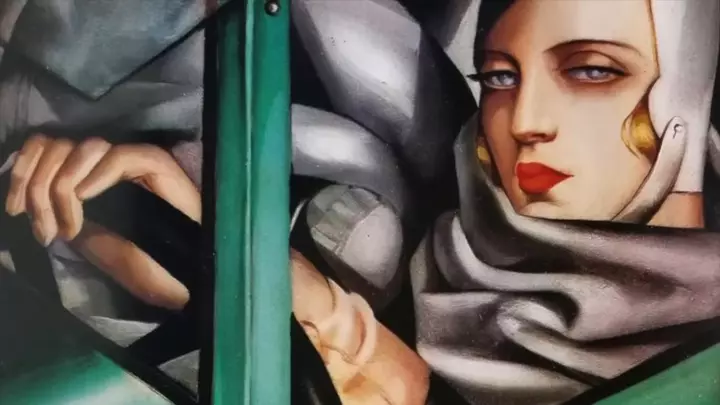
The Polish painter Tamara de Lempicka (1894-1980) was a defining figure of Art Deco: an aesthetic movement of the early 20th century that fused modernist geometry with excitement and glamour to capture a new faith in progress. Her paintings frequently convey unapologetic female autonomy and desire amid the Jazz Age. In this instalment of the YouTube series Great Art Explained, the curator and video essayist James Payne and the art historian Laura Beardsell-Moore explore how Lempicka’s life and times shaped her work – from her affluent upbringing and flight from the Russian Revolution to her experience in 1920s Paris.
In particular, they dissect how her most famous painting, Autoportrait (Tamara in the Green Bugatti) (1929), depicted nothing less than a new, deeply modern conception of womanhood. The female Abstract Expressionists of New York shook the world of art Not just a meme, but a masterpiece – why the Mona Lisa earns its exalted place in art Creating art that was aware of itself – and the viewer – made Manet the first modernist More than breathtaking, ‘The Birth of Venus’ signalled an aesthetic revolution ‘Long Live Degenerate Art’ – how a Surrealist group in Cairo defied repression in 1938 To restore a painting takes the combined skills of a surgeon, a detective and an inventor Why Diego Velázquez needed a lifetime to paint his enigmatic masterpiece Can you see music in this painting? How synaesthesia fuelled Kandinsky’s art Does the artist’s intention matter, or is it indeed all in the eye of the beholder?
Extract — continue reading at the source.