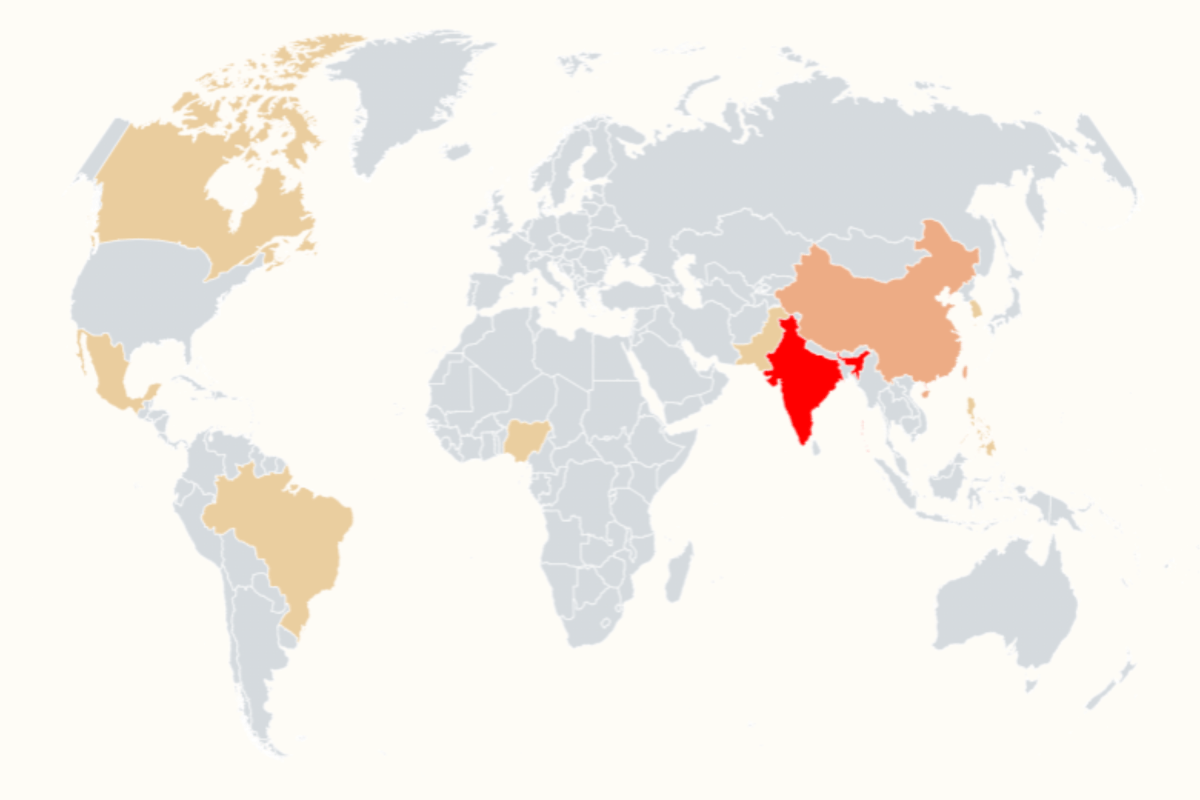
A new map shows nations most exposed to the Trump administration's new visa block, which will prevent multiple tech companies, including Microsoft and Adobe, from applying for green cards for their H-1B visa holders, saying they would no longer steal jobs from American workers. Vice President JD Vance led the announcement on Thursday and said companies seen as using the green card pathway to hire cheap labor and undercut American workers would have their access to the PERM program suspended. "This is a terribly pernicious system.
It's gone on for too long, and we'd all encourage, by the way, Congress do something about it," Vance said, going on to add that the system is “not working in the way that it should.” In the announcement, Vance cited Microsoft as an example of alleged abuse. Microsoft, in a subsequent statement, said, “The vast majority of Microsoft employees in the United States are Americans.” Meanwhile, U.S. Secretary of Labor Keith Sonderling said IT outsourcing firms Cognizant, Infosys, Tata, Wipro, HCL, and Capgemini would all be suspended from the program.
Adobe and Microsoft's suspensions were due to "multiple active federal investigations," Sonderling said. Newsweek reached out to all affected companies for comment via email on Thursday. India is the nation most exposed to the block – the USCIS fiscal report to Congress shows that Indian-born beneficiaries account for 70 percent of H-1B petitions approved in the 2025 fiscal year.
China followed, with 49,161 beneficiaries. The margins were smaller for the rest of the countries in the top ten. The Philippines had 5,546 beneficiaries, Canada had 4,382, South Korea had 4,195, Mexico had 3,390, Pakistan had 3,380, Taiwan had 3,161, Brazil had 2,876, and Nigeria had 2,420.
The H-1B visa program allows U.S. employers to hire foreign workers in specialty occupations, which typically require at least a bachelor's degree, particularly in fields such as technology, engineering and health care. The program has faced criticism from some Republican lawmakers under the Trump administration who argue that employers can use H-1B visas to undercut American workers and wages. More broadly, there has been scrutiny of employment-based immigration, with federal officials focusing on alleged visa fraud, labor violations and the protection of both U.S. and foreign workers.
However, demand for H-1B visas remains strong. Citizenship and Immigration Services (USCIS) announced on July 17, 2026, that it had received enough petitions to reach the fiscal year 2027 cap, including 65,000 regular H-1B visas and 20,000 places under the U.S. advanced degree exemption. The announcement was met with a mixed response online.
Extract — continue reading at the source.