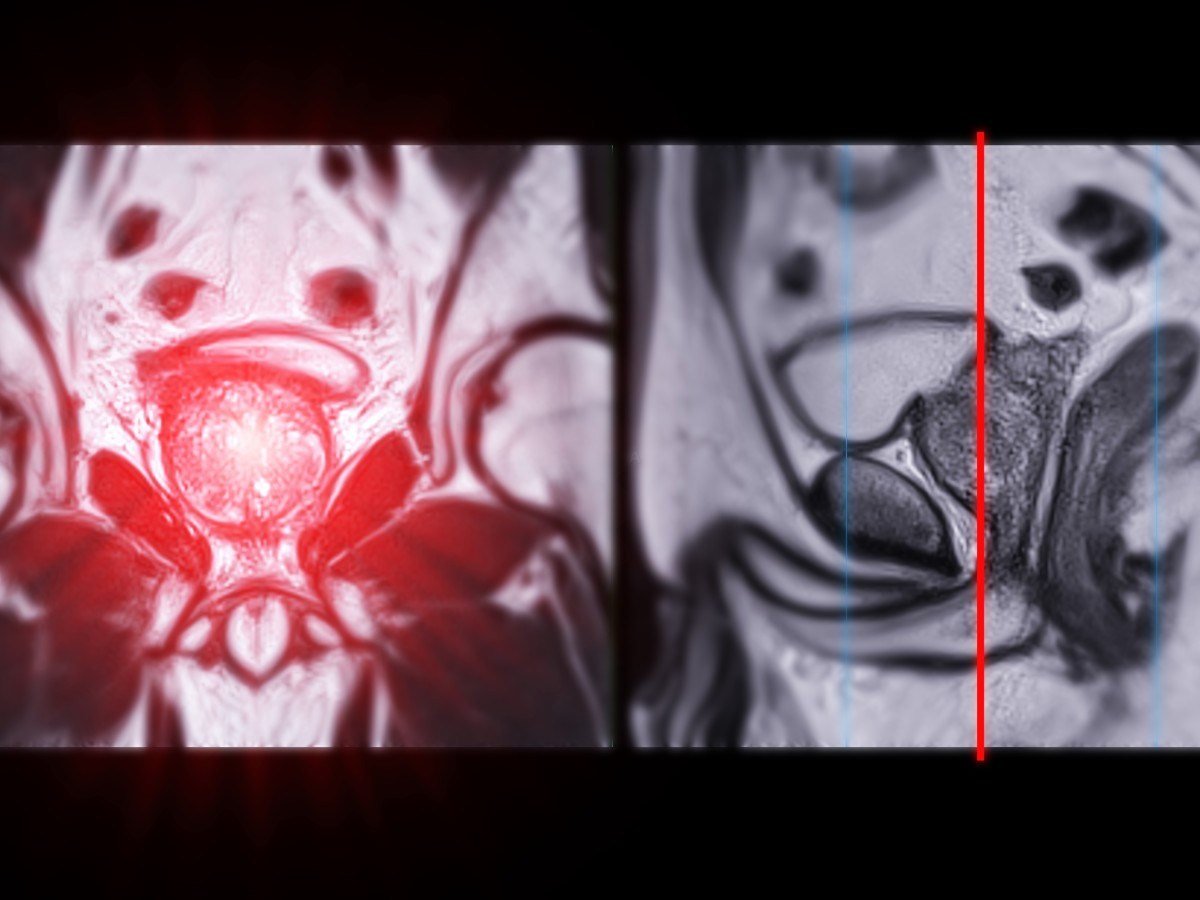
Researchers may have uncovered a key driver of aggressive forms of prostate cancer, and found a way of potentially preventing a drug-resistant type of the cancer developing. Scientists at Fred Hutch Cancer Center, Seattle, found that the molecular regulator RNA—specifically tRNA, a type of RNA—may be able to influence the nature of prostate cancer cells and how they respond to treatment. The study was published in the journal Nature on October 7.
Andrew Hsieh, one of the authors of the study and a board-certified oncologist and scientist at Fred Hutch, told Newsweek that the findings suggest "there is much more to learn about what makes prostate cancers resistant to drugs," and that the findings provide a "meaningful new target to drug in prostate cancer patients." "It also suggests that certain tRNAs may represent markers for aggressive prostate cancer," he said. Prostate cancer is the second-leading cause of cancer death in American men, behind lung cancer. At some point in their life, around 1 in 8 men will be diagnosed with prostate cancer, according to the American Cancer Society.
RNA is a complex compound that replaces DNA as a carrier of genetic codes in some viruses. Some types of RNA have been found to be capable of regulating cancer-associated genes in ways that facilitate tumor development. Hsieh explained that mRNA specifically are "molecules in your cells that are transcribed from DNA to eventually create proteins." He said they "require accessory molecules known as tRNA or transfer RNA to bring amino acids, the building blocks of proteins, to the protein making factories of cells call the ribosome." "This process of mRNA translation or protein synthesis is essential for life and can, unfortunately, be corrupted in cancer," he added.
What the researchers found was that tRNA is "able to tune down the synthesis of specific proteins needed for certain prostate cancer drugs to work," Hsieh said. He added that what was interesting was that tRNA "enables previously resistant prostate cancer to become sensitive to common therapies given to patients." This means it could also be possible that tRNA could be used to prevent prostate cancer from becoming more aggressive and drug-resistant, he said, but added that this "needs to be studied in patients" and that "we need a therapeutic that can reintroduce or increase the amount of this tRNA." "I am excited that there are a handful of companies developing tRNA-based therapeutics," he added. Daniel Petrylak, a professor of medicine and urology at Yale University, told Newsweek that this is "an important finding as the identification of this signature could lead to treatments that eradicate this form of prostate cancer once it arises." This is particularly notable as he explained that, while metastatic prostate cancer—an advanced form of the cancer—can be "controlled with androgen deprivation therapy," most men develop "resistant disease." "Treatments such as other hormones, chemotherapy and radioisotopes can also control the disease at that point, but prostate cancer becomes resistant to these treatments too." Kim, Y.S., Arora, S., Young, D. et al. (2026) tRNA dosage regulates lineage dependency and resistance in prostate cancer.
Nature https://doi.org/10.1038/s41586-026-11153-8 Newsweek’s reporters and editors used Martyn, our AI assistant, to produce this story. Learn more about Martyn here. Contact Newsweek editors on this story: Marc Vargas and Paul Donnelley.
Extract — continue reading at the source.