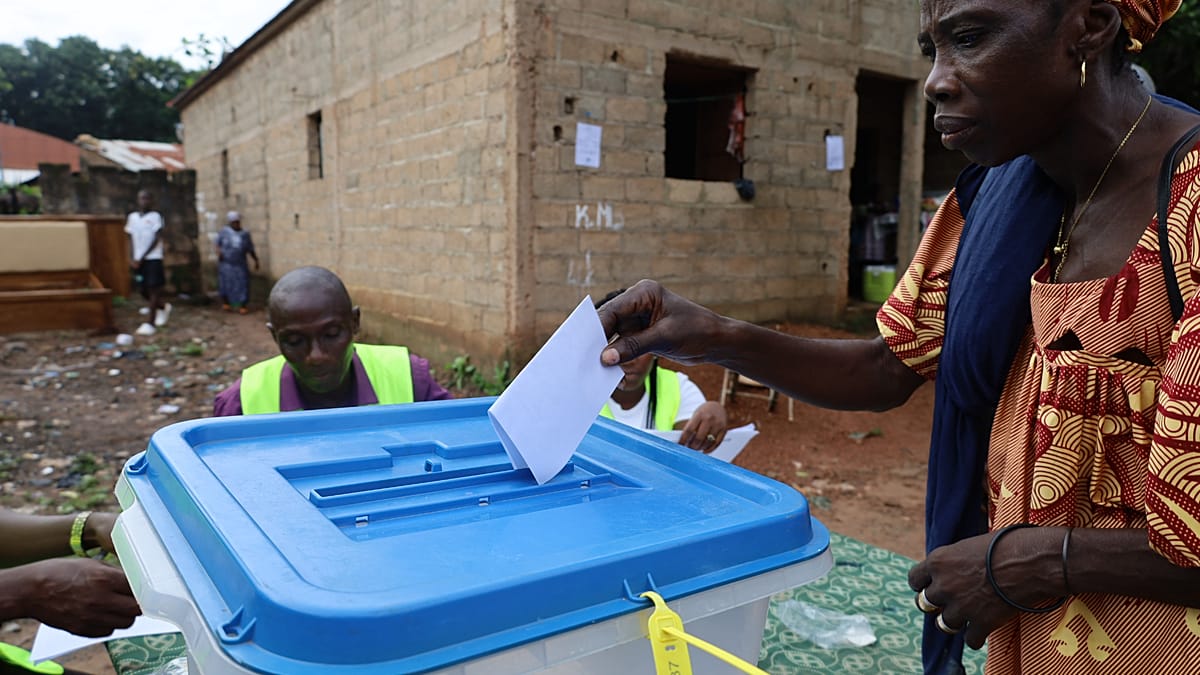
Voting got off to a slow start in some areas when the polling stations opened at . According to media correspondents, security was stepped up at strategic points in the capital, with members of the National Guard and the police deployed at key locations. This referendum is taking place against a backdrop of political instability and is being challenged by the opposition, not only because it has already been approved and published in the Official Gazette of the Republic -before the people had been ‘heard’- but also because it was drafted by the military junta, that is, by a transitional government without prior consultation.
"No one was consulted, neither political parties nor civil-society organisations, let alone traditional and religious leaders, and so on. So everything was done in secret," said the head of the Guinea-Bissau Human Rights League, Bubacar Turé, last week, speaking to Euronews. Turé also stressed that campaigners for a "no" vote in the referendum were not authorised to campaign.
"This is not an environment of freedom," he added, which is another reason why the opposition has called for a boycott of today’s vote. Some analysts say the military government lacks legitimacy to change the constitution, which has fuelled discontent among citizens. "The fundamental question is: who drafted this constitution, and on whose behalf?
To protect which interests or institutions? Who stands to gain from this constitution?" said Guinea-Bissau political analyst Paulino Quadé, speaking to the . A military government seized power in November 2025 following disputed elections in which both the former president, Umaro Sissoco Embaló, and the opposition candidate, Fernando Dias, claimed victory.
After the military junta took power, it appointed General Horta N'Tam as transitional president under a temporary constitutional charter that bars him from standing in elections. If it goes ahead, the new constitution drafted by the self-styled National Transitional Council will give the president more powers and reduce parliamentary representation, among other changes. The military junta currently in power unanimously approved a constitutional amendment to shift the country from a parliamentary to a presidential system, and the public is now being asked to endorse it.
The new text proposes scrapping the previous system, under which the prime minister came from the parliamentary majority, leading to complex power-sharing arrangements. It would also allow the head of state to appoint and dismiss the prime minister and cabinet members, as well as to dissolve parliament. Measures the opposition contests, arguing that they downgrade political parties and the popular will.
Extract — continue reading at the source.