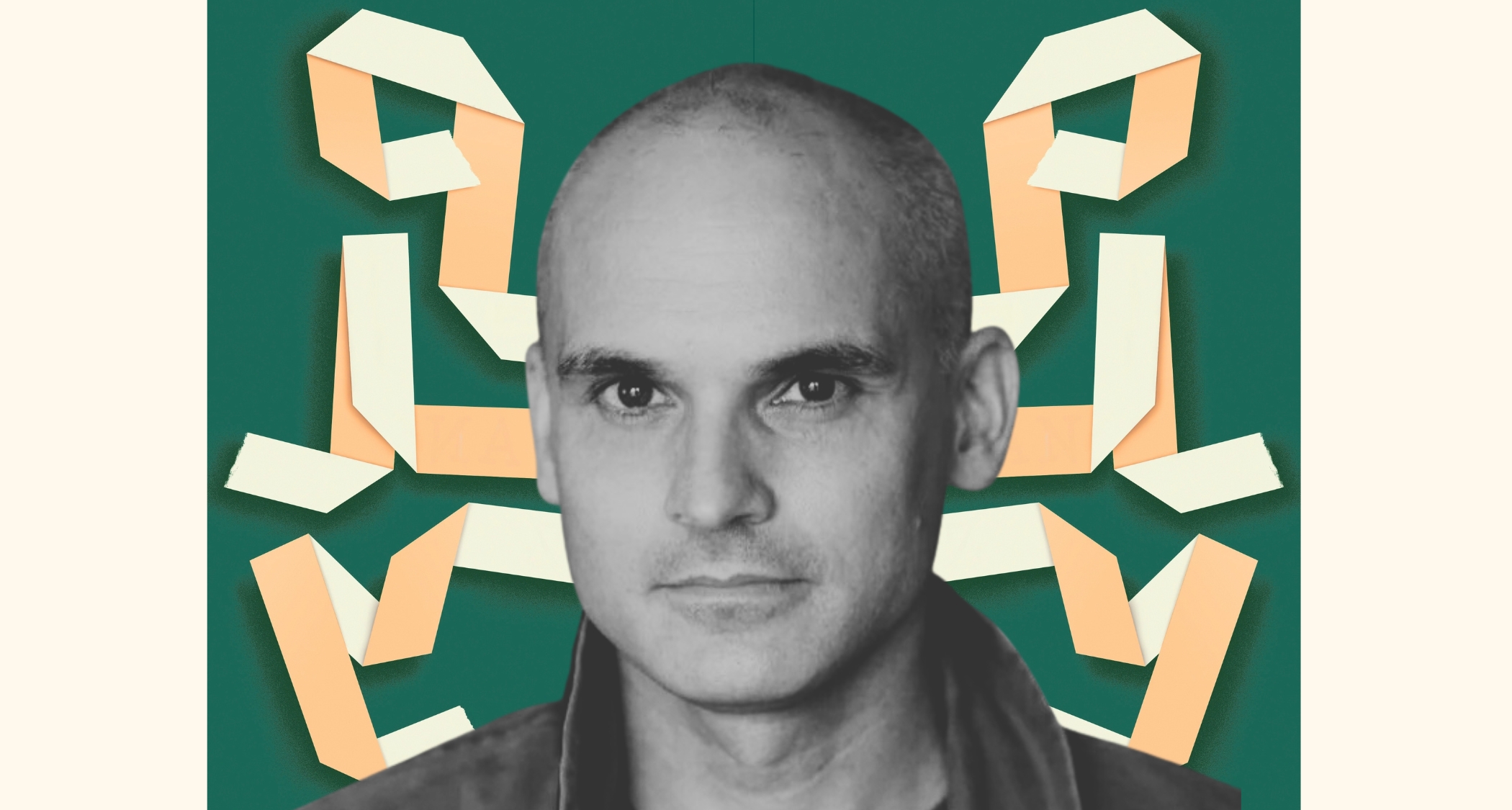
Pulitzer winner Hernan Diaz releases his first novel in four years this week, and he’s parrying a few questions about genre. If there’s an apocalypse, there isn’t a ‘post.’ It’s an eschatological word. It’s the end!” Furthermore, “You used the word dystopia in your first question, and now you use the word nihilism, which I think is an important word.
These terms are married, right?” These quotes make Diaz sound like a challenging interviewee. Really, he’s not—he’s one of the kindest authors I’ve recently met. But I’m not the only journalist who’ll be asking him about dystopias this month, because Ply, Diaz’s third novel, takes place in an urban future (probably New York City) reclaimed by nature.
An aesthetic shambles of nonexistent state capacity where crime is low and punk shows—“more like post-punk,” he specifies—reign supreme. It’s not a dystopia, presses Diaz. Things that we take for granted, almost like air or water.
We believe these things are natural, but they’re not. They’re constructs.” As society goes out the window, other things also disappear, “things that were absolutely worth losing.” These include oppressive power structures, environmental suppression, and, top of mind these days, “the commodification of everyday life.” The protagonist of Ply is a nameless young “pincher,” someone who steals electricity from the spotty grid and delivers it to clients in battery form. Some of her customers are raucous musical groups; others are criminal elements.
After she makes a breakthrough in battery storage technology, the pincher is caught in a power struggle, pun intended, between local kingpins. Ply is a plot-centric novel. But Diaz’s narrative arc is matched by a steady dose of pontification. (“There was freedom in dissolution, joy in disorder,” “Paranoia is not unlike religion,” etc.) Similar to Diaz’s debut In the Distance, his new work can feel like social theory masquerading as old school adventure.
All these novels that we think of as adventure novels, like The Count of Monte Cristo, or [H.G.] Wells, they’re constitutional of the novel as a form. I don’t know at what point a literary umpire decreed that this was anathema, that if you can take something out without affecting the structure, you ought to take it out.” In summation, says Diaz, “I feel that adventure gets a bad rap.” Diaz grew up in Argentina and Sweden but has lived in New York since his 20s. His latest work completes an all-American triptych: pre-U.S. (In the Distance), peak U.S. (Trust), and post-U.S. (Ply).
Extract — continue reading at the source.