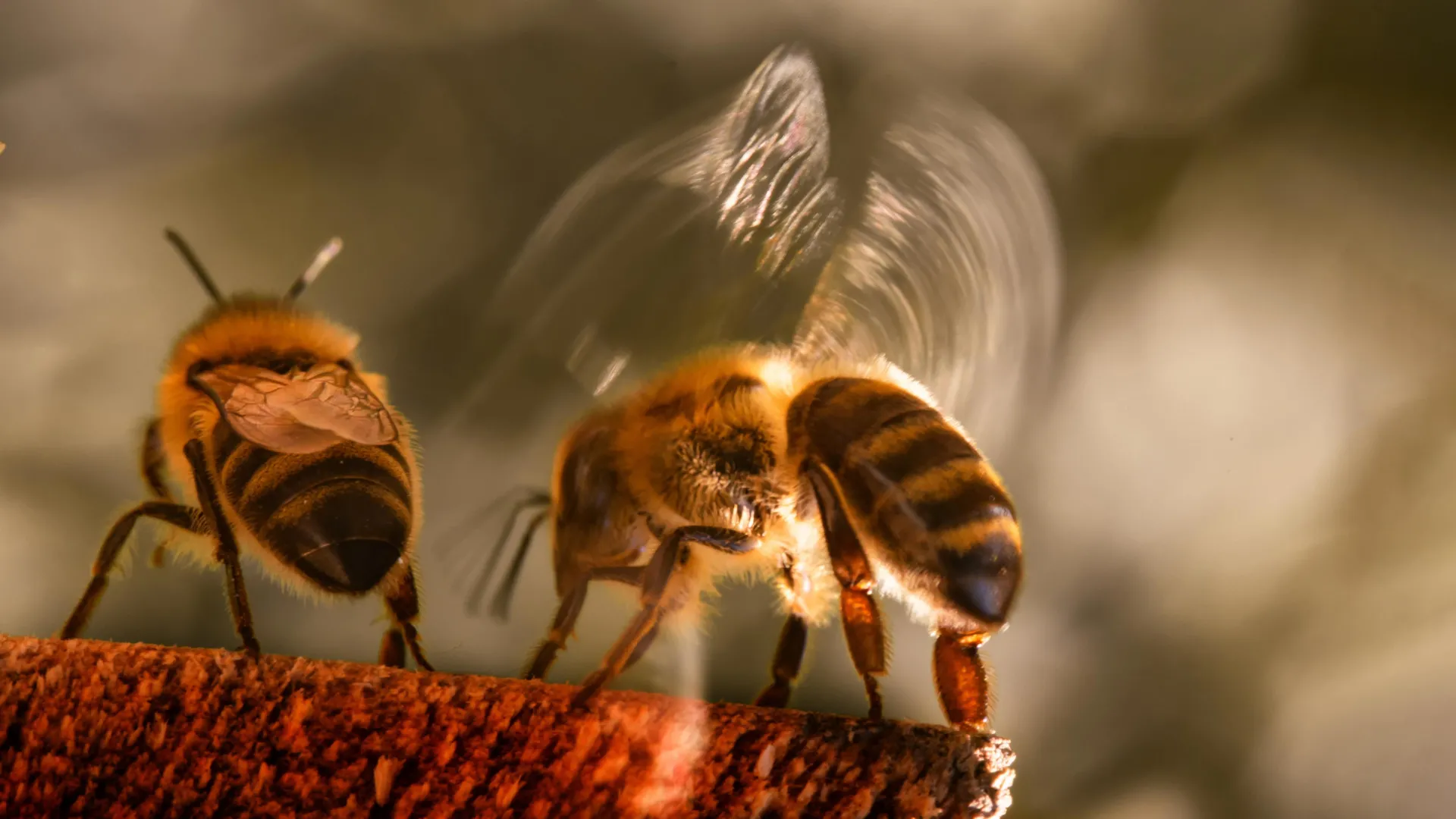
Honey bees are proving to be formidable competitors for food in the UK, and scientists have discovered that they frequently use aggression to drive other pollinators away from flowers. New research has documented how honey bees chase, displace, and intimidate rival insects, providing the first detailed evidence of how extensively they interfere with other species' access to food. The study, conducted by researchers at Anglia Ruskin University (ARU) and published in Ecological Entomology, followed pollinator activity over two years at five locations in and around Cambridge, England.
Each site was situated within 300 meters of an established honey bee colony. Researchers observed insects visiting bramble (Rubus fruticosus) and ivy (Hedera helix), two flowering plants that provide important supplies of nectar and pollen. Both attract large numbers of insects during their flowering periods, making them useful places to investigate competition for food.
Honey Bees Dominate the Competition for Flowers To examine how different pollinators interact, the team divided flower visitors into five groups: honey bees, bumble bees, solitary bees, hoverflies, and an 'other' category containing butterflies, beetles, and wasps. Over 93 hours of observation, the scientists documented encounters in which one insect interrupted another's feeding or prevented it from reaching a flower. Each interaction was classified according to its outcome.
A 'win' occurred when one insect gained access to a flower at the expense of another, which experienced a 'loss' of feeding opportunities. A 'share' meant both insects were able to access the flower without conflict. The results revealed a clear pattern.
Locations with greater concentrations of honey bees generally had fewer other pollinators and experienced more competition for flowers. Honey bees also emerged victorious in a larger proportion of their encounters with other insects. On bramble flowers, doubling the density of honey bees was associated with a 14% decrease in bumblebee abundance.
On ivy, higher honey bee numbers were linked to reduced numbers of solitary bees and hoverflies. The honey bees did not simply reach flowers before their competitors. They frequently initiated aggressive encounters, driving other insects away to secure feeding opportunities.
Extract — continue reading at the source.


