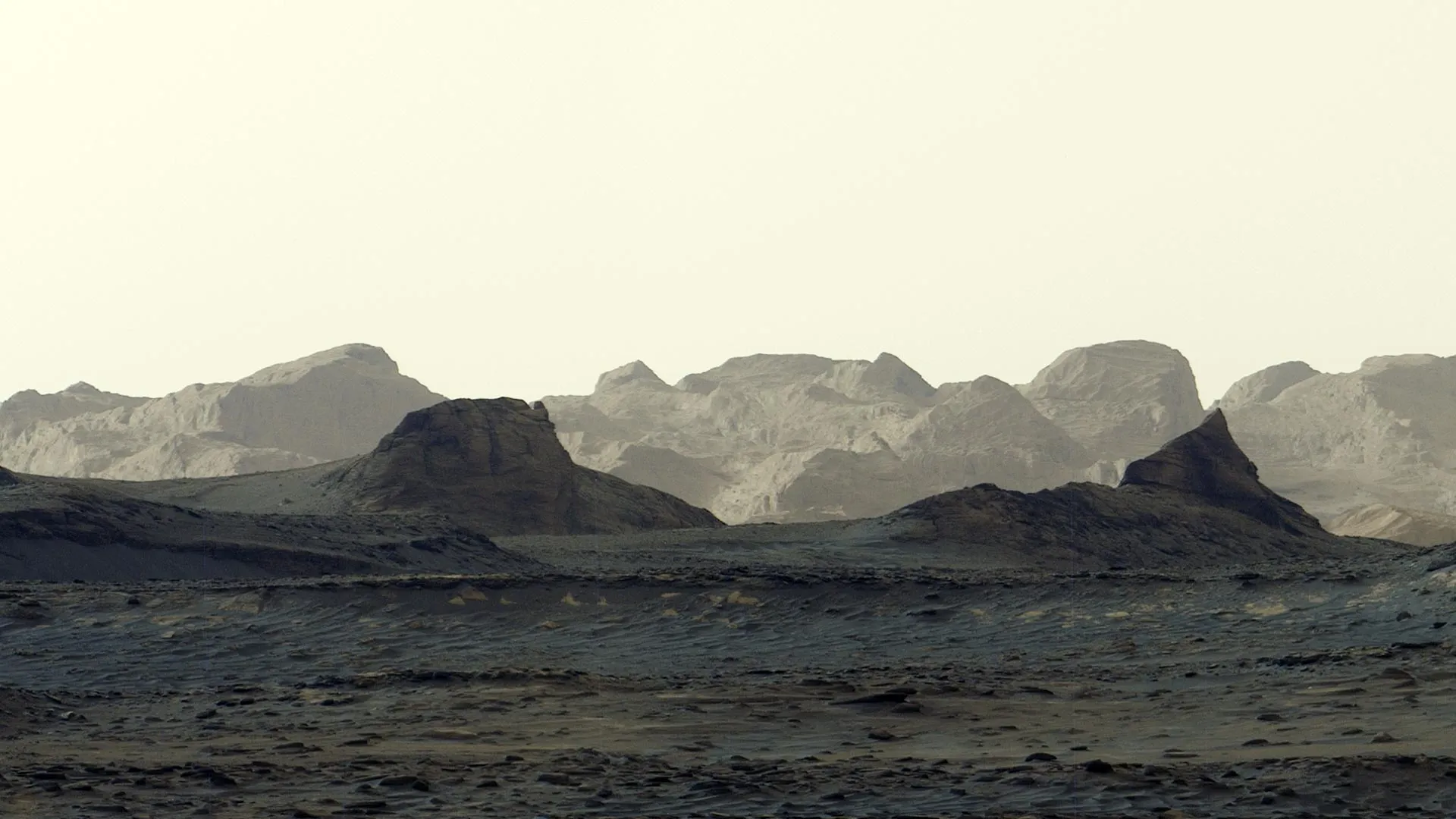
NASA's Curiosity rover has captured a spectacular new panorama of Mars, providing its clearest look yet at a series of mysterious cliffs shaped by wind. Scientists have been eager to examine these distant formations up close, and the latest images offer an exciting preview of what lies ahead. Taken at 8:30 a.m. local Mars time, the scene reveals striking blue tones across the foreground while morning sunlight illuminates rugged cliffs known as yardangs along the horizon.
Curiosity recorded the panorama using its Mastcam on August 11, during the mission's 4,982nd Martian day, or sol. Six separate photographs were transmitted to Earth and combined to create the sweeping view. Unlike most Mastcam photographs, the images were processed without white balancing, allowing the scene to retain the distinctive colors and lighting of the Martian morning.
Curiosity Approaches Mysterious Martian Cliffs The yardangs stretch approximately 10 miles (16 kilometers) across the northwestern portion of Mount Sharp, a 3-mile-tall (5-kilometer-tall) mountain that Curiosity has been climbing since 2014. The rover recently achieved a major milestone, gaining 0.6 miles (1 kilometer) in elevation, a greater climb than any other rover has completed on Mars. As Curiosity continues toward these unusual formations, researchers anticipate increasingly detailed views of the cliffs.
More importantly, they hope that examining the rocks firsthand will help explain how the remarkable landscape developed. What Mars' Ancient Rocks Reveal About Its Past Mount Sharp contains numerous layers of sedimentary rock, each preserving evidence from a different chapter of Martian history. Investigating these layers has helped scientists reconstruct a time billions of years ago when lakes and streams existed in this region of Mars.
As the planet's environment changed, those bodies of water eventually disappeared, leaving deposits of salty minerals behind. Once additional material stopped accumulating on the mountain, powerful winds may have gradually eroded portions of the existing rock, carving out the distinctive yardangs visible today. Yet the unusual appearance of this particular layer has raised questions about its origins.
Its color differs from the surrounding terrain, and its rock layers are tilted in an unexpected direction. Scientists suspect that processes beyond ordinary wind erosion may have contributed to its formation. "The yardang layer looks out of place.
Extract — continue reading at the source.


