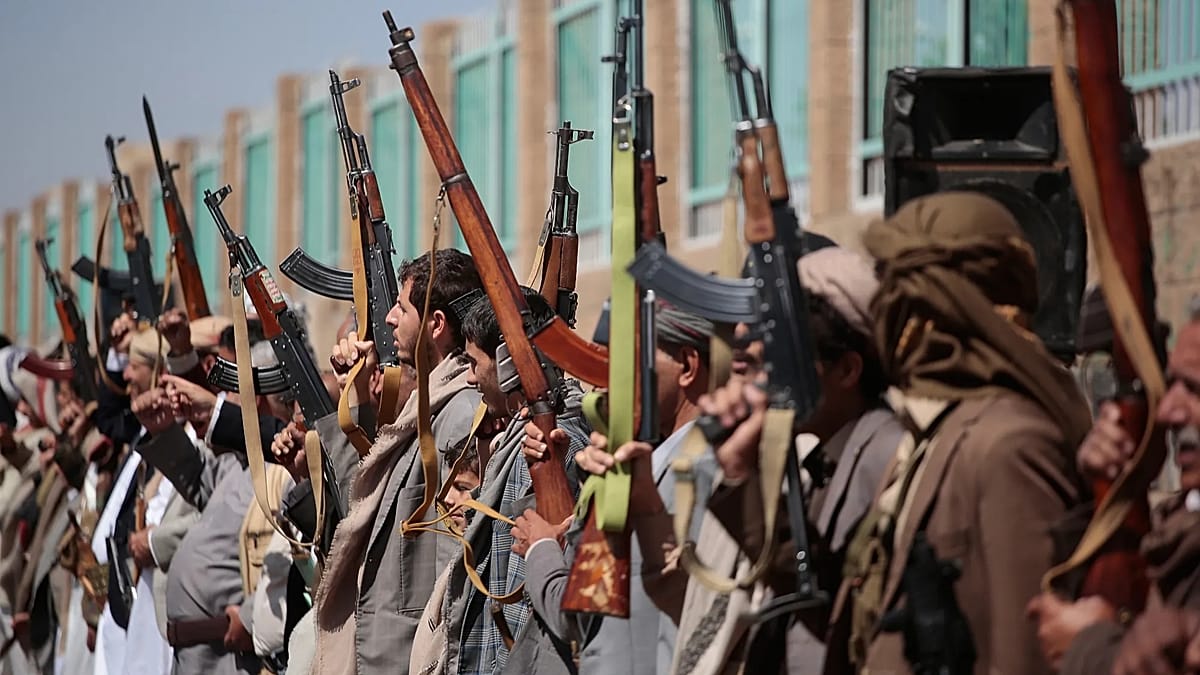
Three people including an airline pilot were killed in attacks on Riyadh's international airport on Thursday, Saudi Arabia said, after Yemen's Houthis claimed a series of attacks targeting the facility. The Saudi civil aviation authority said two missile attacks on Thursday on the Saudi capital's airport and a Saudia Airlines aircraft there "resulted in the martyrdom of three citizens". The national flag carrier on Friday confirmed the death of the plane's captain Hamoud Ali Alkalthami in an incident at King Khalid International Airport, expressing "profound sadness" and "heartfelt condolences," and stating it honoured "his memory with deep respect and appreciation." The missile strikes on Thursday forced diplomats stationed in the Saudi capital to shelter in place and international schools to take safety measures, as explosions echoed across the city.
Numerous flights at Riyadh's King Khalid International Airport were delayed or cancelled, while the airport advised travellers of the "necessity" to contact airlines before their trips. The kingdom's civil defence agency also said "interception debris" had damaged a kindergarten and a medical complex in Riyadh. It did not say if there were casualties there or provide details of the damage.
Admissions by Saudi authorities of civilian targets being hit are relatively rare. There have been few statements on Houthi attacks in recent weeks. The Houthis have also warned workers to evacuate Saudi Arabia's oil facilities, having days before hit a major refinery south of the capital.
The Houthis, whose heartlands are in Yemen's northwest, had already controlled the capital Sana'a and most of the country's major population centres since the start of the war in 2014. Riyadh's military coalition intervened to support the government the following year. Yet Saudi Arabia and the Yemeni government forces it backs have struggled to contain the Houthis' latest offensive, despite a pushback aimed at recapturing Red Sea territory including the area around the Bab el-Mandeb strait that is crucial to global energy flows.
After declaring its counter-offensive against the Houthis, Yemen's government claimed to have pushed the fighters out of strategic areas on the Red Sea coast and the port city of Mocha. But the group formally known as Ansar Allah insists it is holding its territory, and military sources on both sides have not reported any major changes on the ground. Claims by the warring parties have been impossible to independently verify, with the situation moving fast and access for journalists difficult.
In Yemen, one of the world's poorest countries, ordinary civilians are paying the price for the renewed fighting, with more than 200,000 people displaced since July, according to UN data. In Yemen's Taiz, the Houthis are laying siege to the government-controlled city in the country's west, depriving residents of their main supply route to the government's temporary capital in Aden. "There is a crisis in everything: water, gas, vegetables, everything essential", said Taiz resident Um Rian.
Extract — continue reading at the source.