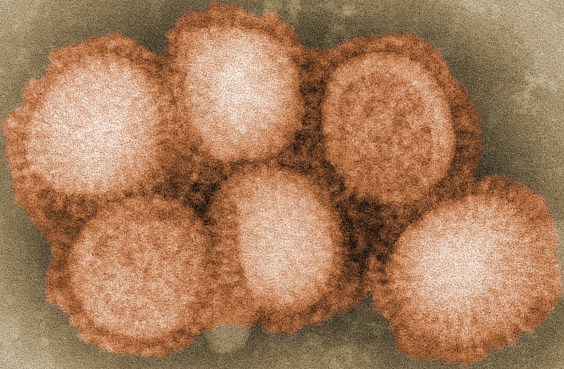
David Lewis set out from Fort Dix on a 50-mile hike with his unit on Feb. 5, 1976. On that bitter cold day, he collapsed and died. Autopsy specimens unexpectedly tested positive for an H1N1 swine influenza virus.
Virus disease surveillance at Fort Dix found another 13 cases among recruits who had been hospitalized for respiratory illness. Additional serum antibody testing revealed that over 200 recruits had been infected but not hospitalized with the novel swine H1N1 strain. Alarm bells instantly went off within the epidemiology community: Could Pvt.
Lewis’ death from an H1N1 swine flu be a harbinger of another global pandemic like the terrible 1918 H1N1 swine flu pandemic that killed an estimated 50 million people worldwide? The U.S. government acted quickly. On March 24, 1976, President Gerald Ford announced a plan to “inoculate every man, woman, and child in the United States.” On Oct. 1, 1976, the mass immunization campaign began.
Meanwhile, the initial small outbreak at Fort Dix had rapidly fizzled, with no new cases on the base after February. Frank Top, who headed the Fort Dix virus investigation, later told me, “We had shown pretty clearly that (the virus) didn’t go anywhere but Fort Dix … it disappeared.” Nonetheless, concerned by that outbreak and witnessing the massive crash vaccine program in the U.S., biomedical scientists worldwide began H1N1 swine influenza vaccine research and development programs in their own countries. Going into the 1976-77 winter season, the world waited—and prepared—for an H1N1 swine influenza pandemic that never came.
But that wasn’t the end of the story. As an experienced infectious disease epidemiologist, I make the case that there were unintended consequences of those seemingly prudent but ultimately unnecessary preparations. What Was Odd About H1N1 Russian Flu Pandemic In an epidemiological twist, a new pandemic influenza virus did emerge, but it was not the anticipated H1N1 swine virus.
In November 1977, health officials in Russia reported that a human—not swine—H1N1 influenza strain had been detected in Moscow. By month’s end, it was reported across the entire USSR and soon throughout the world. Compared with other influenzas, this pandemic was peculiar.
Extract — continue reading at the source.
/https://tf-cmsv2-smithsonianmag-media.s3.amazonaws.com/filer_public/59/b8/59b82100-4e7b-4b5d-93fd-67208e88cb7e/nhb2012-00536_copy.jpg)


/https://tf-cmsv2-smithsonianmag-media.s3.amazonaws.com/filer_public/e5/8b/e58bb7f0-27ac-4493-905d-6f2484c70402/microraptor-main.png)

