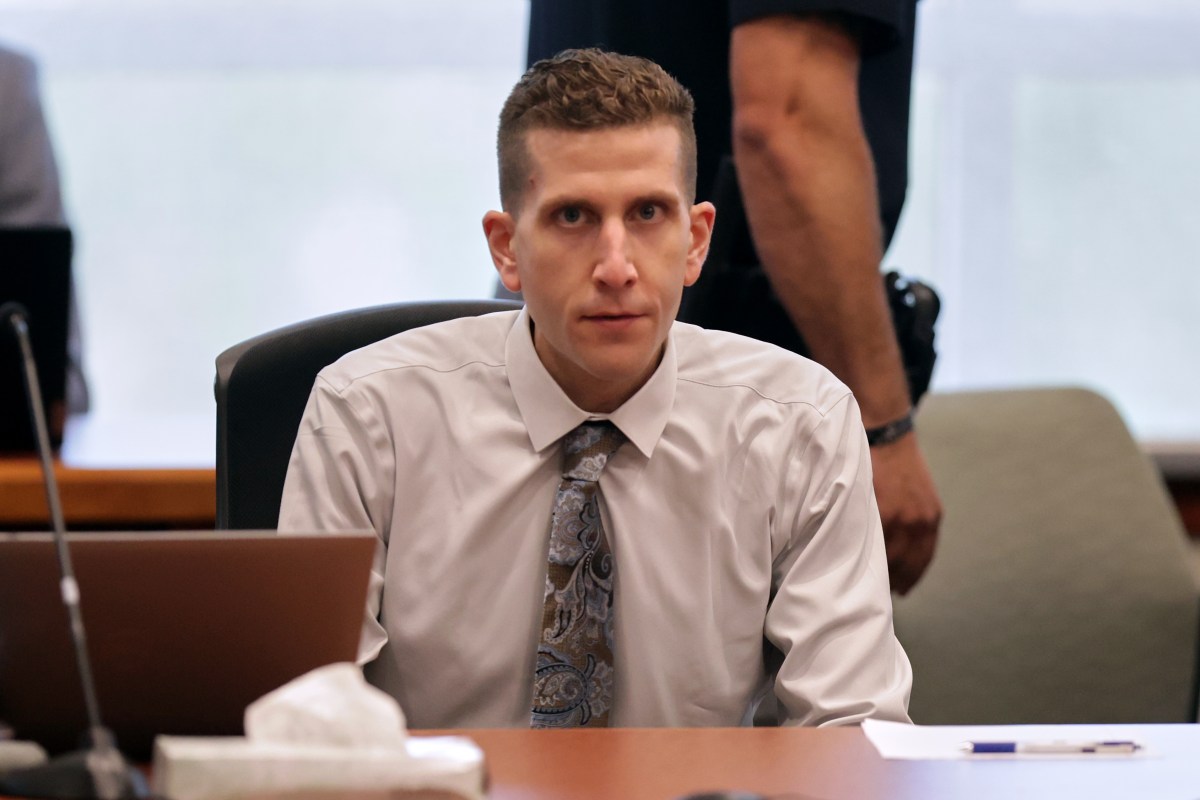
Bryan Kohberger’s mental health disorders could be a factor if he succeeds in withdrawing his guilty plea and going to trial for the murders of four University of Idaho students, experts told Newsweek. Kohberger, 31, pleaded guilty to the fatal stabbings of Kaylee Goncalves, Ethan Chapin, Xana Kernodle and Madison Mogen in July last year, just weeks before he was set to go on trial for the murders at a rental home near the university’s campus in Moscow, Idaho, in November 2022. He is serving four consecutive life sentences.
Last month, he filed a petition for post-conviction relief asking a court to let him withdraw his guilty plea and go to trial, saying his attorneys didn’t adequately represent him and had manipulated him into making the deal that took the death penalty off the table. Prosecutors have yet to respond to the filing, but Idaho Attorney General Raúl R. Labrador said in a statement that his office was ready to do "whatever is necessary" to ensure justice was carried out.
Now, newly unsealed court filings provide details of the neuropsychological evaluation that Kohberger underwent following his arrest. Kohberger’s attorneys had him examined by a clinical neuropsychologist, Dr. Rachel Orr, who diagnosed him with autism spectrum disorder–which his attorneys cited in an unsuccessful bid to get the death penalty removed as a possible punishment.
Neama Rahmani, a former federal prosecutor who is now president of law firm West Coast Trial Lawyers, told Newsweek that those diagnoses alone are unlikely to persuade a judge to now set aside Kohberger's guilty plea. But he said they could become relevant if he argues that they prevented him from fully understanding the consequences of his plea. According to the report, Orr met with Kohberger on six separate occasions to interview and evaluate him between October 2024 and January 2025.
Orr’s report also lists additional diagnoses that Kohberger had met the criteria for in the past, including Developmental Coordination Disorder (DCD), Anorexia Nervosa, Unspecified Depressive Disorder and Opioid Use Disorder. Rahmani said it’s unlikely that Kohberger will be successful in his bid to withdraw his guilty plea, but even if he is, his diagnoses would not be relevant at trial. Laurie Levenson, a professor of criminal law at Loyola Law School and a former federal prosecutor, told Newsweek that Kohberger’s prison environment may be influencing his decision to seek a trial.
That gives him a greater incentive to withdraw his plea and ask for a trial,” she said. Levenson said if it happens, she would expect prosecutors “would seek to use any and all evaluations in a trial of him on the underlying murder.” Because Kohberger accepted a plea deal that took the death penalty off the table, his diagnoses were not a major issue at sentencing. But that could change if he was allowed to withdraw his plea, be convicted after a trial, and then face a new sentence, including the possibility of the death penalty.
Extract — continue reading at the source.