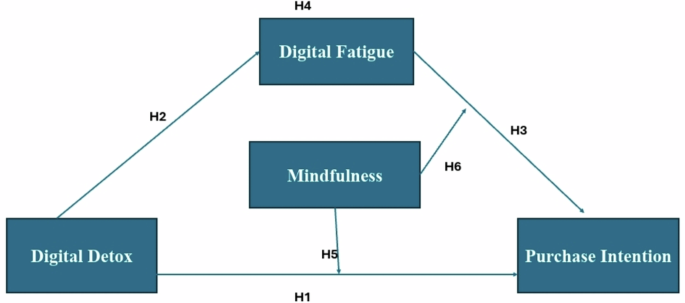
The paper examines the mediating role of digital detox (DD) between purchase intention (PI)-digital fatigue (DF)-mindfulness (MF) as moderators in the context of social commerce. The research utilized a sample of 297 participants in the fashion and retail sector in the UAE to develop empirical data through self-administered questionnaire. The structural equation modeling (SEM) was used to test the connections between hypotheses and was strong enough to test for complicated mediation-moderation.
The results show that DD has a significant positive effect on PI both in direct and indirect effect due to reduced DFs. In addition, MF strengthens the estimated positive connection between DD-PI and weakens the negative influence of DF on the formation of MF as a moderator. The article advances the digital consumption and social commerce literature because it has defined DD as a primary driver of consumer well-being and behavioral intention, particularly in terms of its application in emerging-market contexts.
In a practical manner, the research offers meaningful perspective into managers and marketers to come up with consumer engagement policies that integrate digital balance and MF practises. Although the results produced are significant both in theoretical and managerial contributions, the data is tied to limited cultural and industry-specific generalizability boundaries, implying the need to employ cross-cultural and longitudinal studies in further investigations. Social commerce has developed a phenomenal pace, changing the process of buying into a more digital phenomenon with the online space becoming a focal point of interaction, communication, and trade.
The digital stimuli of social networking, influencer marketing, peer recommendations, and content provided by algorithms are now available to consumers around the clock. Although these advancements have made life easier and more interactive, the digital media usage over the years has had the same impact of creating an increased DF awareness. DF is perceived as a mental condition that is typified by cognitive overload, mental exhaustion, irritation, and emotional strain due to over-exposure to information and constant digital connectivity.
The adverse effects of the digital overload are already established in the literature on the subject. Previous findings are consistent with that DF has a negative impact on cognitive functioning, well-being, and the quality of decisions and decreased engagement, satisfaction, and trust in digital platforms (Bakri, 2023; Gary, 2025). Nonetheless, despite the fact that such studies evidently prove the detrimental effect of excessive digital exposure under the name of fatigue, they mostly treat it as a final condition.
Consequently, little is known about the consumer response to DF by coping mechanisms especially in a manner that reinstate motivation and have an overall positive effect on behavioral consequences like PI. As a reaction to the growing amounts of digital overload, the idea of DD, which is temporary disconnectivity or a conscious restriction of using digital platforms, has become viral as a means of re-establishing cognitive balance and mental health (Aguvaveedi et al., 2025). The available literature primarily defines DD as a wellness-based behavior that improves the psychological well-being or work-life balance (Ji et al., 2025; Aguvaveedi, 2025).
Extract — continue reading at the source.


