sözaltı news Science
Science
EN AZ
How do you restore the wild spaces in a corner of England?

How do you restore the wild spaces in a corner of England?

bbc.com 27.04.2026 09:17 14 baxış
Plans to improve nature have been unveiled, aiming to restore habitats and protect wildlife.

Ellen KnightShropshireGetty ImagesShropshire is home to a number of diverse habitats and rare speciesA plan to improve Shropshire's wild spaces has been unveiled, aiming to restore habitats and protect wildlife. Under the 2021 Environment Act, every local authority must develop one of these plans to promote biodiversity and restore nature in their respective areas. It is called a Local Nature Recovery Strategy (LNRS), and Shropshire is the latest of the 48 areas to reveal its aims.

The county has "things that we really want to protect," said Lynn Parker, who is coordinating the project, adding that "having the strategy means that we can focus our efforts".What is a Local Nature Recovery Strategy?An LNRS is a joint effort between a large number of agencies, and is part of a new system that hopes to map and help drive a more coordinated approach to nature recovery and build a national Nature Recovery Network. It is one part of the government's 25 Year Environment Plan that in 2018 set out to improve the UK's nature within a generation and is funded by the Department for Environment, Food and Rural Affairs (Defra). In Shropshire, the LNRS is being led by Shropshire Council, with support from Telford and Wrekin Council and other agencies including Natural England and Shropshire Wildlife Trust.

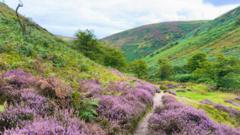
But an LNRS cannot force a landowner to make changes and is not legally binding - it purely points out where change should, ideally, happen. Ellen Knight/BBCLynn Parker said Shropshire had "a bit of a nature crisis""Shropshire is like the rest of the UK - we've got a bit of a nature crisis," Parker said.The LNRS provides a framework for agencies to "focus" on, she added, which means "we can benefit all of those areas and species"."We know that Shropshire residents really think nature is important for them," Parker said.She noted that "water management, flooding control, water quality, and climate" are areas that local people have highlighted as needing more attention. Ellen Knight/BBCWalker said improving nature would help the local economyCouncillor David Walker, who represents Whittington on Shropshire Council, said improving the county's natural world could also bring "big economic benefits"."Shropshire's a lovely place to live and work, but that doesn't mean there aren't things we can do to make it better," he said.Walker added that "tourism and other economic activity" could be boosted by thriving ecosystems.Rob Trigg/BBCCouncillor Carolyn Healy said Telford was "one of the greenest" towns Councillor Carolyn Healy represents the Ironbridge Gorge ward on Telford and Wrekin Council and is the cabinet member for planning, neighbourhoods and sustainability.The strategy "sets out areas of opportunity" and identifies places "where we can really enhance biodiversity," Healy said.Telford and Wrekin has "a fantastic network of local nature reserves," she added, noting that the plans will "help shape how we manage those areas as well".Getty ImagesThe Wrekin, seen here in the distance, is an iconic Shropshire landmark What habitats are there in Shropshire?Shropshire is, of course, home to the Shropshire Hills, an Area of Outstanding Natural Beauty, as well as iconic landscapes like the Wrekin and the Ironbridge Gorge.The county also boasts ecologically significant areas like Whixall Moss, the Rivers Severn, Clun and Teme, and a large number of Sites of Special Scientific Interest (SSSIs).It also has unusual habitats like ffridd, a Welsh term for a type of upland ecosystem common in Wales, that is made up of a combination of habitats including bog, acid grassland, and bracken.The strategy for Shropshire is broken down into 16 priorities, including restoring hedgerows, peatlands and wetlands, "re-naturalising" rivers and protecting "veteran trees".Getty ImagesThe Long Mynd is a heath plateau in the Shropshire Hills AONBWhat about the wildlife?

A total of 29 species are named in the LNRS as needing specific action to protect them.Dormice, hedgehogs, pine martens and water voles are the mammals that the project has identified as a priority.Birds including the curlew, nightjar, dipper, lesser black-backed gull and red grouse are also named. Just one plant is on the list - the green-winged orchid - alongside a large number of invertebrates including the pearl-bordered fritillary butterfly and the black darter dragonfly. ImagesOnce a common sight in Shropshire, curlew numbers have fallen in the 21st CenturyDave Cragg, from Natural England, said "there's a lot that needs to be done" to address "the global biodiversity crisis".In Shropshire, "there are definitely places where it is really good", Cragg said, noting the county's nature reserves and Sites of Special Scientific Interest.

The diversity of Shropshire's nature makes it special, he added, recalling "those brilliant hills, the Stiperstones, the Long Mynd" as well as "bogs, fens, and a brilliant river system"."It's got a bit of everything really."Ellen Knight/BBCDave Cragg said Shropshire's ecosystems were very diverseWhat about the people living there? The team behind the strategy have spent two years engaging with local people, holding clinics across Shropshire and attending agricultural shows to name just a few.A public survey was held when the LNRS was in its infancy in summer 2024, with nature recovery conferences held for town and parish councils later that year. Shropshire Council said it was "pleased with the response", with 3,782 comments received during a consultation held in 2025, which they claim is "more than any other LNRS area to date".NFUKate Mayne, Shropshire's NFU chair, said farmers were important to the success of an LNRSGroups like the National Farmers Union (NFU) have contributed to the consultation to ensure that it works with farmers.About 84% of Shropshire's total land area is farmed land.

Kate Mayne, who is a farmer and the

Extract — continue reading at the source.

Read full story