sözaltı news World
World
EN AZ
How health workers in DR Congo are treating Ebola and staying safe

How health workers in DR Congo are treating Ebola and staying safe

bbc.com 02.06.2026 03:20 11 baxış
There are currently no approved drugs that target Bundibugyo - the species of Ebola responsible for this outbreak.

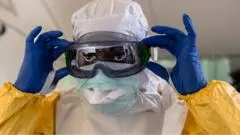
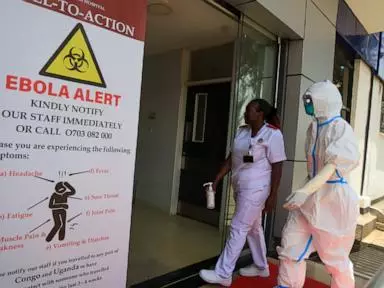
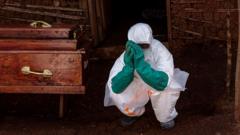
How health workers in DR Congo are treating Ebola and staying safe Hafsa KhalilGetty ImagesHealth workers are on the frontline of trying to stop the current Ebola outbreakHealth workers in the east of the Democratic Republic of Congo are racing against the clock to help Ebola patients manage their symptoms, as well as keep themselves safe and prevent the risk of spreading the virus, while the number of cases continues to rise.All patients - suspected and confirmed - are isolated and all those who come into contact with them are supposed to wear full personal protective equipment (PPE), and use other equipment to minimise transmission.One such device is the Cube, a transparent "self-contained treatment unit for highly infectious diseases" that allows a patient to receive medical treatment without direct contact from medical staff.Created in the aftermath of the 2014-2016 Ebola outbreak in West Africa, the Alliance for International Medical Action (Alima) designed them to allow medical staff to treat patients from outside, with the use of attached tunnel-like gloves.Jennifer Lazuta/ALIMAThe Cubes have been used in previous Ebola outbreaks, including in DR Congo in 2019"You don't need to have full PPE to be in contact with patients, so it's a very, very important device in this kind of outbreak," says Dr Papys Lame, Alima's Ebola response coordinator.He tells the BBC it ensures the "necessary standard of care, a positive patient experience and the protection of healthcare workers".But while these are useful, there are not enough in DR Congo compared to the number of suspected cases of Ebola.According to Alima, two Cubes arrived in Bunia, the provincial capital of Ituri, the epicentre of the outbreak, over the weekend and are expected to be in use soon. Another two Cubes are on their way to the city.Supplies of PPE are also limited. On Friday, the International Council of Nurses (ICN) warned of shortages, saying nurses in DR Congo are "scared for their safety because they do not have the equipment to protect themselves".The Ebola virus spreads from one person to another by contact with infected bodily fluids.The delay in confirming cases in the early days of the outbreak has seen the virus spread from Ituri to the provinces of North and South Kivu, as well as neighbouring Uganda."Unfortunately, Ebola starts very vaguely with a headache, fever and feeling weak," explains Dr Armand Sprecher, an emergency physician and epidemiologist specialising in Ebola for Médecins Sans Frontières (MSF)."People get what we call malaise - achy in the muscles and the joints, and eventually developing some vomiting, abdominal pain, diarrhoea," which he tells the BBC is "true for a lot of illnesses".Infectious diseases common in the region such as malaria and typhoid share early symptoms with Ebola.One less common symptom of Ebola - which can occur later - is bleeding, including from the nose, gums and vagina, and blood in vomit and faeces.All people showing signs of the virus are initially classified as suspected cases and admitted to treatment centres.What is Ebola and why is stopping the latest outbreak so difficult?'Ebola has tortured us': Fear grips eastern DR Congo as deadly virus spreads'Speed, money and compassion' - lessons from an Ebola survivor and other expertsLame says people with suspected Ebola have samples taken to determine whether or not they have the virus, and another one 48 hours later if the first comes back negative.If the second test is negative, they are considered a non-case, and either referred to a hospital or health centre for further care or discharged home if they no longer have symptoms.For those who test positive, the Alima coordinator says their symptoms are treated until they are no longer symptomatic and "must have two negative laboratory results before being discharged".Although Ebola patients have to be isolated to avoid transmission, Lame emphasised the importance of individuals' psychological wellbeing, which the Cube helps with.The Cube's design allows people to visit their loved ones, he says, explaining that during previous outbreaks "patients were separated from their families and communities and were often reluctant to seek treatment".But while medical teams work around the clock to treat the symptoms of people with Ebola, the testing and confirmation of cases has been slow.The ICN also said there was a shortage of testing kits.The authorities say there have been more than 282 confirmed cases of Ebola including 42 deaths, and more than 1,000 suspected cases, more than 220 of whom have died.There are currently no approved drugs that target Bundibugyo - the species of Ebola responsible for this outbreak - so patients are mainly receiving supportive care and treatment for their symptoms.This includes oxygen and ventilation to help with breathing, and intravenous fluids to stop dehydration and provide electrolytes lost in vomiting and diarrhoea.There is no approved vaccine but experimental ones are in development.Because of the delays in confirming cases, Sprecher says health workers don't have the "usual mapping of transmission" they did with Ebola outbreaks in the past, most of which were caused by the more common species known as Zaire."Previously, we would know if the disease was passing through a village, through a family, or through people who went to a funeral, so when the patient came to us, we could ask questions like: 'Were you at that funeral, or do you live in this village?'"We don't have that sort of knowledge backing us up," he explains.Health workers are often the most at risk, and have a lot of factors to consider, including their own health and wellbeing.

Sixteen health workers are confirmed to have contracted Ebola during this outbreak.Last week, five people were discharged after recovering from Ebola. Four were nurses, while one was a laboratory worker."We lose patients, which is psychologically difficult," L

Extract — continue reading at the source.

Read full story