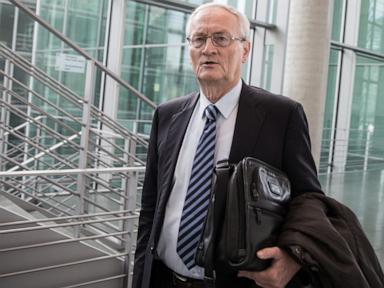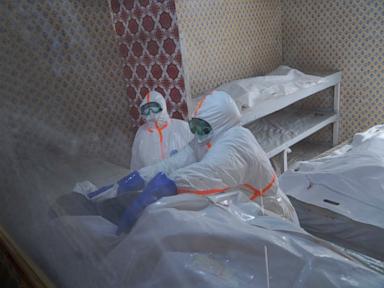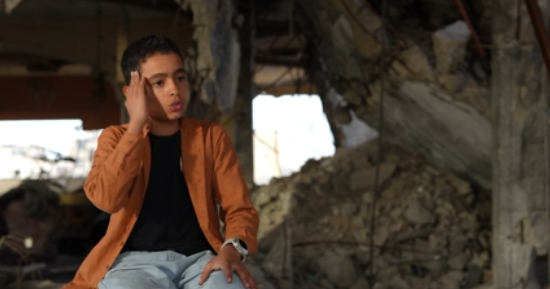
Three years after Hamas militants launched their assault on southern Israel, killing 1,200 people, taking 251 others hostage and triggering Israel's war in Gaza that has killed tens of thousands of Palestinians, CBS News met two teenagers on both sides of the Gaza border to find out how they are coping. Ron Shargian, 15, said growing up in southern Israel has meant learning to live with fear. He was 12 when he watched Hamas militants on paragliders soar over a wall meant to protect his community.
"It feels like some kind of nightmare," he told CBS News three years later, calling the experience on that fateful day surreal, "and something I wouldn't believe if anyone told me it's going to happen." The attackers killed 17 of his neighbors in Netiv HaAsara, the Israeli community that was closest to the Gaza border. As the assault unfolded, he and his family locked themselves inside their home's bomb shelter. "Every time the gunshots get close to you, you think that that's the end, that they're coming to your house now," he recalled.
His family escaped after 11 hours, when security forces came to the rescue, but like thousands of other Israelis displaced by the war, they couldn't go back home, at least not right away. After Oct. 7, Shargian's family lived in a hotel for evacuees, and then in Tel Aviv, and then in another hotel, and then a year and a half in the coastal town of Gan Yavne. Finally, a little over a year ago, his family returned to their home.
"It was really hard to come back," he said. "But I also anticipated it very much. I really missed my home, my friends, the community — it's something that you don't have anywhere else." Across the border in Gaza, safe places have been hard for Palestinian children to find since Israel launched its full-scale military assault in retaliation for the Hamas attack.
"Lots of things has been destroyed for me," Kazem Doghmash told CBS News. He was 11 when the war started. Israel pummeled Gaza for years with daily airstrikes in a grueling war that, despite a cease-fire in place since last October ending major combat, continues to claim lives three years later.
Palestinian officials in Gaza say more than 1,400 people have been killed in Gaza since the cease-fire officially came into effect. "They say a lot of times that the war will finish, but the war has been not finished, the war has been more difficult," said Doghmash, who is now 14. "Before the war, I am just being a kid," he said, remembering it as "a good life." In Israel, Shargian said he struggles with how to think about people on the other side of the Gaza border after everything that happened.
Extract — continue reading at the source.