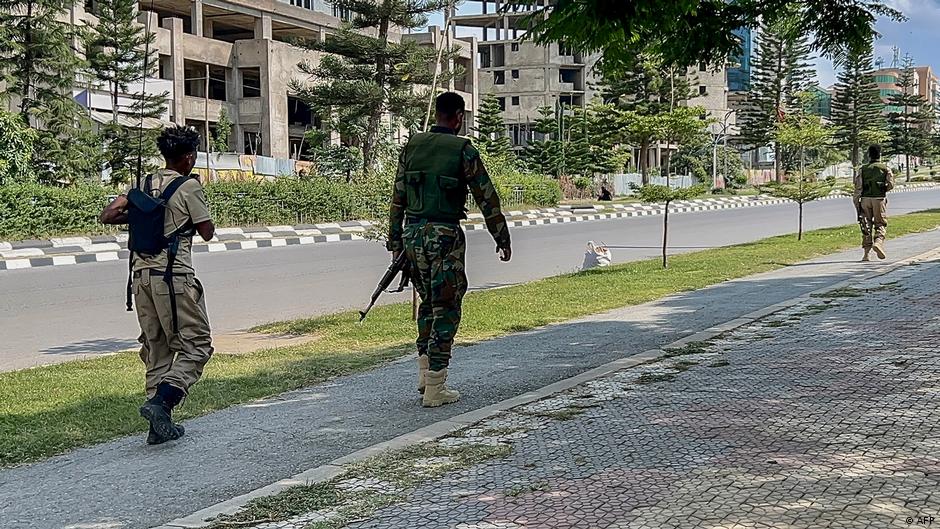
Fighting has erupted again in Ethiopia's northern Tigray region. Tigrayan forces launched a major offensive on September 23, with fighting also reported in the neighboring regions of Afar and Amhara. The escalation threatens the fragile peace established by the 2022 Pretoria peace agreement, which ended the previous Tigray war between Ethiopia's federal government in Addis Ababa and the Tigray People's Liberation Front (TPLF).
But the central question is bigger than the return of war to Tigray: could the conflict connect with the wars and rivalries already destabilizing the Horn of Africa and the Red Sea? Martin Plaut, British journalist and Horn of Africa expert, argues that the conflict could spill beyond Ethiopia's borders. "If a conflict were to spill over, it is quite possible that a conflict involving Eritrea and Ethiopia could then involve Sudanese forces as well, which could drag the whole region into a war," he told DW in an exclusive interview.
To view this video please enable JavaScript, and consider upgrading to a web browser that supports HTML5 video Jalale Getachew Birru, a senior analyst for East Africa at the Armed Conflict Location & Event Data Project (ACLED), also stresses that the conflict cannot be viewed in isolation. ACLED is an independent conflict-monitoring and research organization that collects and analyses data on political violence and armed conflict around the world. It involves the neighboring countries as well, and it’s being displayed across the Horn of Africa countries," Birru told DW.
Her assessment points to a broader regional dynamic: Ethiopia's conflict is unfolding alongside shifting alliances and competing interests in neighboring Sudan and Somalia. ACLED's current analysis likewise places the renewed Tigray conflict within a wider pattern of instability across the Horn of Africa. The risk is not based on a single regional alliance.
It comes from the fact that several conflicts are already geographically and politically connected, Birru noted. The African Union (AU) also expressed deep concern about the possibility of further destabilization. In a statement on September 23, AU Commission Chairperson Mahmoud Ali Youssouf warned that new political and military alliances risk reversing the progress made since 2020.
The AU called for an immediate end to actions that could escalate tensions, renewed direct talks under the Pretoria agreement and restraint by Ethiopia's neighbors. It also tasked former Nigerian President Olusegun Obasanjo, the AU's High Representative for the Horn of Africa, with supporting diplomatic efforts. The AU's intervention reflects concerns that the crisis could have wider regional implications, including the possibility that it could interact with conflicts beyond Ethiopia's borders.
Extract — continue reading at the source.