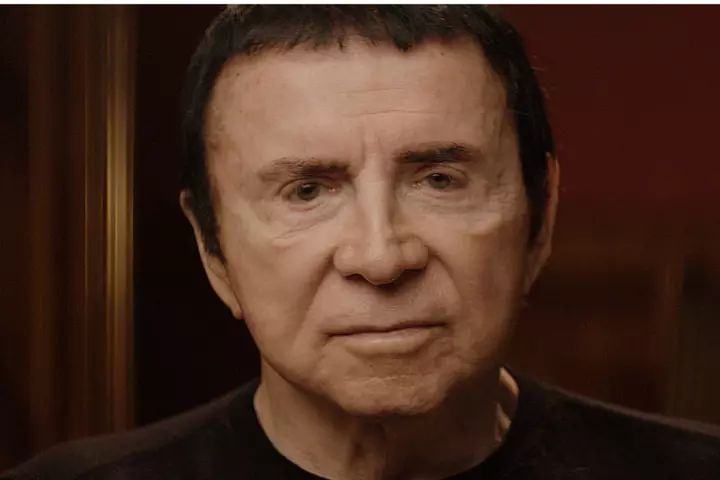
While Western TV audiences of the 80s surveying the Soviet world were following Mikhail Gorbachev, those inside the bloc were just as likely to be interested in a bizarre mass hypnosis artist by the name of Anatoly Kashpirovskiy, as Ji.hlava doc fest audiences have seen this week. A trained medical doctor who said he first became fascinated by hypnosis in order to deal with medical students sleeping through his lectures, Kashpirovskiy became a cult phenomenon of epic proportions once state television channels began to carry his appearances. For Polish director Lukasz Konopa, screening “Kashpirovskiy.
Under the Spell” in Ji.hlava’s Testimonies section, the strangely compelling man was part of the landscape of growing up before the Soviet collapse, he says. When I first saw him on television, I was seven years old and I lived in a small village in gray, communist Poland. On the screen was a strange-looking man with black hair, speaking a language I didn’t understand.
Meanwhile, the light bulbs in our apartment were mysteriously flickering. As I discovered later, the electricity grid was under enormous strain due to the huge amount of electricity consumed by the bulky televisions of the time, as everyone was watching him at the same time.” As he grew up, studying film in the United Kingdom and moving into a cinematography career, he forgot about the experience, he says, “until it came back to me during the first lockdown in 2020. I became curious about what happened to him.
He was a very important part of the transition: The fall of communism and the early days of capitalism – a shift that changed everything in this part of the world.” Konopa became convinced the Kashpirovskiy story was worth telling, he says, “especially at a time of another political and social change that we are living through right now.” “When I started watching Kashpirovskiy’s seances, I was surprised how modern he sounded. He reminded me of a contemporary life coach. He tells people that everything will be OK and tries to give them advice on how to live their lives.
Sometimes, he literally says: ‘I will hold your hands and walk you through this.’” Konopa found the most compelling archival material in Ukraine, where Kashpirovskiy began his career, he says. One item dates back to 1971: Kashpirovskiy in a doctor’s uniform. Kashpirovskiy riding a bike.
Kashpirovskiy performing tricks and hypnotizing a kolkhoz [Soviet cooperative farm] audience. It’s so strange that someone filmed Kashpirovskiy at that stage of his life, more than 15 years before he became famous.” Kashpirovskiy, who has been called a hypnotist, healer, magician and conjurer, soon grew to fame for practices such as operating on women without anaesthetics and persuading the Chechen leader Shamil Basayev to release 1,500 prisoners – events the director calls “just some of the stunts that captivated millions of citizens hungry for miracles amidst the wasteland of the impending collapse of perestroika and glasnost.” The experiment of “television medicine,” Konopa says, was one of the earliest such mass pop culture phenomena, reaching a Soviet audience of 300 million people. Mining the surviving broadcast recordings was a steep challenge, Konopa admits.
Extract — continue reading at the source.