Showing up at a funeral matters everywhere, but especially in the Arab world and the wider Middle East. When Iran’s Supreme Leader, Ali Khamenei, was buried on July 9,just over four months after he was killed in a joint American-Israeli military strike. Saudi Arabia, Qatar, and Oman sent official delegations to the funeral.
The United Arab Emirates, Kuwait, and Bahrain did not. To many analysts, the absence was more telling than any official statement. Before the war, the Gulf states were diversifying their economies beyond oil, betting on remaining islands of stability in a turbulent Middle East.
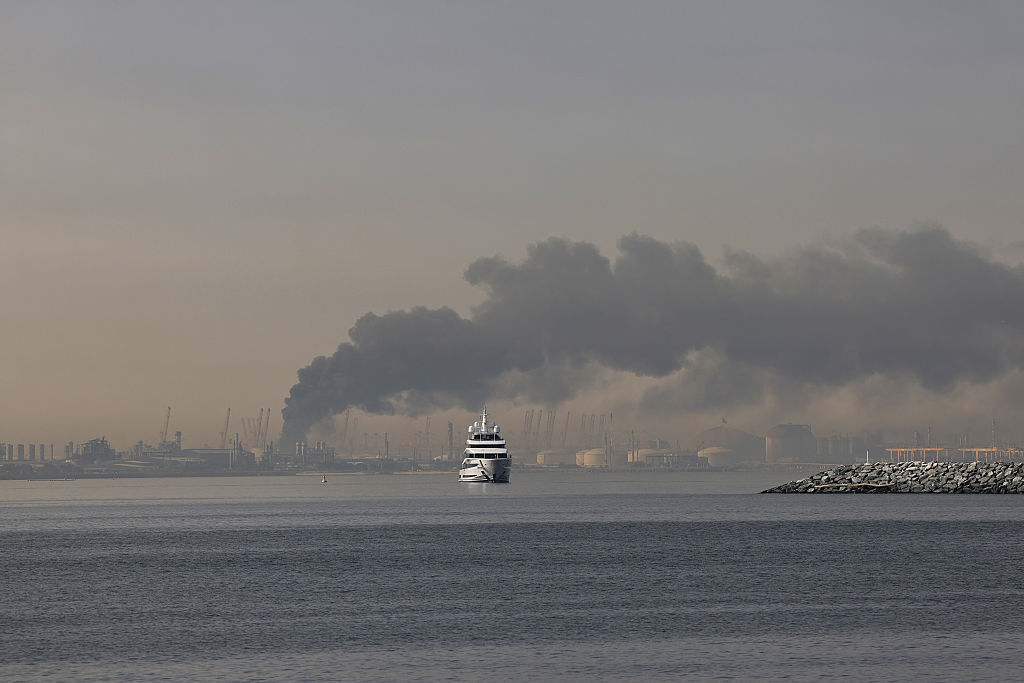
President Donald Trump’s decision to wage war on Iran, despite their opposition, exposed the fragility of that bet. War-risk insurance costs soared, and Iranian attacks followed. Saudi facilities at Abqaiq and Qatar’s Ras Laffan gas complex were hit; the UAE intercepted barrages for weeks; Bahrain and Kuwait weren’t spared either.
Though it wasn’t widely reported, Saudi Arabia and the UAE struck Iran, as, according to some accounts, did Qatar—though Doha denies it. In private, Gulf officials confirm that most Gulf Arab states retaliated. The war produced unusual strategic convergence among the Gulf monarchies.
There is now widespread recognition that the region’s existing security framework has failed. Though coordination behind the scenes may run deeper, the Gulf Cooperation Council (GCC), created in 1981, has invoked its collective-defense clause only once. Officials broadly agree on three points: Iran remains a long-term threat; the U.S. security umbrella is no longer dependable; and regional stability has become an existential priority.
They also see two clear challenges. One is an Iranian regime that continues to pursue its vision of an “Iranian Axis” across the region. The other is an Israel bent on “regional paramountcy,” the presumption that it alone sets the terms of force while the region adjusts.
Extract — continue reading at the source.