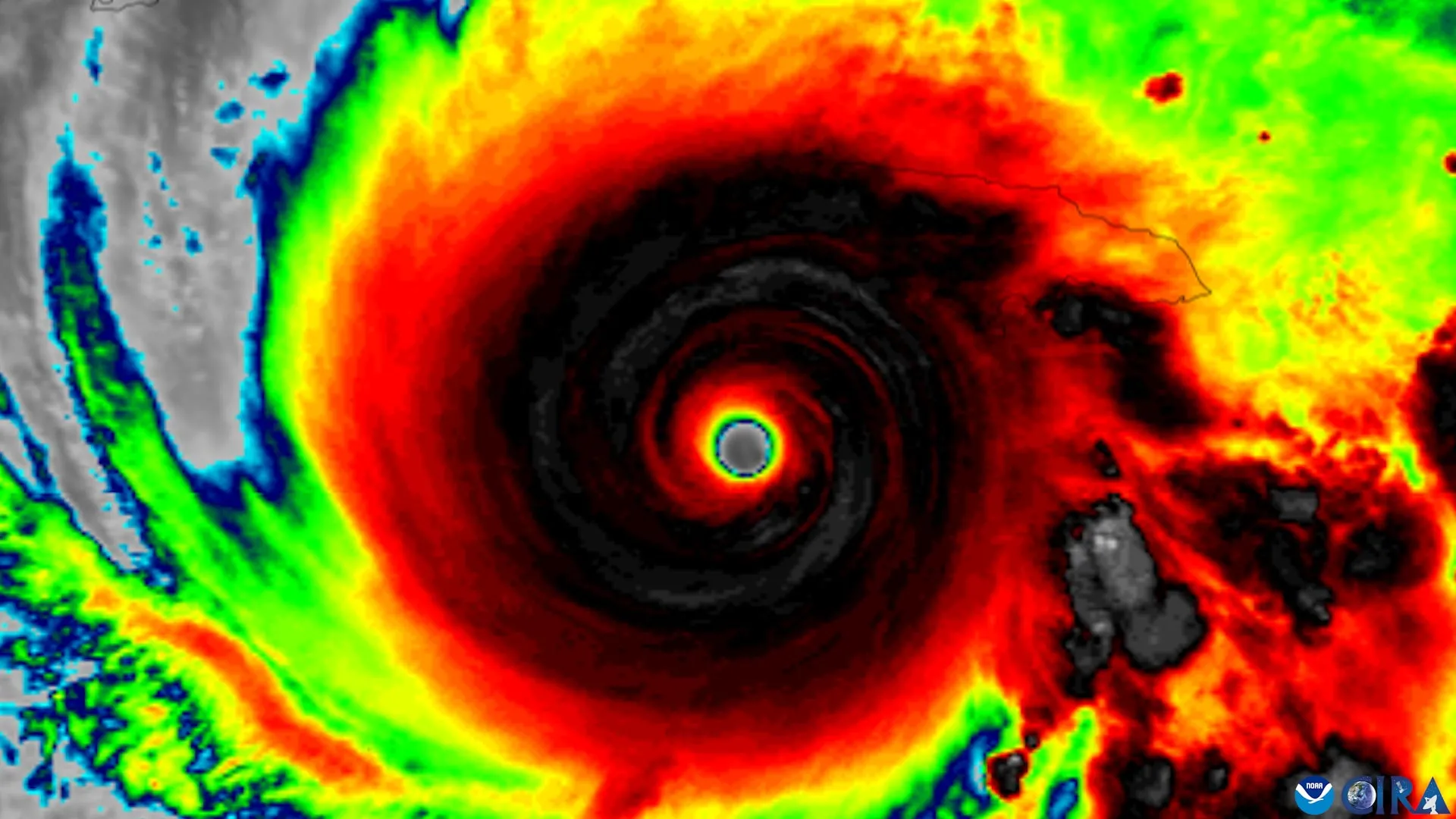
Tropical cyclones generally need to become vertically organized before they can grow much stronger. That means the storm's rotating centers at different levels of the atmosphere must line up rather than remain tilted away from one another. Using nearly three decades of observations from NOAA Hurricane Hunter aircraft, researchers have now identified four features that appear to help tilted tropical cyclones become vertically aligned and more capable of intensifying.
The research was led by scientists at the University of Miami Rosenstiel School of Marine, Atmospheric, and Earth Science, working with colleagues at NOAA's Atlantic Oceanographic and Meteorological Laboratory. Their findings suggest that successful alignment depends on several factors working together, including the storm's internal structure, the direction of surrounding winds, and environmental conditions around the cyclone. Understanding this transition is important because rapidly intensifying storms can give coastal communities and emergency managers very little time to respond.
If forecasters can recognize earlier when a poorly organized tropical cyclone is becoming more favorable for strengthening, they may be able to provide communities with additional time for evacuation decisions and other preparations. "A tropical cyclone has to stand up straight before it can intensify," said Michael S. Fischer, the lead author and an assistant professor in the Department of Atmospheric Sciences at the Rosenstiel School.
"Strong winds higher in the atmosphere can push the top of a storm's circulation away from the center near the ocean surface. Until those centers come back together, the storm usually cannot intensify substantially." The researchers identified four characteristics that can help determine whether a tilted tropical cyclone is likely to straighten vertically. The first is a compact, tightly organized circulation close to the ocean surface.
The second is a storm tilt positioned favorably relative to vertical wind shear. The third is stronger rising air and heavier rainfall near the storm's lower-level center. The fourth is an environment that includes warm ocean water, plenty of atmospheric moisture, and relatively weak winds in the middle levels of the atmosphere.
Meteorologists use the term "tilt" to describe the separation between a tropical cyclone's circulation centers at lower and middle altitudes. Vertical wind shear refers to changes in wind speed or direction with height. Strong shear can interfere with a cyclone's organization by pushing the upper portions of its circulation away from the center closer to the ocean surface.
Extract — continue reading at the source.


