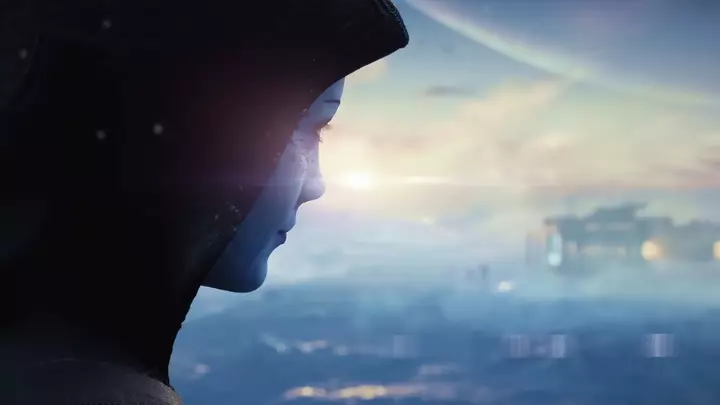
On a long-dead planet, I felt cosmic foreboding in a rickety alien elevator overrun with swamp grime and rot. As my company of soldiers and mercenaries fell silent, an eerie but wistful hum kicked in; the opening of a non-diegetic track, by Jack Wall, titled “Vigil.” Even if you’ve never played a video game, let alone Mass Effect, hit play and listen. What memories come to mind?
What stories do you suddenly want to tell? Mass Effect, created by BioWare, was full of stories. While the games had an overarching plot centered on the galaxy’s collective survival against an ancient threat, its three main titles—released between 2007 and 2012—were filled to the brim with smaller stories that could leave a mark the size of an asteroid. (There was a standalone sequel in 2016, Mass Effect: Andromeda, but it’s less beloved than the first games.
Also, I didn’t play it.) Stories about love and loss, revenge and redemption, bravery and betrayal, and pleasant surprises made up the hundreds of hours of adventure. Though it was all just ones and zeroes on an Xbox 360 disc, Mass Effect felt alive. Which is why the news that BioWare is closed—and with it, Mass Effect—hurts like hell.
In case you missed it, on October 22, the prolific Canadian game studio announced its closure on its social channels, including the announcement that development on the “next Mass Effect project” is “ending.” The blame lies with parent company EA, the long and short of which boils down to private equity doing what it does. So suddenly and without fuss, Mass Effect is over. There are a million reasons to mourn.
Right now the gaming industry looks less like a bustling marketplace and more like triage. But the demise of BioWare is especially painful, and the unambiguous end of its still-beloved Mass Effect series hard to process because it just doesn’t make sense. Since it was founded in 1995, the studio enjoyed industry acclaim and commercial success behind almost all its multi-installment games: Baldur’s Gate, Neverwinter Nights, Star Wars: Knights of the Old Republic, and Dragon Age.
Mass Effect was BioWare’s signature sci-fi, spiritually an amalgamation of the genre’s biggest hitters—Star Trek, Dune, and the works of Asimov, Bradbury, Burroughs, and Lovecraft—that confidently stood on its own with an original universe. The games took place in a far distant future in which humanity achieved interstellar travel and engaged in interplanetary diplomacy with alien races. The saga followed Commander Shepard, a human soldier whose background, appearance, and gender are up to player preferences. (My Shepard kinda looked like Donnie Yen.) As Shepard follows signs of a race of sentient machines that can bring about complete annihilation, he/she gathers allies to give the galaxy a fighting chance.
Extract — continue reading at the source.