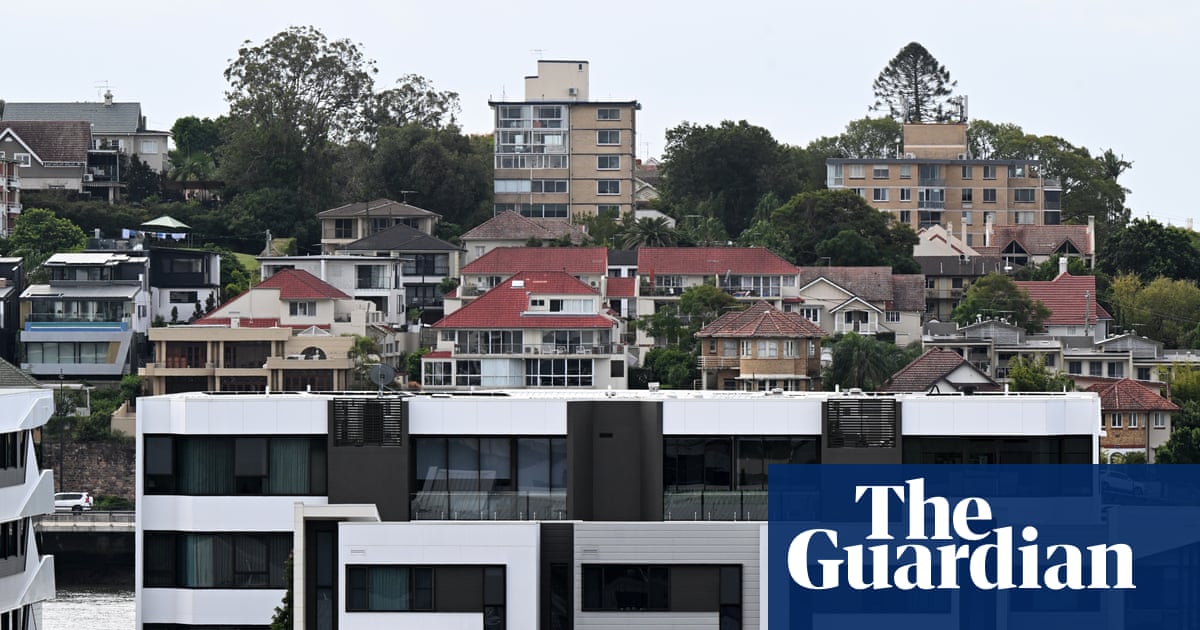
Commonwealth Bank boss Matt Comyn believes Australia is at the bottom of its investor decline. Homes at Bulimba and Hamilton in Brisbane. The budget has clearly added to the existing slowdown.RBA data shows owner-occupier new loans have fallen by roughly 10% since the start of the year, while investor loan growth has fallen by about 25%.Yet the slump in investor demand – the explicit goal of Labor’s tax changes – already looks to be turning around.CBA’s chief executive, Matt Comyn, said on Wednesday the worst had passed by late June and applications were now a little higher and holding steady.“Things seem to have stabilised and we expect an improvement into … 2027.”Comyn repeatedly told analysts on Wednesday he believed Australia was at the bottom of its investor decline.CBA is still receiving close to three applications for every four it received before the budget changes and expects landlord borrowing to pick up from here.‘It will correct’An average of 19,000 investor loans entered the housing market each month at the start of 2026, worth a combined $14bn.Even if a 25% fall in investor borrowing became the new norm across the banking system, some 14,000 new landlords would take out a loan each month.A drop of that magnitude would return investor borrowing from the record highs it hit in December last year to the growth rates it held in 2023 and 2024.skip past newsletter promotionFree newsletter | When neededSign up to Breaking News AustraliaGet the most important news as it breaksEnter your email Sign upafter newsletter promotionThis is far from the investment doomsday predicted by some in the real estate industry, who warned landlords would flee the market and rents would spiral.Thousands of Australians are still buying investment properties.
Rents are rising slower than inflation.Graph showing investor loans have fallen back to 2023 levelsNor is the budget the sole, or even dominant, factor behind the slump in home loans and prices.Comyn on Wednesday blamed the slowdown on rising interest rates, inflation, buyer confidence and the strain on the global economy.Westpac’s chief financial officer, Nathan Goonan, on Monday said interest rates were the dominant influence on the housing market, outweighing the tax reforms.His bank has seen applications slump 18% for owner-occupiers and 26% for investors but is still predicting slow, steady growth in home lending supported by a rate cut next year.The RBA governor, Michele Bullock, made clear on Tuesday that interest rates were still more likely to rise than to fall, saying she would not be held captive by a slumping housing market.Bullock believes the slump is going well beyond the interest rate fundamentals thanks to an outsized loss of confidence and has previously argued the slowdown will “settle down” once confidence returns.She laid out the best argument for investing in housing – and one that hasn’t changed since the budget.“We still have a shortage of supply relative to housing,” Bullock said.“Ultimately, that is going to resolve somehow in prices, so it will correct.” Luca Ittimani is a business and economics reporter and Jonathan Barrett is business editor at Guardian AustraliaExplore more on these topicsHousingAustralian economyBusinessBanking Interest ratesReserve Bank of AustraliaTaxanalysisShareReuse this content
Extract — continue reading at the source.